




 DISCORD
Scythe
Neal Shusterman


 Barnes & Noble Bestsellers


 138 Min Reading Time
 Audio Version Available
About this book
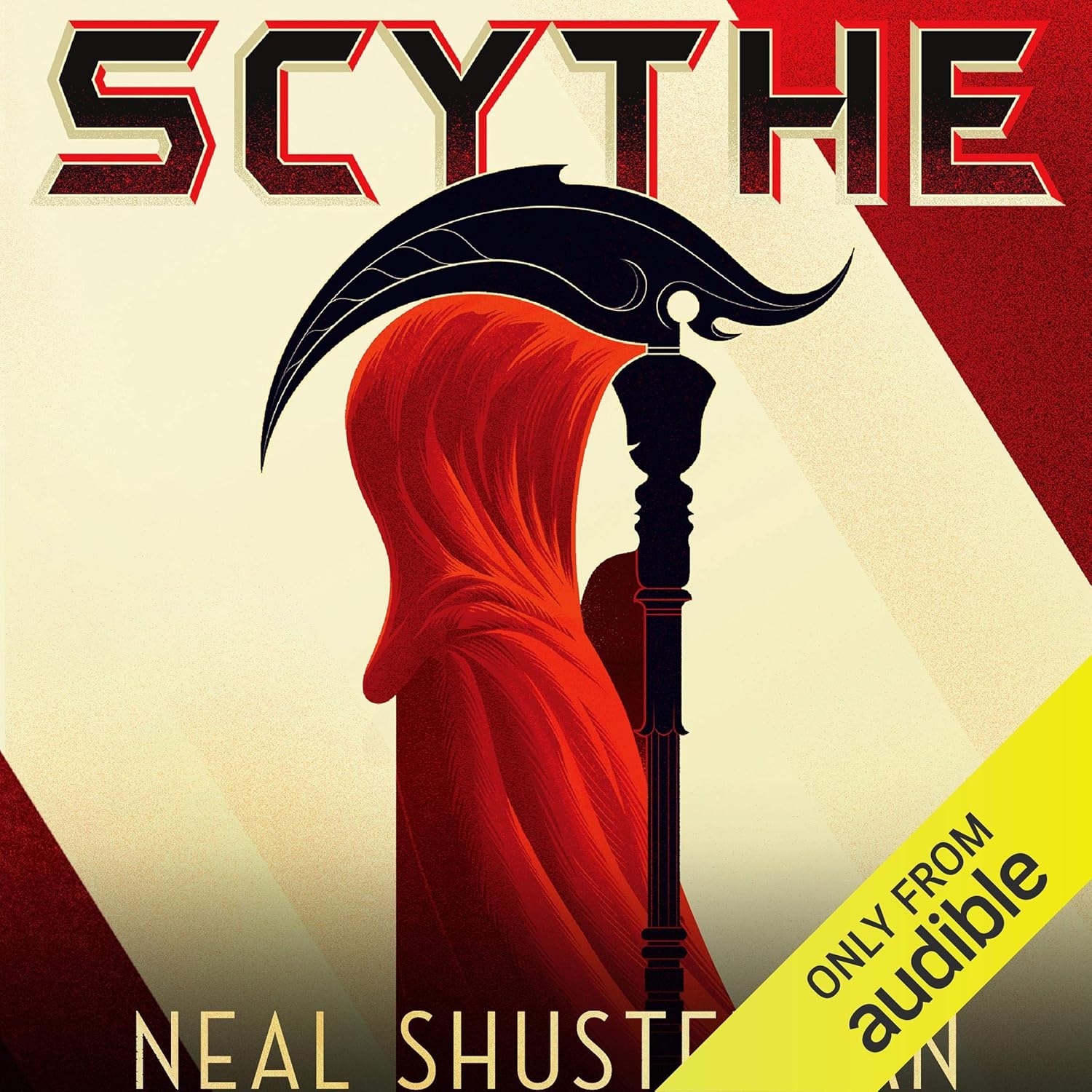
In a world where humanity has conquered death, Scythes are the only ones who can end life, tasked with controlling the population in a seemingly perfect world. Citra and Rowan, two unwilling teens, are chosen as apprentices to a Scythe, forced to learn the art of killing. But as they come to understand the deadly necessities of their vocation, they realize the Scythedom is far from perfect, and only one of them will be chosen as a Scythe. The price of failure? The winner must glean the loser, pitting Citra and Rowan against each other in a fight for their lives.
Summary of Key Ideas
- •
The Burden of Immortality
The End of Natural Death and its Consequences: In the world of "Scythe," humanity has conquered death through advanced technology. This seemingly utopian achievement raises profound questions about the value of life, the meaning of mortality, and the potential for stagnation in a world without natural ends. The absence of death leads to overpopulation, necessitating the creation of Scythes, individuals tasked with the responsibility of gleaning (killing) people to maintain population control. This key idea explores the ethical and philosophical implications of immortality and the burdens it places on society.
- •
The Corruption of Power in a Deathless World
The Scythes' Moral Dilemma: Scythes are meant to be impartial arbiters of death, chosen for their moral character and trained to kill without prejudice. However, the immense power they wield corrupts many, leading to abuses of authority and the development of personal philosophies regarding gleaning. Some Scythes adhere to strict quotas and methods, while others revel in the power over life and death, indulging in cruelty and sadism. This idea examines the challenges of maintaining morality when faced with absolute power and the potential for corruption even within a system designed to prevent it.
- •
Tradition vs. Innovation in the Scythedom
The Conflict Between Old Guard and New Order: The Scythedom is divided between traditionalists who believe in adhering to established rules and protocols, and progressives who advocate for change and modernization. This conflict reflects broader societal debates about tradition versus innovation, and the potential dangers of clinging to outdated practices in a rapidly evolving world. The clash between these factions drives much of the plot, as Citra and Rowan find themselves caught in the crossfire of this ideological battle.
- •
Devaluation of Life in a Post-Mortality Society
The Value of Human Life in a World Without Death: In a world where death is a choice, rather than an inevitability, the value of human life is paradoxically diminished. People become complacent and apathetic, engaging in dangerous activities without fear of permanent consequences, as they can simply be revived. The novel questions whether immortality truly enhances the human experience or if it ultimately leads to a devaluation of life and a loss of appreciation for its preciousness. The constant ability to 'turn back the clock' removes the weight and impact of decisions.
- •
The Limits of Artificial Benevolence
The All-Knowing Thunderhead vs. Human Agency: The Thunderhead, a benevolent AI, governs the world and provides for humanity's needs. While seemingly benevolent, its control raises questions about free will and autonomy. Humans are relieved of many responsibilities, but at the cost of independence and self-determination. The Thunderhead's refusal to interfere with the Scythedom creates a moral paradox, highlighting the limitations of even the most advanced AI and the importance of human agency in matters of life and death. It also shows that even a perfect system has its flaws.
- •
The Enduring Power of Human Connection
Love and Sacrifice in the Face of Death: Despite the desensitization to death in their society, Citra and Rowan experience profound emotions, including love and the willingness to sacrifice for others. Their relationship develops amidst the grim reality of their Scythe training, highlighting the enduring power of human connection even in the face of mortality. Their individual choices and actions throughout the story demonstrate their core values, often choosing the path of greatest resistance in line with their beliefs. They show the importance of empathy and compassion.
Chapter Recap

About The Author
Neal Shusterman
Main Quotes
"My greatest wish for humanity is not for peace or comfort or joy. It is that we all still die a little inside every time we witness the death of another."
"Death makes the whole world kin. There is no one who doesn't know loss, and this is our common bond."
"That a scythe is merely the instrument of death, but it is your hand that swings me. You and your parents, and everyone else in this world are the wielders of scythes."
"Everyone is guilty of something, and everyone still harbors a memory of childhood innocence, no matter how many layers of life wrap around it."
"Will you be the eagle or the mouse, Rowan? Will you soar or will you scurry away? For those are the only two choices today."
"Estrangement from the collective consciousness of humanity's wisdom is just one more thing that sets scythes apart from others."
"In the early days, Thunderhead was worshipped as a god. Now it's just taken for granted. Like oxygen."
"There is no good death. There is no just death. It is always a tragic thing."
"The truth is, we're all just stumbling through the dark, and the best we can do is try not to step on each other's toes."
"Power doesn't corrupt. Power is indifferent. It's the desire for power that corrupts."
Who Should Read This Book
Young adults (ages 13-19) interested in science fiction and dystopian themes
Readers who enjoy thought-provoking books about morality, death, and power
Fans of Neal Shusterman's previous works
Readers looking for books with complex characters and challenging themes
Adults who enjoy young adult fiction with mature themes
Readers interested in exploring philosophical questions about the future of humanity and artificial intelligence
Book Summaries Like
Scythe
FAQ

Free Access to LitNotes