




 DISCORD
Secrets of the Octopus
Sy Montgomery


 Barnes & Noble Bestsellers


 20 Min Reading Time
 Audio Version Available
About this book
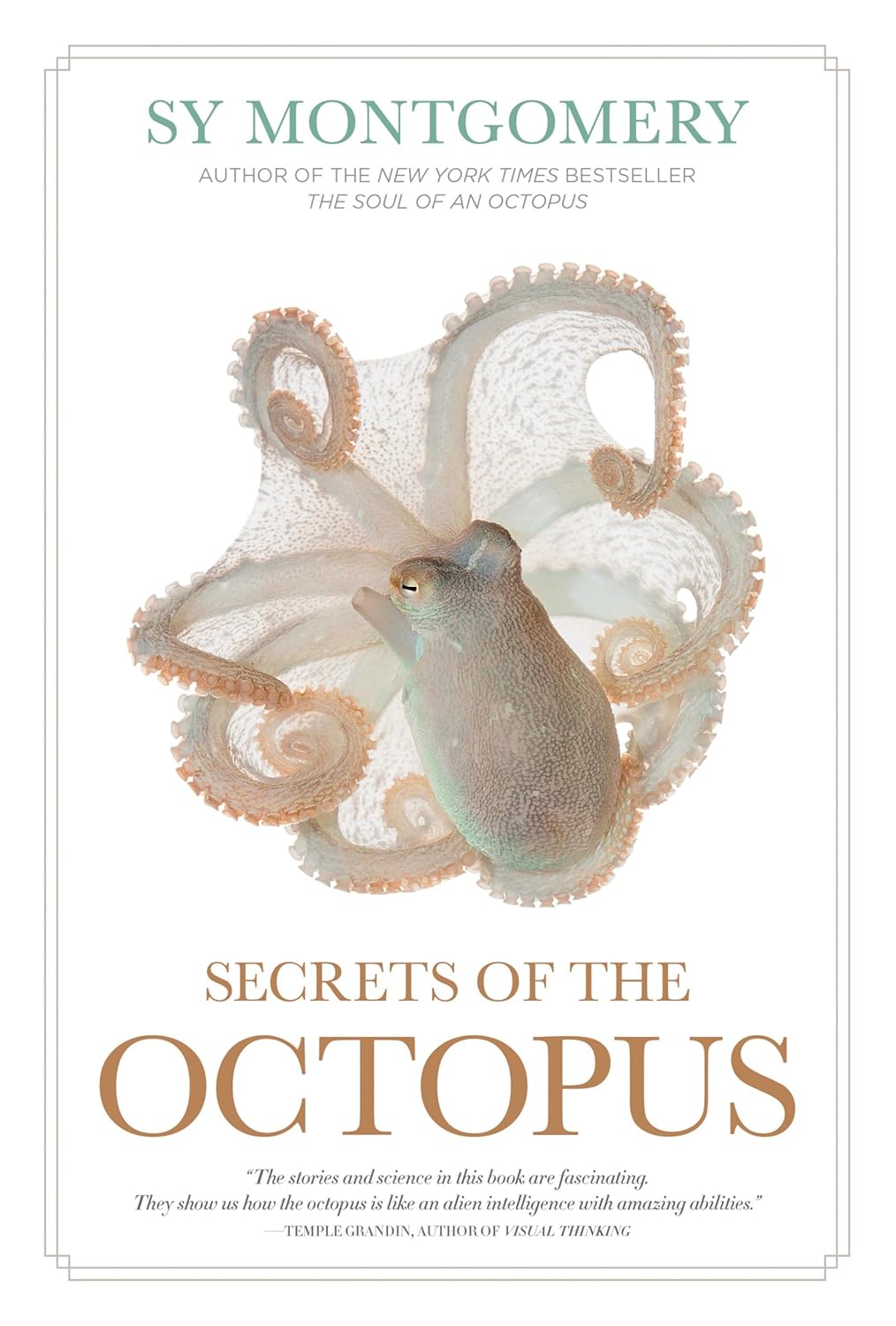
Take an illuminating journey into the life of the octopus, one of nature’s most intelligent and complex animals. Learn from an international bestselling author, the world's brightest octopus researchers, and vivid National Geographic photography to come closer than ever to these elusive creatures. The companion to the highly-anticipated National Geographic Disney+ special Secrets of the Octopus, narrated by Paul Rudd, this beautifully illustrated book explores the underwater world of the octopus—a creature that resembles an alien lifeform, but whose behavior has earned it a reputation as one of the most intelligent animals on the planet. This journey into the world of the octopus will reveal how the large and capable brain of these creatures occupies their whole body–not just their heads—and they can actually adjust their genetic makeup to respond to the demands of the environment. It will allow readers to watch them change shape and color in order to camouflage themselves more effectively than any other species. And it will divulge how octopus mothers give their all in order to bring forth a new generation. With this offering, acclaimed author Sy Montgomery—known, thanks to her bestselling book, as the “octopus whisperer”—returns to the species she knows and loves, offering current and compassionate stories about the scientists on the front lines of octopus research and conservation. For all animal lovers—and especially those drawn to this magical marine being—this will be a book to relish, for both its fascinating imagery and its charming storytelling.
Summary of Key Ideas
- •
Distributed Intelligence: Minds in Multiple Arms
Octopus Intelligence Extends Beyond the Brain: Montgomery explores the revolutionary idea that octopuses possess intelligence distributed throughout their bodies, particularly in their arms. Each arm can act semi-independently, making decisions and reacting to stimuli without direct input from the central brain. This distributed intelligence allows for complex problem-solving and adaptability, showcasing a unique evolutionary pathway to cognition. This challenges the conventional understanding of intelligence being solely localized in a centralized brain.
- •
Masters of Problem-Solving
Octopuses Exhibit Complex Problem-Solving Skills: The book showcases numerous examples of octopuses demonstrating remarkable problem-solving abilities. These include opening jars, escaping from tanks, and navigating complex mazes. Montgomery highlights that these are not merely instinctual behaviors but rather evidence of cognitive flexibility and the ability to learn and adapt to new situations. These abilities underscore the octopus’s advanced intelligence and their capacity for understanding and manipulating their environment.
- •
Living Canvases: Skin as Sensory and Communication Hub
Octopus Skin as a Sensory and Communication Organ: Montgomery dives into the incredible capabilities of octopus skin, which acts as both a sensory organ and a communication tool. Octopuses can change the color and texture of their skin in milliseconds to camouflage themselves, communicate with other octopuses, and even express emotions. This ability, driven by chromatophores and other specialized cells, highlights the octopus's mastery of disguise and their complex social signaling. The skin essentially functions as a dynamic display of their internal state and environmental awareness.
- •
Emotional Octopuses: Individuality and Feelings
Octopus Emotions and Individuality: Challenging the notion that invertebrates are incapable of experiencing emotions, Montgomery presents compelling evidence that octopuses possess distinct personalities and emotional lives. Through her interactions with individual octopuses, she observes displays of curiosity, playfulness, affection, and even grief. Recognizing octopuses as individuals with unique preferences and behaviors transforms our understanding of these creatures and raises ethical questions about their treatment.
- •
Innovative Tool Users of the Sea
Octopus Tool Use: While not as prevalent as in primates or birds, Montgomery explores instances of tool use in octopuses, particularly the veined octopus, which carries coconut shells for shelter. This behavior indicates a level of planning and foresight, demonstrating the octopus’s capacity to manipulate objects in their environment to achieve specific goals. Tool use highlights the octopus's cognitive complexity and their ability to innovate solutions to environmental challenges.
- •
Ephemeral Lives, Enduring Legacy
The Short but Intense Lifespan of Octopuses: Montgomery reflects on the relatively short lifespan of most octopus species, which typically ranges from one to five years. Despite their brief existence, octopuses pack a remarkable amount of learning, experience, and reproduction into their lives. This compressed timeline underscores the urgency and intensity of their existence, highlighting the importance of understanding and protecting these fascinating creatures before their knowledge and genetic legacy are lost.
- •
The Ultimate Maternal Sacrifice
Maternal Care and Sacrifice: The book delves into the remarkable maternal behavior of female octopuses, many of whom dedicate their entire adult lives to caring for their eggs. These mothers forgo eating, often wasting away as they protect their developing offspring from predators and ensure a constant flow of oxygenated water. This ultimate act of self-sacrifice underscores the profound connection between mother and offspring and highlights the diverse strategies for ensuring reproductive success in the animal kingdom.
- •
Bridging the Gap: Human-Octopus Connections
Octopuses and Human Connection: Montgomery emphasizes the profound connections that can be formed between humans and octopuses. Through patient observation and interaction, humans can gain insight into the octopus's intelligence, emotions, and unique perspective on the world. These interspecies relationships foster empathy and respect for these often-misunderstood creatures, prompting a deeper appreciation for the diversity of life on Earth and inspiring conservation efforts.
Chapter Recap

About The Author
Sy Montgomery
Main Quotes
"The octopus is an animal whose alien beauty reminds us how unimaginative we humans are."
"They remind us that there are other ways to be smart, to solve problems, to feel, even to love."
"But the human mind is not the only mind on Earth."
"We’ve long assumed that we’re alone in our capacity for thought, consciousness, and suffering. But science has proven otherwise."
"Octopuses are not just smart; they also have individual personalities."
"Like us, each octopus has its own unique character."
"Each octopus seems to assess people individually."
"Octopuses are masters of disguise."
"Here was a wild animal, making friends with people."
"The more we learn about them, the more we can appreciate them for who they are."
Who Should Read This Book
Animal lovers, especially those fascinated by marine life and specifically octopuses
Readers interested in science and nature writing
People who enjoy books that explore the intelligence and emotional lives of animals
Fans of Sy Montgomery's previous works, such as "The Soul of an Octopus"
General nonfiction readers seeking engaging and informative books about the natural world
Educators and students (middle school and up) interested in learning about cephalopods
Individuals involved in marine conservation and environmental issues
Members of OctoNation and other octopus appreciation groups
Readers who appreciate books with beautiful photography and illustrations
People interested in the intersection of science, philosophy, and animal behavior
Book Summaries Like
Secrets of the Octopus
FAQ

Free Access to LitNotes