




 DISCORD
Self-Care for Adult Children of Emotionally Immature Parents
Lindsay C. Gibson PsyD, Lindsay C. Gibson


 Foreword Indies Book of the Year Award
 The New York Times Best Sellers


 60 Min Reading Time
 Audio Version Available
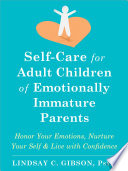
About this book
Are you an adult still grappling with the emotional fallout of having an emotionally immature parent? From Lindsay C. Gibson, the New York Times bestselling author of Adult Children of Emotionally Immature Parents, comes a compassionate and practical guide to help you reclaim your sense of self and cultivate genuine well-being.
Self-Care for Adult Children of Emotionally Immature Parents offers daily strategies to heal the invisible wounds of your past. Learn to set healthy boundaries, validate your emotions, and break free from the cycle of prioritizing others' needs above your own. Discover how to navigate relationships with confidence, manage stress with clarity, and finally embrace a life of self-respect and fulfillment. This book is your essential companion for building a brighter, more authentic future.
Summary of Key Ideas
- •
Recognizing Emotional Immaturity
Understanding Emotional Immaturity: The book begins by defining emotional immaturity in parents, highlighting their characteristics such as low empathy, self-centeredness, lack of emotional regulation, and a tendency to avoid intimacy. It emphasizes recognizing these traits as the first step toward healing and self-care. Recognizing these patterns helps adult children understand that their parents' behavior is not their fault and allows them to approach their past with a more objective perspective.
- •
Validating Your Emotional Experience
Honoring Your Emotions: A core concept is the importance of validating and honoring one's own emotions. Adult children of emotionally immature parents often learn to suppress or disregard their feelings to avoid conflict or seek approval. The book encourages readers to reconnect with their emotional experiences, acknowledging that their feelings are real and valid, regardless of what their parents might have led them to believe. This involves practicing self-compassion and allowing oneself to feel without judgment.
- •
Establishing Healthy Boundaries
Setting Healthy Boundaries: Establishing and maintaining healthy boundaries is crucial for self-care. The book provides guidance on identifying personal boundaries and communicating them effectively to others, particularly to emotionally immature parents who may resist them. It addresses the guilt and anxiety that can arise when setting boundaries and offers strategies for staying firm and assertive while protecting one's emotional well-being. Learning to say 'no' and prioritizing one's own needs are key components of this process.
- •
Prioritizing Self-Nurturance
Nurturing Your Inner Self: This involves actively engaging in self-compassion, self-soothing, and activities that bring joy and fulfillment. Adult children of emotionally immature parents often neglect their own needs, prioritizing others' expectations instead. The book encourages readers to rediscover their passions, interests, and values, and to make time for self-care practices that nourish their mind, body, and spirit. This may include mindfulness, creative expression, spending time in nature, or engaging in hobbies.
- •
Breaking Reactive Patterns
Disentangling from Emotional Reactivity: Adult children often get caught in reactive patterns with their emotionally immature parents, leading to conflict and emotional exhaustion. The book teaches strategies for observing these patterns without getting pulled into them. This includes practicing detachment, responding thoughtfully rather than reacting impulsively, and recognizing that you cannot control another person's behavior, only your own. The goal is to create emotional distance and protect oneself from further harm.
- •
Cultivating Self-Confidence
Living with Confidence: The ultimate goal is to cultivate a sense of inner confidence and self-worth that is not dependent on external validation. This involves challenging negative self-beliefs, building self-esteem, and developing a strong sense of identity. The book encourages readers to embrace their authentic selves, to trust their intuition, and to make choices that align with their values and goals. It emphasizes that healing is a journey, and with consistent self-care, adult children can create a fulfilling and meaningful life, regardless of their past experiences.
- •
Identifying Types of Emotional Immaturity
Understanding the Four Types of Emotionally Immature Parents: The book likely elaborates on different manifestations of emotional immaturity, categorizing parents into types like the emotional parent, the driven parent, the passive parent and the rejecting parent. Understanding which type of parent one has can help tailor self-care strategies and expectations.
- •
Practicing Self-Reparenting
Reparenting Yourself: Addressing the emotional neglect experienced in childhood requires a conscious effort to provide oneself with the nurturing and support that was lacking. This involves becoming aware of one's inner child and offering it the love, acceptance, and validation it needs. This can manifest in small, everyday acts of kindness towards oneself, such as speaking kindly to oneself, setting realistic expectations, and celebrating small victories.
Chapter Recap

About The Author
Lindsay C. Gibson PsyD
Main Quotes
"Emotionally immature people fear genuine emotion and pull back from emotional closeness. They use coping mechanisms that resist reality rather than dealing with it."
"Emotionally mature people are considerate and respect your boundaries. They seek closeness and an emotional connection, not intrusion."
"Because they’re so uncomfortable with emotions, EIs shut down emotionally when faced with a conflict."
"If you grew up feeling invisible, you probably learned to ignore your own emotional reactions."
"You aren't betraying your parents by seeing them accurately. Thinking about them objectively can't help them. But it can help you."
"Growing up with EIPs teaches you to discount your own needs and feelings."
"Emotionally mature people may tell you how they feel about what you did, but they don’t pretend to know you better than you know yourself."
"Self-care means accepting that you deserve to be taken care of and then making sure it happens."
"The truth is, you can’t get blood from a turnip. You’re not going to get emotional intimacy from someone who doesn’t have any to give."
"The most important thing to remember is that you are not responsible for your parents’ feelings."
Who Should Read This Book
Adult children who experienced emotional neglect or abuse in childhood.
Individuals seeking to understand and heal from the impact of emotionally immature parents.
People struggling with low self-esteem, anxiety, or difficulty in relationships due to their upbringing.
Those interested in self-help resources for personal growth and emotional well-being.
Therapists and counselors looking for materials to support their clients with similar backgrounds.
Individuals seeking practical strategies for setting boundaries and improving their emotional regulation.
Readers of similar books on dysfunctional families and childhood trauma.
Book Summaries Like
Self-Care for Adult Children of Emotionally Immature Parents



FAQ

Free Access to LitNotes