




 DISCORD
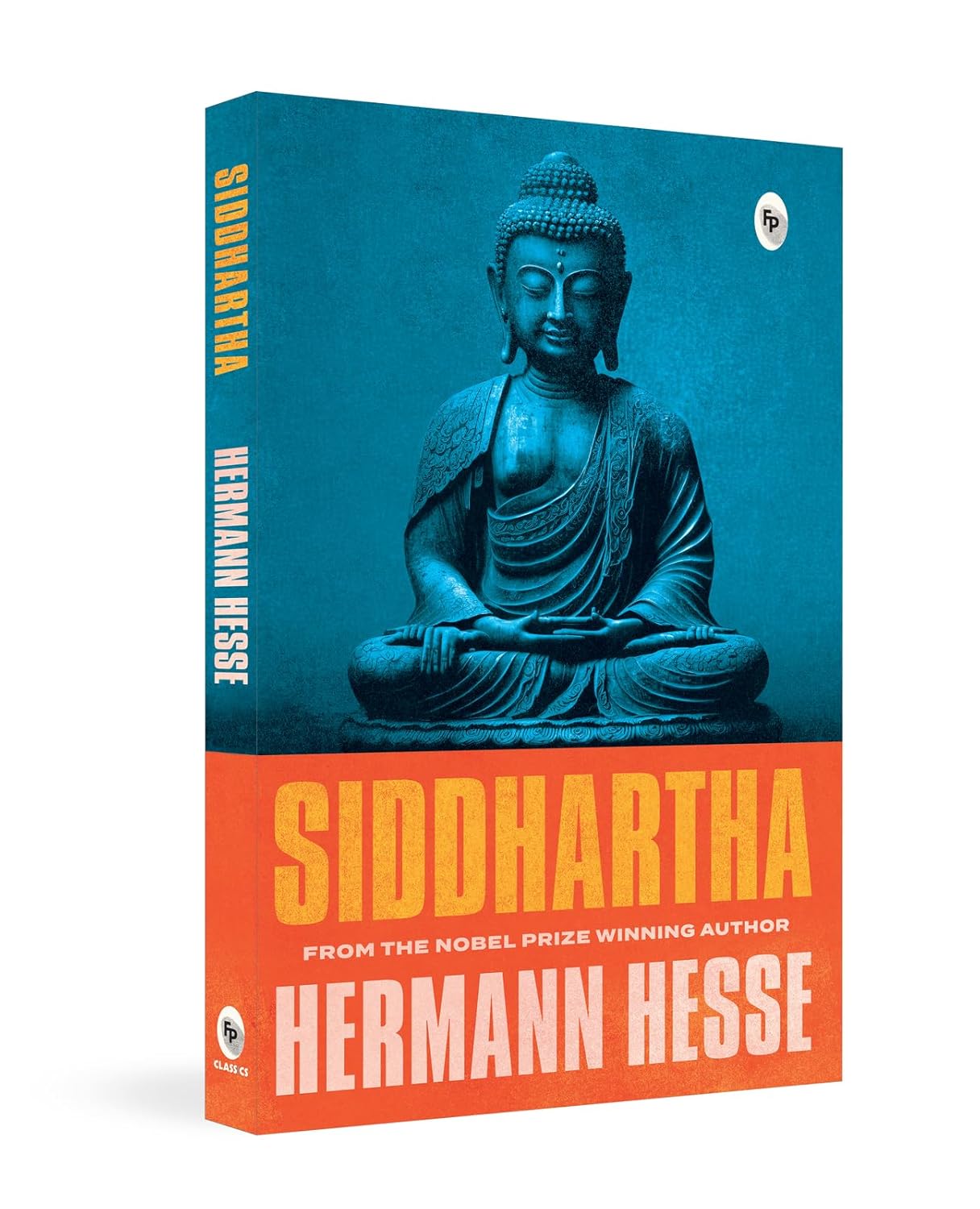
Siddhartha
Hermann Hesse


 Apple Books


 44 Min Reading Time
 Audio Version Available
About this book
In Hermann Hesse's timeless masterpiece, Siddhartha, embark on a profound spiritual odyssey alongside a young Brahmin in ancient India. Dissatisfied with the rigid confines of his upbringing, Siddhartha forsakes his destined path and ventures into the world, seeking enlightenment through asceticism, worldly pleasures, and the wisdom found in the simplest of lives.
Witness his transformation as he journeys from a life of privilege to that of a wandering Samana, a wealthy merchant, a passionate lover, and ultimately, a humble ferryman. Guided by the whispers of the river and the echoes of his own soul, Siddhartha challenges conventional beliefs and discovers that true wisdom arises not from teachings, but from the depths of personal experience.
A lyrical exploration of self-discovery, Siddhartha invites readers to contemplate the meaning of existence and the elusive nature of enlightenment, resonating with seekers of truth across generations.
Summary of Key Ideas
- •
Beyond Doctrine: The Path of Personal Experience
The Illusion of Teachers and Doctrine: Siddhartha's journey emphasizes the limitations of external teachings in achieving enlightenment. He initially seeks guidance from Brahmin priests and then ascetic Samanas, mastering their doctrines. However, he realizes that true wisdom cannot be taught or learned through rigid practices. Instead, it must be discovered through personal experience and introspection. This key idea challenges the reliance on external authority and promotes the importance of individual exploration in the pursuit of spiritual understanding. Siddhartha's rejection of prescribed paths highlights Hesse's belief in the uniqueness of each individual's spiritual journey.
- •
Embracing Life: The Value of Direct Engagement
The Significance of Direct Experience: Siddhartha's enlightenment is not achieved through intellectual understanding or adherence to doctrines, but through direct engagement with life's experiences. His time with the Samanas, his immersion in the world of material wealth and love with Kamala, and his eventual role as a ferryman all contribute to his understanding. Each phase, though seemingly disparate, provides unique insights into the nature of reality and the self. It is through these experiences – both pleasurable and painful – that Siddhartha gradually attains wisdom and transcends the limitations of his earlier beliefs. This emphasizes the value of living fully and embracing all aspects of existence.
- •
The River of Life: Interconnectedness and Unity
The Unity of All Things: A core concept in Siddhartha is the interconnectedness of all aspects of existence. Siddhartha comes to understand that the river, a central symbol in the novel, represents the continuous flow of life and the unity underlying all its apparent divisions. Through observing the river, he perceives the cyclical nature of existence and the interdependence of opposing forces. This realization transcends dualistic thinking and allows him to see the world as a harmonious whole. The idea of unity extends beyond the natural world to encompass human experiences, emotions, and relationships, suggesting a profound interconnectedness between all beings.
- •
The Transformative Power of Love
The Importance of Love and Compassion: While Siddhartha initially distances himself from worldly attachments, he eventually learns the importance of love and compassion in achieving enlightenment. His relationship with his son, though fraught with difficulty, teaches him about unconditional love and the pain of attachment. This experience softens his heart and allows him to develop a deeper understanding of human suffering. Ultimately, it is through embracing love and compassion that Siddhartha transcends his ego and attains true wisdom. This highlights the transformative power of human connection and the necessity of empathy in the spiritual journey.
- •
Beyond Linearity: The Cyclical Nature of Time
The Rejection of Linear Time: Siddhartha's enlightenment involves a shift in his perception of time. He comes to understand that time is not linear but cyclical, with all moments existing simultaneously. This realization is closely tied to his understanding of the river, which flows continuously, embodying the eternal present. By transcending the limitations of linear time, Siddhartha gains a deeper understanding of the interconnectedness of all events and the illusory nature of past, present, and future. This concept challenges conventional notions of causality and progress, suggesting a more holistic and timeless view of reality.
- •
The Paradox of Self: Discovery Through Loss
Finding the Self Through Self-Loss: Siddhartha's journey is paradoxical, involving both the pursuit of self-discovery and the willingness to lose himself in the world. He initially seeks to escape the limitations of his ego but eventually realizes that true understanding comes from embracing all aspects of himself, including his desires and attachments. His immersion in the world of sensual pleasures, though initially seen as a detour from his spiritual path, ultimately contributes to his growth. It is through experiencing both the heights and depths of human existence that Siddhartha achieves a balanced and integrated sense of self. This idea underscores the importance of self-acceptance and the transformative power of embracing one's own humanity.
Chapter Recap

About The Author
Hermann Hesse
Main Quotes
"Wisdom cannot be imparted. Wisdom that a wise man tries to impart always sounds like foolishness to someone else."
"When someone is seeking, it happens quite easily that he only sees the thing that he is seeking; that he is unable to find anything, unable to absorb anything, because he is only thinking of the thing he is seeking, because he has a goal, because he is possessed by his goal."
"I have always believed, and I still believe, that whatever good or bad fortune may come our way we can always give it meaning and transform it into something of value."
"It is not for me to judge another man's life. I must judge, I must choose, I must spurn, purely for myself. For myself, alone."
"I have learned nothing so far. I know nothing."
"The world, Govinda, is not imperfect or slowly evolving along a long path to perfection. No, it is perfect at every moment."
"Nothing was, nothing will be; everything is, everything has essence and presence."
"Words do not express thoughts very well; everything immediately becomes a little different, a little distorted, a little foolish."
"I will no longer mutilate and destroy myself, in order to find a secret behind the ruins."
"Most people are like a falling leaf that drifts and turns in the air, flutters, and falls to the ground. But a few others are like stars which travel one defined path: no wind reaches them, they have within themselves their guide and path."
Who Should Read This Book
Individuals interested in Eastern religions and philosophies, particularly Buddhism and Hinduism
Readers interested in spiritual journeys and self-discovery
Young adults exploring existential questions and identity
Students of literature, philosophy, and religious studies
Readers seeking meaningful and thought-provoking narratives
Individuals interested in Hesse's other works and his exploration of spiritual themes
People drawn to stories set in ancient India
Readers looking for books that offer insights into finding meaning and purpose in life
Those interested in allegorical stories and parables
Individuals who appreciate philosophical novels with simple yet profound messages
Book Summaries Like
Siddhartha



FAQ

Free Access to LitNotes