




 DISCORD
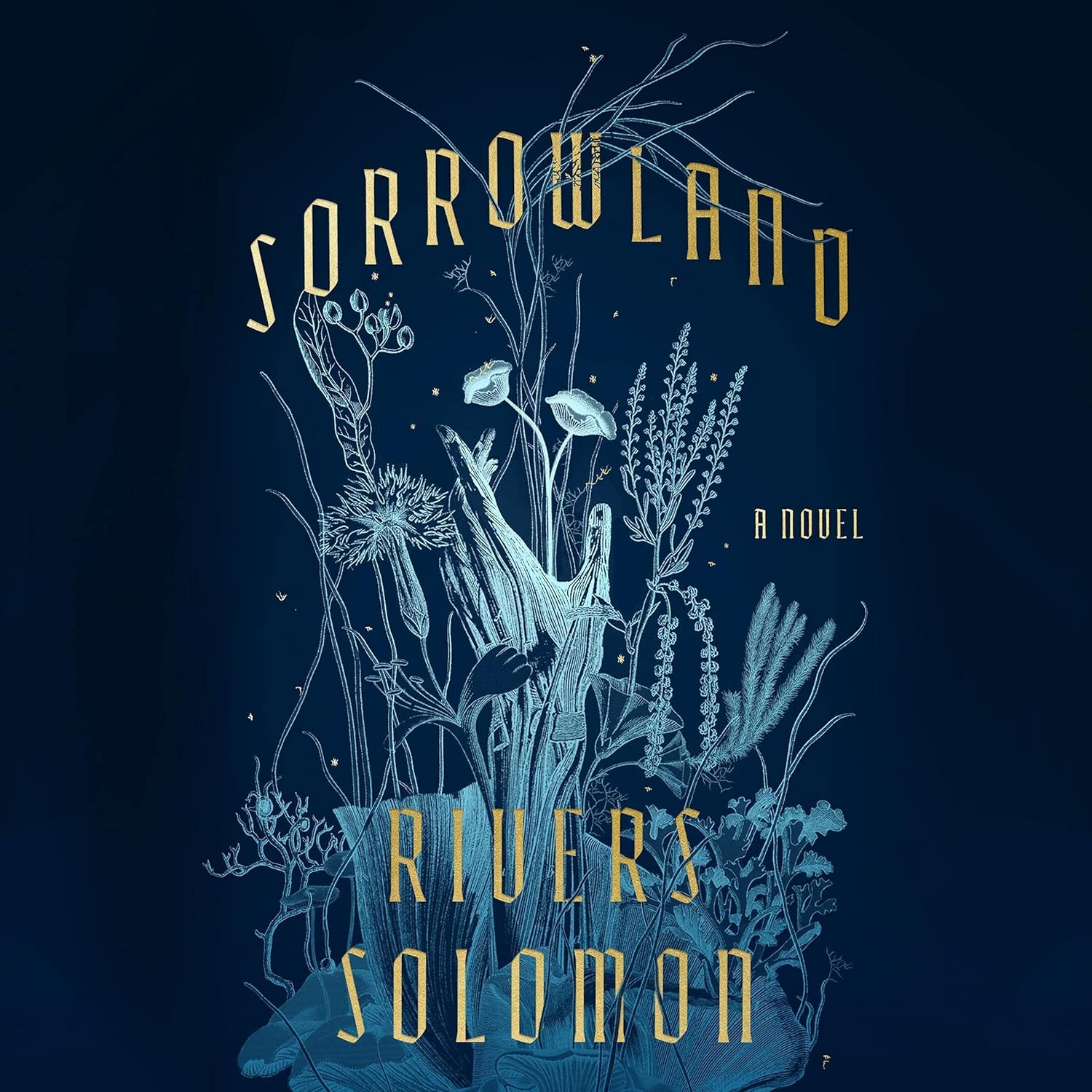
Sorrowland
Rivers Solomon

 Stonewall Book Award


 61 Min Reading Time
 Audio Version Available
About this book
A triumphant, genre-bending breakout novel from one of the boldest new voices in contemporary fiction. Vern, seven months pregnant and desperate to escape the strict religious compound where she was raised, flees for the shelter of the woods. There, she gives birth to twins, planning to raise them far from the influence of the outside world. But even in the forest, Vern is a hunted woman. Forced to fight back against the community that refuses to let her go, she unleashes incredible brutality, her body wracked by inexplicable and uncanny changes. To understand her metamorphosis and protect her small family, Vern must face the past—and the disturbing future that lies beyond the woods. Her quest for truth will uncover not only the secrets of the compound she fled but the violent history of America that produced it. Rivers Solomon's Sorrowland is a searing work of Gothic fiction where monsters are not just individuals, but entire nations, marking the arrival of a bold, unignorable voice in American literature.
Summary of Key Ideas
- •
The Monstrous as a Site of Resistance and Transformation
Vern's physical and psychological transformation into something 'monstrous' is not simply a horror element but a powerful metaphor for resisting the forces that seek to control and define her. As she changes, she gains strength and insight, reclaiming agency over her body and her life. This metamorphosis challenges conventional notions of beauty and normalcy, suggesting that true power lies in embracing the parts of ourselves that society deems unacceptable. Vern's journey highlights how marginalized individuals can find empowerment in their otherness, using it as a tool for survival and rebellion against oppressive systems. The monstrous becomes a symbol of liberation, representing the refusal to conform and the courage to forge one's own path.
- •
The Legacy of Systemic Oppression and Experimentation on Black Bodies
Sorrowland confronts the historical and ongoing exploitation of Black bodies through the fictionalized but all-too-real horrors inflicted upon Vern. The novel draws parallels to historical events like the Tuskegee Syphilis Study and the story of Henrietta Lacks, exposing the ways in which Black individuals have been subjected to medical experimentation and other forms of abuse. The Blessed Acres of Cain, the separatist community Vern flees, is revealed to be a site of insidious experimentation, highlighting the insidious nature of systemic racism and its enduring impact on Black lives. Solomon uses Vern's experiences to critique the medical establishment and broader societal structures that perpetuate these injustices, urging readers to confront the dark history of racial oppression in America.
- •
The Complexity of Motherhood and Generational Trauma
Vern's relationship with her twin children, Howl and Feral, is central to the novel's exploration of motherhood. She grapples with the challenges of protecting them from the dangers of the outside world while also confronting her own trauma and the inherited trauma passed down through generations. Vern is determined to break the cycle of abuse and create a better future for her children, even as she struggles with her own monstrous transformations and the secrets of her past. The novel portrays motherhood as a complex and often fraught experience, filled with both immense love and the heavy burden of responsibility. It highlights the ways in which trauma can shape parenting and the importance of healing in order to create a more nurturing environment for future generations.
- •
The Search for Identity and Self-Acceptance
Vern's journey is fundamentally a quest for self-discovery. As she uncovers the truth about her past and the experiments conducted on her at the Blessed Acres of Cain, she begins to understand her own identity and the forces that have shaped her. She confronts her trauma, embraces her monstrous transformations, and learns to accept herself for who she is, flaws and all. This process of self-acceptance is not easy, but it is essential for Vern's survival and her ability to create a meaningful life for herself and her children. The novel suggests that true freedom comes from within, from the courage to embrace one's authentic self, even in the face of societal pressures and expectations.
- •
The Dangers of Isolation and the Power of Found Family
Initially, Vern seeks isolation in the woods as a means of protecting herself and her children from the outside world. However, she gradually comes to realize that she cannot survive alone. She forms a found family with other marginalized individuals who offer her support, love, and a sense of belonging. These relationships are crucial to Vern's healing and her ability to confront the forces that seek to control her. The novel underscores the importance of community and connection, particularly for those who have been marginalized and ostracized by society. It suggests that true strength lies in solidarity and that found families can provide the love and support that traditional families often fail to offer.
- •
Challenging Narratives of Power and Control
Sorrowland critiques the abuse of power by institutions and individuals, particularly those who seek to control and exploit marginalized communities. The novel exposes the insidious ways in which power operates, from the medical establishment to religious institutions to the government. It challenges readers to question the narratives of those in power and to resist attempts to silence and control dissenting voices. Vern's journey is a testament to the power of individual resistance and the importance of fighting against injustice, even in the face of overwhelming odds. The novel encourages readers to be critical thinkers and to challenge the status quo in order to create a more just and equitable world.
Chapter Recap

About The Author
Rivers Solomon
Main Quotes
""To be alive meant to lust after connection, and better to have one with the enemy than with no one at all. A baby's fingers and mouth grasp on instinct.""
""There was more to life than Cainland, more to earth than its collected sorrows. There was wonder and awe and the allure of nothingness.""
""Going against tended to end more rightly, more justly, than going with. People were wrong.""
""These didn't have to be lies. They could be truths whispered into existence.""
""What is belonging?" we ask. She says, “Where loneliness ends.”"
""Vern wished to make every moment of her life a rebellion, not just against the Blessed Acres of Cain but the world in all its entirety.""
""The world is holy! The soul is holy! The skin is holy! The nose is holy! The tongue and cock and hand and asshole holy! Everything is holy! Everybody's holy!""
""The child gushed out from twixt Vern's legs ragged and smelling of salt. Slight, he was, and feeble as a promise.""
""Whatever magic tansy was made of Gemma wanted to drown in it, revelled in the honeyed heat burning her.""
""We must each be where we belong.""
Who Should Read This Book
Fans of gothic horror and speculative fiction
Readers interested in themes of racism, gender identity, religion, nationalism, and slavery
Individuals seeking novels that blend science fiction, fantasy, and contemporary fiction
Those who appreciate Afro-Gothic and Afrofuturist literature
Readers looking for stories that explore queer intimacy and identity
Audience interested in narratives that examine historical traumas inflicted on Black people, including medical experimentation and exploitation
Book Summaries Like
Sorrowland
FAQ

Free Access to LitNotes