




 DISCORD
Speak
Laurie Halse Anderson


 Barnes & Noble Bestsellers


 33 Min Reading Time
 Audio Version Available
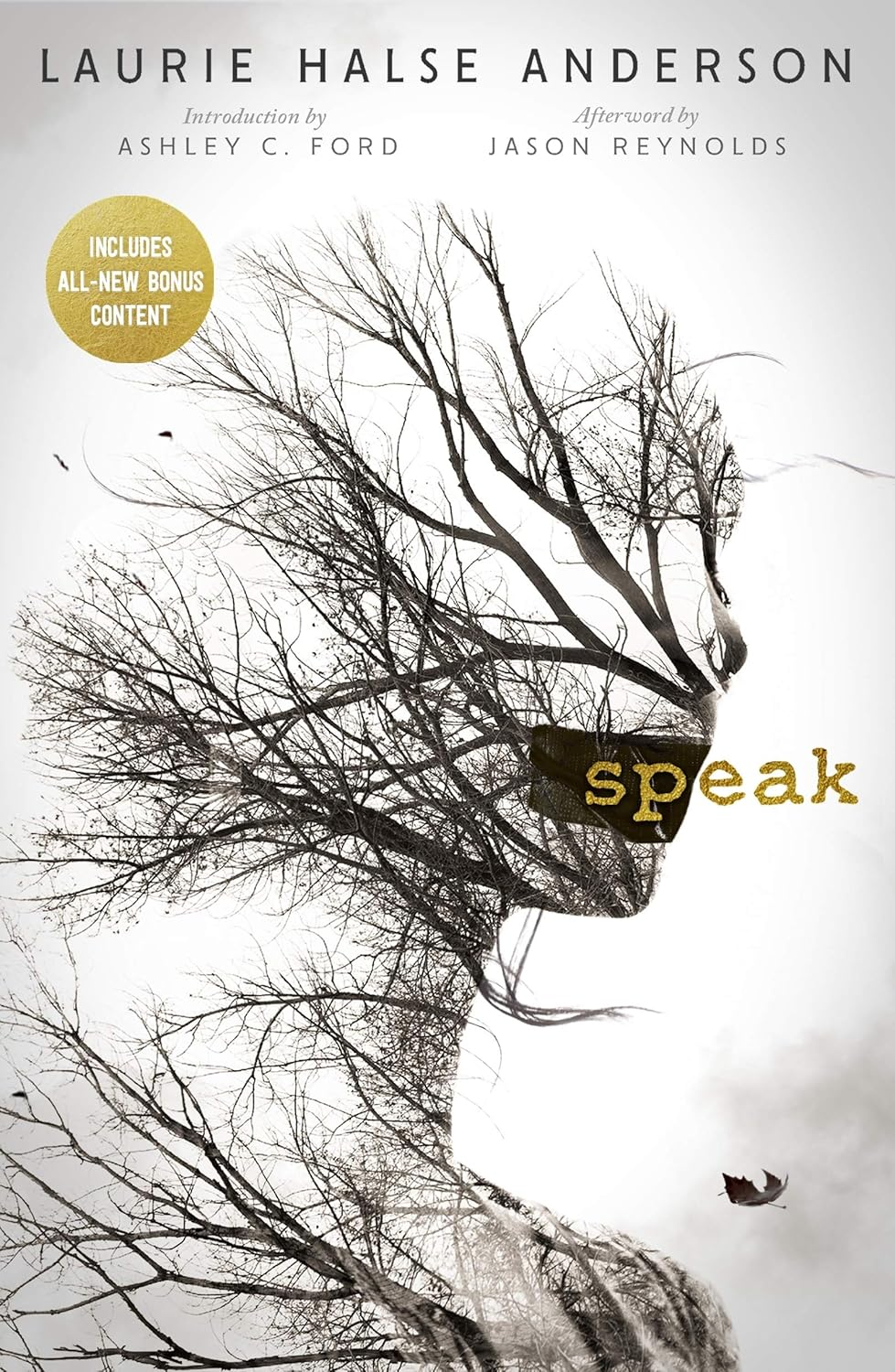
About this book
"Speak up for yourself—we want to know what you have to say."
For Melinda Sordino, this is the ultimate lie. Silenced by a traumatic event at a summer party, she enters Merryweather High as an outcast. Branded a snitch for calling the cops, Melinda finds herself friendless and alone, retreating into a world of isolation where speaking seems impossible.
As the school year unfolds, Melinda's silence grows, but within the sanctuary of her art class, she begins to confront the truth of what happened that night. Through her art, she slowly unearths the courage to face her demons and the harrowing reality of her assault. But her healing is threatened when her attacker continues to haunt her halls.
Now, Melinda must find her voice, fight back against the shadows of her past, and finally speak the truth she's been holding captive. "Speak" is a powerful and unforgettable journey of healing, resilience, and the importance of finding your voice in a world that often tries to silence it.
Summary of Key Ideas
- •
Finding Voice After Trauma
The core theme of Speak revolves around Melinda's journey to find her voice after a traumatic sexual assault. Initially, she is silenced by the trauma and the social repercussions of calling the police at a party. Her inability to speak stems from fear, shame, and the overwhelming nature of the event. As the novel progresses, Melinda begins to reclaim her voice through various means, including art, introspection, and eventually, direct confrontation. This journey highlights the importance of communication as a means of healing and self-empowerment, illustrating how speaking out can break the cycle of silence and pave the way for recovery.
- •
The Crushing Weight of Isolation
Melinda's experiences lead to profound feelings of isolation and alienation from her peers, family, and even herself. She struggles to connect with others and feels like an outsider in her own life. This isolation is a direct result of her trauma and the inability to communicate what happened to her. The novel explores how isolation can exacerbate trauma and hinder the healing process. Melinda's journey towards recovery involves breaking through this isolation by reaching out to others and finding support, ultimately emphasizing the importance of human connection in overcoming adversity.
- •
Art as a Means of Expression and Healing
Art serves as a vital outlet for Melinda to express her emotions and experiences when words fail her. Her art class becomes a safe space where she can explore her trauma and begin to heal. The recurring tree project symbolizes her growth and transformation throughout the novel. As Melinda confronts her past, her art becomes more expressive and powerful, reflecting her journey towards self-discovery and healing. This highlights the therapeutic potential of art as a means of communication, self-expression, and emotional processing, especially in the face of trauma.
- •
Navigating the Turmoil of Adolescence
Speak addresses the complexities and challenges of adolescence, including identity formation, social pressures, and the struggle to fit in. Melinda grapples with her changing body, her evolving relationships, and her place in the social hierarchy of high school. Her trauma further complicates these challenges, making it difficult for her to navigate the already turbulent waters of adolescence. The novel portrays the vulnerability and insecurity that many teenagers experience, while also highlighting the resilience and strength that can be found in the face of adversity. Melinda's journey is a testament to the challenges and triumphs of growing up.
- •
The Scars of Trauma: Mental and Emotional Toll
The novel explores the devastating effects of trauma on an individual's mental and emotional well-being. Melinda experiences symptoms of depression, anxiety, and post-traumatic stress disorder (PTSD) as a result of her sexual assault. These symptoms manifest in her withdrawal from social activities, her difficulty concentrating in school, and her overall sense of hopelessness. Speak offers a realistic and unflinching portrayal of the mental health challenges that can arise from trauma, emphasizing the importance of seeking help and support in order to heal and recover. It highlights the need for greater awareness and understanding of mental health issues.
- •
Confronting Sexual Assault and its Consequences
Speak confronts the issue of sexual assault and its far-reaching consequences. The novel challenges the culture of silence and victim-blaming that often surrounds sexual assault, encouraging readers to speak out against injustice and support survivors. It underscores the importance of consent, respect, and accountability. By sharing Melinda's story, Anderson sheds light on the prevalence of sexual violence and its impact on individuals and communities. The novel serves as a call to action, urging readers to create a safer and more equitable world for all.
- •
Transformation and the Power of Resilience
Throughout the novel, Melinda undergoes a significant transformation as she confronts her trauma and begins to heal. She learns to assert herself, to stand up for what she believes in, and to reclaim her power. This transformation is symbolized by her changing relationship with the tree project in art class, which evolves from a lifeless sketch to a vibrant and expressive piece of art. Melinda's journey demonstrates the possibility of growth and resilience even in the face of unimaginable adversity. It highlights the importance of self-discovery, self-acceptance, and the courage to speak one's truth.
Chapter Recap

About The Author
Laurie Halse Anderson
American writer, known for children's and young adult novels.
Main Quotes
"It is easier not to speak."
"All that crap you hear on TV about communication and expressing feelings is a lie."
"If you don't stand up for yourself, how can you stand up for anybody else?"
"From the ashes, a new world shall be born."
"There is no magic cure, no making it all go away forever. There are only small steps upward; an easier day, an unexpected laugh, a mirror that doesn't matter anymore."
"I have survived. I am here, standing. Maybe not whole, but here."
"I try to paint them so they are almost dead, but not totally. Because it is not fun to kill what is already dead."
"I can't decide if I'm pissed off or turned on."
"This is where you can find your soul, if you dare. Where you can touch that part of you that you've never dared look at before."
"My head is full of facts that I can't use."
Who Should Read This Book
Young adults (ages 13-19)
Readers interested in realistic fiction
Individuals who enjoy books addressing social issues, particularly sexual assault and its aftermath
Those who appreciate stories about trauma, healing, and finding one's voice
Readers of young adult literature that deals with difficult topics in a relatable way
Educators and parents looking for books to spark discussions about consent, communication, and mental health
Individuals who have experienced similar traumas and are seeking validation or understanding
Readers interested in character-driven narratives and internal struggles
Book Summaries Like
Speak




FAQ

Free Access to LitNotes