




 DISCORD
Tao of Jeet Kune Do
Bruce Lee


 Apple Books


 56 Min Reading Time
 Audio Version Available
About this book
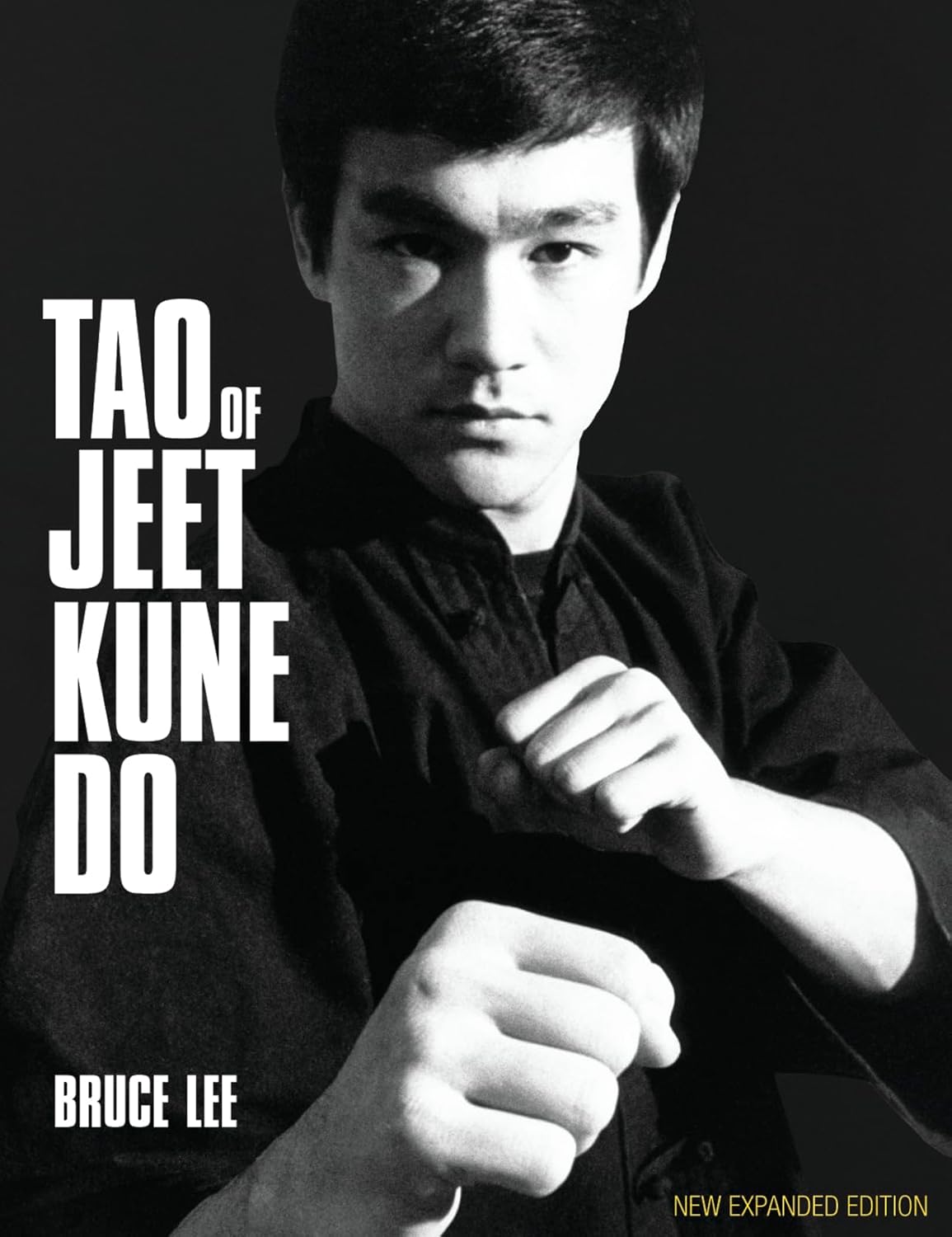
Delve into the mind of Bruce Lee and unlock the secrets of Jeet Kune Do, the revolutionary martial art he conceived. Tao of Jeet Kune Do isn't just a fighting manual; it's a philosophical journey into self-discovery and personal liberation. Drawn from Lee's own notes and meticulously compiled, this seminal work reveals the underlying principles, techniques, and mental disciplines that define Jeet Kune Do's unique approach to combat and life.
Explore everything from stance and footwork to striking, grappling, and vital point attacks, illustrated with Lee's own drawings. Beyond technique, discover the core philosophies of fluidity, adaptability, and economy of motion, emphasizing the importance of constant self-improvement and breaking free from restrictive forms. Embrace the Tao and learn to cultivate a fighting style as individual and dynamic as you are. Tao of Jeet Kune Do is more than a martial arts guide; it's a testament to Bruce Lee's vision of self-expression, a must-read for anyone seeking mastery in martial arts and a deeper understanding of themselves.
Summary of Key Ideas
- •
The Art of Adaptation and Self-Expression
Jeet Kune Do (JKD) is more than just a martial art; it's a philosophy of self-expression and constant evolution. Lee emphasizes that JKD is not a rigid style but a flexible approach tailored to the individual. The core idea revolves around adapting to any situation, like water taking the shape of its container. Practitioners are encouraged to absorb what is useful, reject what is useless, and add what is specifically their own. This adaptability ensures that JKD remains a dynamic and personal art, free from the constraints of traditional forms. It is not about collecting more techniques, but about discovering and refining one's own natural abilities and expressions in combat and in life.
- •
Embracing Simplicity and Directness
Central to JKD is the concept of simplicity. Lee advocates for direct and efficient movements, eliminating unnecessary flourishes or complex techniques. The most direct route to the target is the most effective. This principle extends beyond physical techniques into the mental approach, encouraging clarity and focus. By stripping away the superfluous, practitioners can react more quickly and decisively. Simplicity also promotes energy conservation, allowing for sustained performance in prolonged engagements. This efficiency is not about laziness; it is about maximizing impact with minimal effort, reflecting a deep understanding of biomechanics and combat dynamics.
- •
The Fluidity of Water: Adaptability
JKD emphasizes the importance of being like water – fluid, adaptable, and able to penetrate any obstacle. This concept, drawn from Taoist philosophy, highlights the need to be formless and yielding, adjusting to the opponent's movements and intentions. Rigidity leads to breakage, while flexibility allows one to overcome resistance. This adaptability extends beyond physical combat to encompass mental and emotional resilience. By remaining fluid and responsive, practitioners can maintain balance and control, even in the face of adversity. This fluidity enables one to exploit weaknesses and capitalize on opportunities, making it a cornerstone of the JKD approach.
- •
Continuous Learning and Self-Discovery
Lee stresses the importance of constant learning and self-discovery. JKD is not a destination but a journey of continuous improvement. Practitioners are urged to question assumptions, challenge conventional wisdom, and explore new ideas. This involves not only mastering techniques but also understanding the underlying principles and philosophies. Self-discovery involves introspection, understanding one's strengths and weaknesses, and tailoring training to individual needs. This ongoing process of learning and refinement ensures that JKD remains relevant and effective, evolving with the practitioner's growth and experience, promoting an open mind and a thirst for knowledge.
- •
The Freedom to Be: Breaking Boundaries
Freedom is a core tenet of JKD, encouraging practitioners to break free from the constraints of traditional martial arts styles. Lee believed that adherence to fixed forms and techniques limits one's ability to adapt and react effectively. JKD promotes individual expression and creativity, allowing practitioners to develop their own unique style based on their personal attributes and experiences. This freedom extends to all aspects of training, from technique selection to strategic approaches. By embracing freedom, practitioners can unlock their full potential and develop a fighting style that is both effective and authentic, discarding what doesn't work for them.
- •
The Power of Mindfulness and Mental Clarity
JKD integrates Eastern philosophy, particularly Taoism and Zen, emphasizing the importance of mental clarity and mindfulness. A calm and focused mind is essential for effective combat, allowing practitioners to react quickly and decisively without hesitation or doubt. Mindfulness involves being fully present in the moment, aware of one's surroundings and the opponent's movements. This mental discipline extends beyond the training environment, cultivating a sense of inner peace and balance that permeates all aspects of life. By integrating Eastern philosophy, JKD becomes more than just a fighting system; it becomes a path to self-awareness and personal growth. Bruce Lee emphasizes emptying the mind to achieve enlightenment in martial arts.
Chapter Recap

About The Author
Bruce Lee
Lee Jun-fan (November 27, 1940 – July 20, 1973), commonly known as Bruce Lee, was a Chinese, Hong Kong American actor, director, martial artist, martial arts instructor and philosopher. He was the founder of Jeet Kune Do, a hybrid martial arts philosophy drawing from different combat disciplines that is often credited with paving the way for modern mixed martial arts (MMA). Lee is considered by commentators, critics, media, and other martial artists to be the most influential martial artist of all time and a pop culture icon of the 20th century, who bridged the gap between East and West. He is credited with helping to change the way Asians were presented in American films. **Source**: [Bruce Lee](https://en.wikipedia.org/wiki/Bruce_Lee) on Wikipedia.
Main Quotes
"To have no method as method."
"Using no way as way."
"The consciousness of self is the greatest hindrance to the proper execution of all physical action."
"The possession of anything begins at the moment you understand you possess nothing."
"Adapt what is useful, reject what is useless, and add what is specifically your own."
"A fight is not won by one punch or one kick. Either learn to endure or hire a bodyguard."
"Always be yourself, express yourself, have faith in yourself, do not go out and look for a successful personality and duplicate it."
"Empty your mind, be formless, shapeless, like water."
"Art reaches its greatest peak when devoid of self-consciousness. Freedom discovers man the moment he loses concern over what impression he is making or about to make."
"The stillness in stillness is not the real stillness; only when there is stillness in movement does the universal rhythm manifest."
"Liberation from the uneasy sense of confinement. Not being tense but ready. Not thinking but not dreaming. Not being set but flexible."
Who Should Read This Book
Martial arts practitioners of all styles and levels
Students of Bruce Lee and Jeet Kune Do
Individuals interested in martial arts philosophy
Readers interested in Eastern philosophy and Taoism
Those seeking self-improvement through martial arts
Individuals interested in self-defense
Fans of Bruce Lee's films and legacy
Readers interested in Zen and enlightenment
Anyone looking for inspiration and motivation in life
Individuals interested in the history of martial arts
Book Summaries Like
Tao of Jeet Kune Do
FAQ

Free Access to LitNotes