




 DISCORD
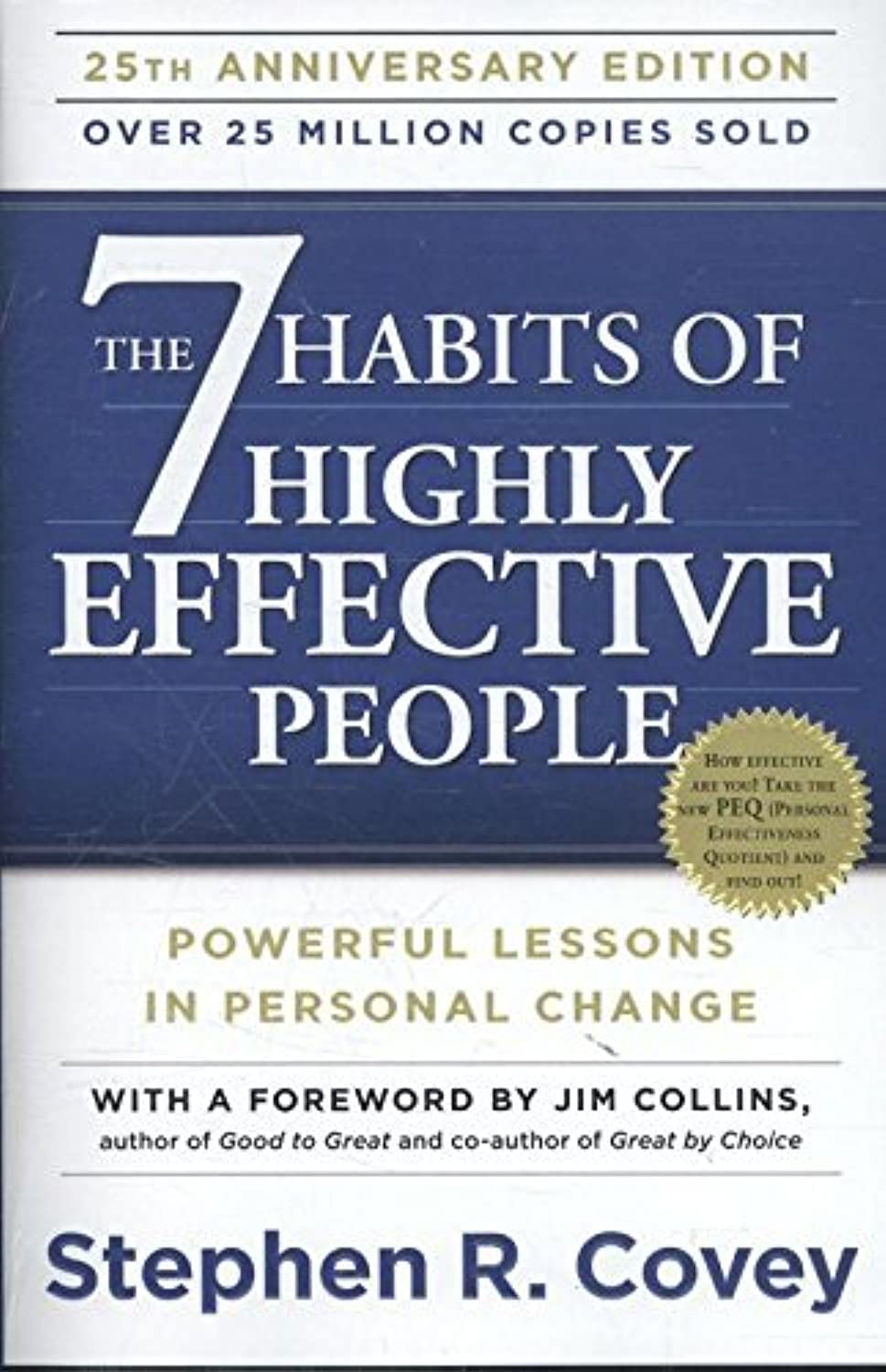
The 7 Habits of Highly Effective People
Stephen R. Covey


 Amazon Best Sellers
 Barnes & Noble Bestsellers


 63 Min Reading Time
 Audio Version Available
About this book
For over three decades, Stephen R. Covey's The 7 Habits of Highly Effective People has been a guiding light for millions, from presidents and CEOs to educators and individuals seeking a more fulfilling life. A New York Times bestseller and hailed as the #1 Most Influential Business Book of the Twentieth Century, this timeless classic offers a principle-centered approach to solving personal and professional challenges.
Covey's holistic and integrated framework provides a step-by-step pathway to living with fairness, integrity, and human dignity. Discover the seven transformative habits that will empower you to adapt to change, seize opportunities, and cultivate both personal and professional effectiveness. With insightful anecdotes and profound wisdom, The 7 Habits of Highly Effective People equips you with the tools to unlock your potential and create a life of purpose and impact.
Summary of Key Ideas
- •
Be Proactive: Take Responsibility
Proactivity is the foundation of personal effectiveness. It emphasizes taking responsibility for your life and choices, rather than reacting to external circumstances. Proactive individuals focus on their circle of influence, working on what they can control and not wasting energy on things they cannot. This habit encourages a shift from being reactive, where you blame external factors, to being responsive, where you consciously choose your reaction. By being proactive, you empower yourself to create opportunities and shape your own destiny, setting the stage for the subsequent habits.
- •
Begin with the End in Mind: Define Your Goals
Beginning with the End in Mind involves defining your personal, moral, and ethical guidelines, essentially outlining what you want to achieve in the long run. It emphasizes the importance of having a clear vision of your desired future. Covey encourages readers to write a personal mission statement that articulates their values and goals, serving as a guiding principle for decision-making. By envisioning the end result, individuals can align their actions with their values, ensuring that they are moving towards a meaningful and fulfilling life. This habit provides direction and purpose, preventing you from getting caught up in activities that don't contribute to your overall vision.
- •
Put First Things First: Prioritize Effectively
Putting First Things First is about prioritizing tasks based on importance rather than urgency. It involves effective time management, focusing on activities that align with your goals and values. Covey introduces the Time Management Matrix, which categorizes tasks into four quadrants: Urgent and Important, Not Urgent and Important, Urgent and Not Important, and Not Urgent and Not Important. Highly effective people spend most of their time in Quadrant II (Not Urgent and Important), focusing on proactive and preventative activities. This habit helps individuals avoid the trap of constantly reacting to urgent matters, enabling them to focus on activities that lead to long-term success and fulfillment.
- •
Think Win-Win: Seek Mutual Benefit
Thinking Win-Win is a mindset of mutual benefit in all interactions. It encourages seeking solutions that are advantageous to all parties involved, rather than focusing on winning at the expense of others. Covey emphasizes that win-win is not just a technique but a character-based principle. It requires empathy, courage, and consideration. By seeking win-win solutions, individuals can build strong relationships, foster trust, and create collaborative environments. This habit promotes cooperation and synergy, leading to better outcomes for everyone involved. It shifts the focus from competition to collaboration, creating a positive and productive atmosphere.
- •
Seek First to Understand: Practice Empathy
Seeking First to Understand, Then to Be Understood emphasizes the importance of empathetic listening. It involves genuinely trying to understand another person's perspective before expressing your own. Covey argues that most people listen with the intent to reply, rather than to understand. Empathetic listening requires putting aside your own biases and assumptions to truly grasp what the other person is saying, both verbally and nonverbally. By understanding others, you can build trust, communicate more effectively, and find mutually beneficial solutions. This habit promotes effective communication and strengthens relationships by creating a foundation of understanding and respect.
- •
Synergize: Achieve Creative Cooperation
Synergizing involves combining the strengths of different people to achieve greater results than individuals could achieve alone. It’s the habit of creative cooperation, valuing differences and working together to create new possibilities. Synergy is not simply compromise; it's about finding innovative solutions that leverage the unique perspectives and talents of each team member. Covey emphasizes that synergy requires openness, trust, and a willingness to embrace new ideas. By synergizing, teams can overcome limitations, solve complex problems, and achieve extraordinary outcomes. This habit fosters creativity, innovation, and a sense of shared purpose.
- •
Sharpen the Saw: Renew Yourself Continuously
Sharpening the Saw is about continuous self-renewal in four dimensions: physical, social/emotional, mental, and spiritual. It involves taking care of your body through exercise, nutrition, and rest; nurturing your relationships and emotional well-being; expanding your mind through learning and reading; and connecting with your values through meditation or service. Covey emphasizes that neglecting any of these dimensions can lead to burnout and decreased effectiveness. By regularly renewing yourself in these four areas, you can maintain a balanced and sustainable lifestyle, ensuring long-term productivity and fulfillment. This habit is about preserving and enhancing your greatest asset: yourself.
Chapter Recap

About The Author
Stephen R. Covey
Main Quotes
"Begin with the End in Mind."
"Seek first to understand, then to be understood."
"The key is not to prioritize what's on your schedule, but to schedule your priorities."
"Sow a thought, reap an action; sow an action, reap a habit; sow a habit, reap a character; sow a character, reap a destiny."
"Habit 1: Be Proactive"
"Habit 2: Begin with the End in Mind"
"Habit 3: Put First Things First"
"Habit 4: Think Win-Win"
"Habit 5: Seek First to Understand, Then to Be Understood"
"Habit 6: Synergize"
Who Should Read This Book
Individuals seeking self-improvement
Business professionals and leaders
Managers and supervisors
College students and young adults entering the workforce
People interested in personal development and productivity
Individuals looking to improve their relationships
Anyone seeking a more balanced and effective life
Educators
Parents
People in positions of responsibility
Individuals interested in leadership principles
Those looking for a framework for ethical and effective living
Organizations seeking to improve employee effectiveness and teamwork
Individuals wanting to increase their overall effectiveness in any area of life
Book Summaries Like
The 7 Habits of Highly Effective People



FAQ

Free Access to LitNotes