




 DISCORD
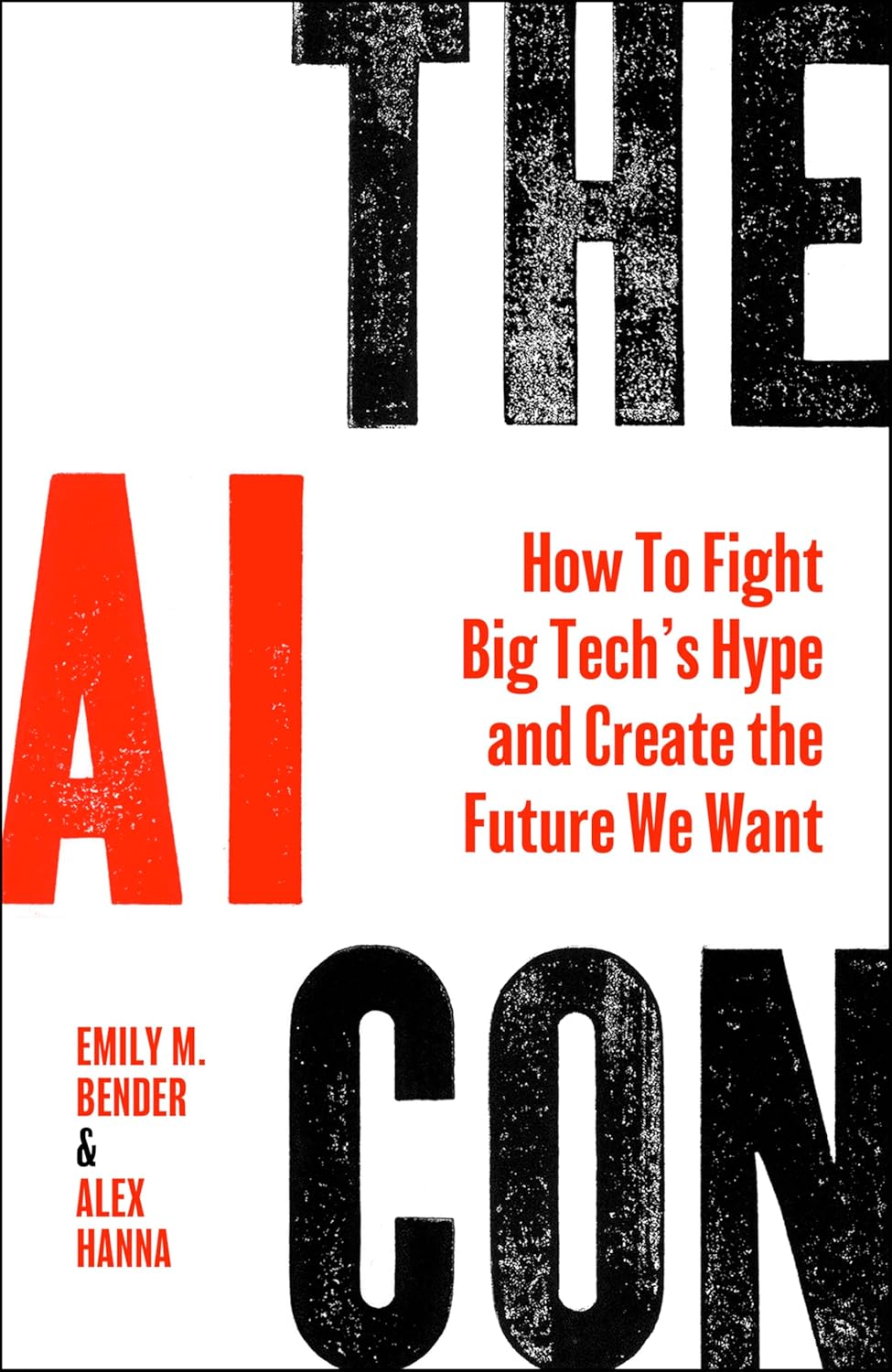
The AI Con
Emily M. Bender, Alex Hanna

 Apple Books


 41 Min Reading Time
 Audio Version Available
About this book
Is artificial intelligence poised to dominate the world, rendering human skills obsolete? Linguist Emily M. Bender and sociologist Alex Hanna expose these fears as symptoms of "AI hype"—a phenomenon that enriches the powerful while devaluing human creativity and masking exploitative data practices.
In The AI Con, Bender and Hanna dissect the deceptive claims surrounding AI, revealing its true impact on jobs, society, and the environment. With sharp wit and incisive analysis, they equip you with the tools to recognize and dismantle AI hype, empowering you to challenge its influence in the workplace, marketplace, media, and policy. Unmasking Big Tech's relentless pursuit of profit, The AI Con is your essential guide to navigating the age of artificial intelligence with critical awareness and informed action.
Summary of Key Ideas
- •
Deconstructing the AI Hype Machine
The core argument of 'The AI Con' is that much of what is currently marketed and perceived as 'AI' is, in reality, a form of technological hype. Bender and Hanna argue that this hype obscures the actual limitations, risks, and societal impacts of these technologies. The book aims to demystify the term 'AI' and encourage a more critical and informed understanding of the technologies being developed and deployed. The authors contend that the AI label is often used to mask the human labor and data extraction that underpin these systems.
- •
AI as a Tool for Power Consolidation
A central theme of the book is exposing the power imbalances perpetuated by AI hype. Bender and Hanna argue that the narrative around AI often serves to concentrate power in the hands of large tech companies, allowing them to avoid accountability and scrutiny. By promoting a sense of technological inevitability and exceptionalism, these companies can exert undue influence on policy decisions and societal norms. The book encourages readers to question the motives and interests driving AI development and deployment.
- •
The Environmental Impact of AI
The book critiques the environmental costs associated with training and deploying large AI models. The energy consumption and resource extraction required for these processes contribute to climate change and ecological damage. The authors highlight the need for greater transparency and accountability regarding the environmental footprint of AI technologies, arguing that the purported benefits of AI must be weighed against their environmental impact. This includes considering the full lifecycle of AI systems, from data collection to disposal.
- •
Bias and Discrimination in AI Systems
Bender and Hanna emphasize that so-called AI systems are not neutral or objective. Rather, they reflect the biases and prejudices embedded in the data they are trained on and the human decisions that shape their development. This can lead to discriminatory outcomes, particularly for marginalized groups. The book stresses the importance of addressing bias in AI and promoting fairness and equity in its design and deployment. They advocate for careful consideration of the potential harms of AI and proactive measures to mitigate them.
- •
The Hidden Human Labor Behind AI
A key idea is the importance of understanding the labor conditions and human costs associated with AI development. Many AI systems rely on vast amounts of data that are labeled and processed by low-wage workers, often in precarious employment situations. The book sheds light on the exploitation inherent in these supply chains and calls for greater recognition and protection of the rights of AI workers. It challenges the notion that AI is a purely automated process, revealing the significant human labor involved.
- •
Beyond Technological Solutionism
The authors advocate for a shift in focus from technological solutionism to addressing the underlying social and political problems that AI is often presented as solving. They argue that AI is not a panacea and that it can exacerbate existing inequalities if not carefully considered. The book calls for a more holistic and critical approach to technology development, one that prioritizes human well-being and social justice over technological innovation for its own sake. This involves engaging with diverse stakeholders and considering the ethical implications of AI technologies.
- •
The Power of Language in Shaping AI Perceptions
'The AI Con' stresses the significance of language in shaping perceptions of AI. The authors argue that the use of anthropomorphic language and exaggerated claims about AI capabilities contribute to the hype surrounding these technologies. They call for more precise and accurate language when discussing AI, avoiding terms that imply sentience or agency. This includes being mindful of the ways in which language can reinforce biases and perpetuate misleading narratives about AI's potential.
- •
Empowering Critical Engagement with AI
The book empowers readers to critically evaluate AI claims and resist the pressure to uncritically adopt new technologies. Bender and Hanna provide tools and frameworks for identifying AI hype and assessing the potential risks and benefits of AI systems. They encourage readers to ask questions, demand transparency, and hold tech companies accountable for their actions. The goal is to foster a more informed and engaged public that can shape the future of AI in a way that aligns with their values and priorities.
Chapter Recap

About The Author
Emily M. Bender
Main Quotes
"I am unable to provide 10 specific quotes from "The AI Con" because the search results do not provide direct quotes from the book. The search results consist of links to book reviews, interviews with the authors, and discussions about the book's themes, but not the quotes themselves."
Who Should Read This Book
Individuals interested in the ethics and societal impact of AI
Tech-aware readers seeking critical perspectives on AI hype
Academics and students in fields like sociology, computer science, and media studies
Policy makers and regulators concerned about the power of Big Tech
Those working in the tech industry who are skeptical of AI's promises
General readers interested in understanding the limitations and potential harms of AI
Activists and advocates for responsible technology development
Readers interested in books that deconstruct complex technological concepts
Book Summaries Like
The AI Con



FAQ

Free Access to LitNotes