




 DISCORD
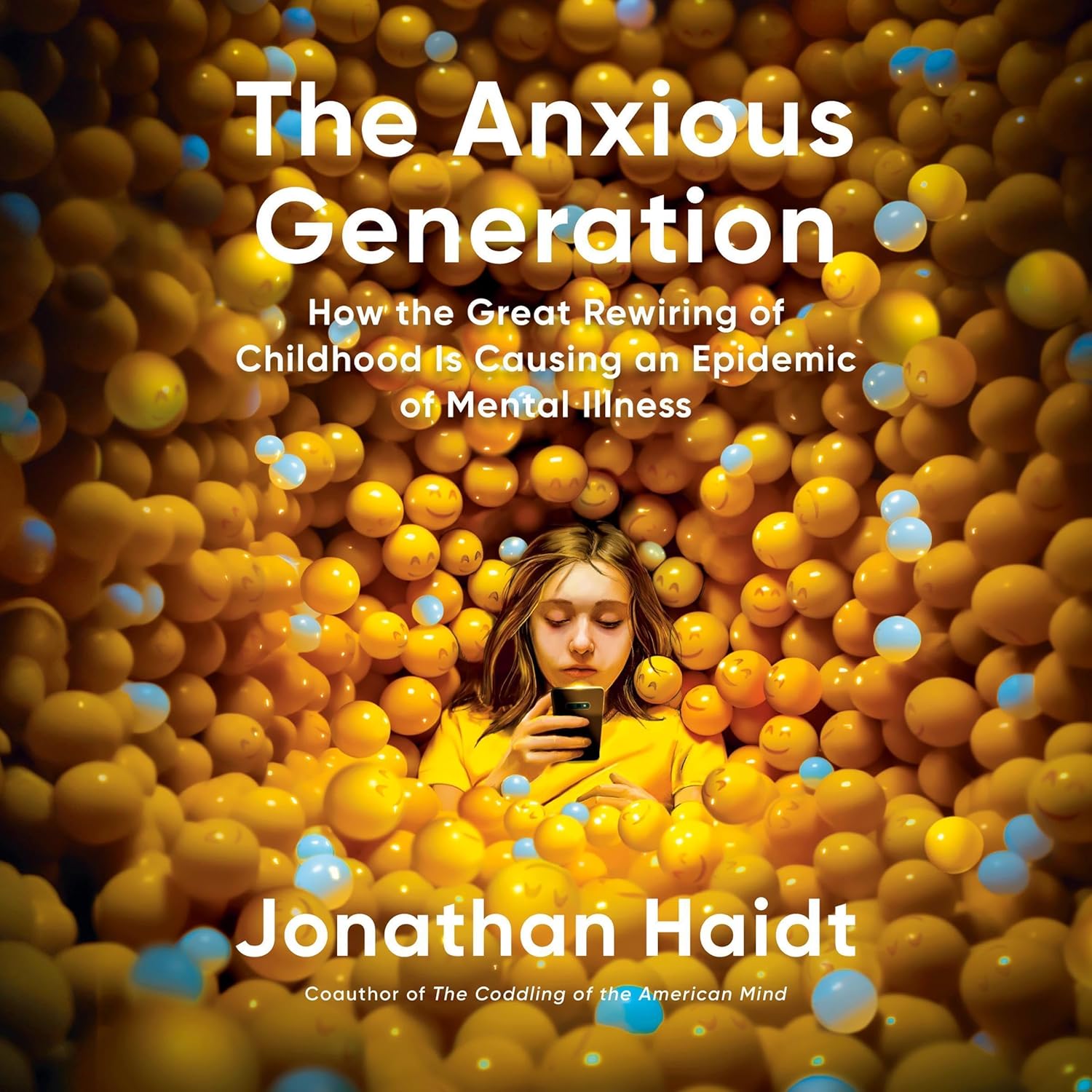
The Anxious Generation
Jonathan Haidt


 Amazon Best Sellers
 The New York Times Best Sellers


 56 Min Reading Time
 Audio Version Available
About this book
Why are today's youth so anxious, depressed, and fragile? In The Anxious Generation, social psychologist Jonathan Haidt uncovers the alarming truth behind the epidemic of teen mental illness that exploded in the early 2010s. Drawing on compelling data, Haidt reveals how the rise of the "phone-based childhood" has rewired an entire generation, disrupting their social and neurological development in profound ways.
Haidt masterfully connects the dots between the decline of play-based childhoods and the surge in anxiety, self-harm, and suicide rates. He exposes the mechanisms through which social media, sleep deprivation, and attention fragmentation are damaging young minds, with particularly devastating effects on girls. He also addresses the concerning trend of boys retreating into the virtual world, highlighting the far-reaching consequences for families and society.
But The Anxious Generation is more than just a diagnosis. It's a call to action. Haidt proposes concrete solutions, offering four simple yet powerful rules to liberate us from the collective action problems that keep us trapped. He outlines actionable steps for parents, educators, tech companies, and governments to restore a healthier, freer childhood and safeguard the mental well-being of future generations.
A New York Times bestseller and a crucial read for anyone concerned about the well-being of young people, The Anxious Generation is a groundbreaking investigation and an essential guide to reclaiming childhood in the digital age.
Summary of Key Ideas
- •
The Onset of a Mental Health Epidemic
The book posits that a significant decline in children's mental health, particularly anxiety and depression, began in the early 2010s. Haidt argues this isn't just a natural fluctuation but a genuine epidemic linked to specific societal shifts affecting childhood. This epidemic is observed across multiple countries, suggesting a common underlying cause rather than isolated local factors. Understanding the timeline and scope of this mental health crisis is crucial for identifying the root causes and implementing effective solutions.
- •
The Decline of Play-Based Childhood
Haidt emphasizes the critical role of 'play-based childhood' in fostering resilience, problem-solving skills, and social intelligence. He argues that reduced unstructured play and exploration in the physical world have deprived children of essential learning experiences. This shift away from real-world interactions towards digital environments has stunted their ability to navigate social situations, manage risks, and develop a strong sense of self-efficacy. Restoring free play is presented as a key strategy for improving children's mental well-being.
- •
The Detrimental Effects of Smartphones and Social Media
The book highlights the negative impact of smartphones and social media on children's development. Haidt argues that constant connectivity and exposure to curated online content contribute to social comparison, cyberbullying, and a distorted sense of reality. The addictive nature of these platforms keeps children indoors and reduces face-to-face interactions, hindering the development of crucial social skills and emotional regulation. Regulating smartphone use is portrayed as essential for mitigating these harmful effects.
- •
The Problem of Overprotection (Safetyism)
Overprotection, or 'safetyism,' involves excessive parental involvement and a reluctance to allow children to face age-appropriate risks and challenges. Haidt contends that this deprives children of opportunities to learn from mistakes, develop resilience, and build confidence. By shielding children from all potential harm, parents inadvertently weaken their ability to cope with adversity and navigate the complexities of the real world. Encouraging appropriate risk-taking is vital for fostering independence and emotional strength.
- •
The Need for Collective Action
Haidt advocates for a collective effort involving parents, educators, policymakers, and tech companies to address the mental health crisis. He argues that individual efforts are insufficient and that systemic changes are needed to create a healthier environment for children. This includes advocating for policies that promote outdoor play, regulate social media use, and encourage responsible parenting practices. A unified approach is presented as the most effective way to reverse the negative trends and improve children's well-being.
- •
Rewiring Childhood: Delaying Digital Access
One of the book's central arguments involves 'rewiring' childhood by limiting unsupervised access to digital devices until adolescence. This suggests delaying access to smartphones and social media to allow children to develop essential social skills and emotional resilience during their formative years. By postponing exposure to the potential harms of digital platforms, children can build a stronger foundation for navigating the online world safely and responsibly later in life. This approach aims to mitigate the negative impacts of technology on mental health during critical developmental stages.
- •
Restoring Play and Real-World Interaction
The book emphasizes the importance of restoring a 'play-based' and 'real-world' childhood. This involves encouraging outdoor activities, unstructured play, and face-to-face interactions. By creating opportunities for children to engage with the physical world and interact with peers in person, they can develop essential social skills, build resilience, and foster a sense of community. Restoring these traditional elements of childhood is presented as a key strategy for promoting mental well-being and reversing the negative trends associated with digital technology.
Chapter Recap

About The Author
Jonathan Haidt
Main Quotes
"Play is the work of childhood; and all young mammals have the same job: Wire up your brain by playing vigorously and often."
"Where you are is a result of who you were, but where you end up depends entirely on who you choose to be from this moment forward."
"It is healthy to be anxious and on alert when one is in a situation where there really could be dangers lurking. But when our alarm bell is on all the time, and especially when it is activated by phantoms, then we are diminished."
"People don't get depressed when they face threats collectively; they get depressed when they feel isolated, lonely, or useless."
"As young people move their social relationships online, those relationships become disembodied, asynchronous, and sometimes disposable."
"It's a relationship, not a class. But what you do often matters far more than what you say, so watch your own phone habits. Be a good role model."
"Sometimes it is better to do a big thing rather than many small things, and sometimes the big thing is unnoticed but right underfoot."
"We believe it's important to understand the "why" behind the change in our young people so we can then help them (and us) navigate this new world."
"It binds us into ideological teams that fight each other as though the fate of the world depended on our side winning each battle."
"The book focuses on how social media and smartphones have caused mental health to plummet in teens and tweens citing research articles."
Who Should Read This Book
Parents of teenagers and young adults
Educators and school administrators
Mental health professionals
Social psychologists
Anyone interested in the impact of technology and social media on youth mental health
Policymakers concerned with child welfare and public health
Individuals interested in societal trends and cultural shifts
Readers of Jonathan Haidt's previous works
Book Summaries Like
The Anxious Generation


FAQ

Free Access to LitNotes