




 DISCORD
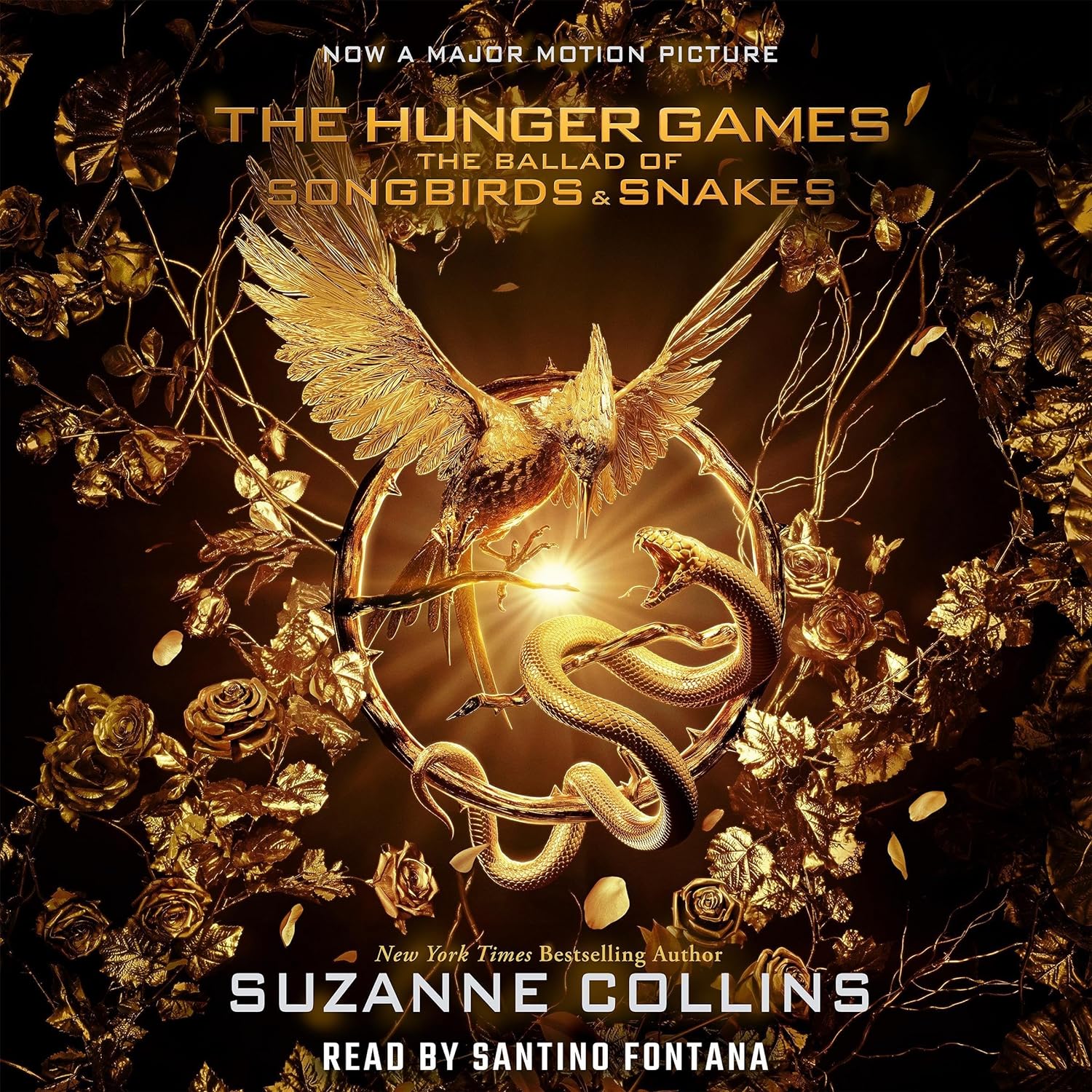
The Ballad of Songbirds and Snakes (A Hunger Games Novel)
Suzanne Collins


 Goodreads Choice Awards
 Barnes & Noble Bestsellers


 98 Min Reading Time
 Audio Version Available
About this book
It is the Tenth Hunger Games, and eighteen-year-old Coriolanus Snow is Panem's last hope. The once-mighty Snow family has fallen on hard times, and his only chance to restore their name is to mentor the winning tribute. But the odds are against him. He’s been given the humiliating assignment of mentoring the female tribute from District 12, the lowest of the low.
Inside the arena, it will be a fight to the death. Outside the arena, Coriolanus starts to feel for his doomed tribute… and must choose between following the rules and following his heart.
With everything he loves hanging in the balance, how far will Coriolanus go? And how much of himself will he sacrifice to become the songbird he needs to be—or the snake he is destined to become?
Summary of Key Ideas
- •
The Corrosive Nature of Ambition
Ambition as a Corrupting Force: The novel explores how ambition, particularly Coriolanus Snow's, can lead to moral compromise and ultimately, tyranny. Snow's relentless pursuit of power and status drives him to make increasingly ruthless decisions, showcasing how unchecked ambition can corrupt even those with initial good intentions. The story serves as a cautionary tale about the dangers of prioritizing personal gain over ethical considerations, highlighting the slippery slope from aspiration to oppression. We see this through his interactions with Lucy Gray Baird and his willingness to betray her for his own advancement.
- •
Perpetuation of Violence
The Cycle of Violence: A central theme is the perpetuation of violence. The Hunger Games themselves are a symbol of this cycle, born from rebellion and used as a tool of control. The novel delves into how violence begets violence, shaping the characters' actions and the dystopian society they inhabit. Snow's experiences and choices contribute to the entrenchment of this cycle, demonstrating how trauma and the desire for retribution can lead to continued suffering and oppression. The story questions whether such cycles can ever truly be broken, or if they are inherent to human nature.
- •
Inherent Goodness vs. Societal Influence
The Nature vs. Nurture Debate: The book examines the question of whether people are inherently good or evil, or if their environment shapes them. Coriolanus Snow's transformation is central to this theme. Is he a product of his circumstances, or was he always destined to become a tyrant? The novel suggests that both nature and nurture play a role, with Snow's inherent ambition and the harsh environment of Panem contributing to his descent. Lucy Gray Baird's contrasting morality further emphasizes this debate, presenting an alternative path that Snow ultimately rejects.
- •
Manipulation Through Propaganda
The Power of Propaganda and Control: The novel emphasizes the importance of propaganda and control in maintaining power. The Capitol uses the Hunger Games and carefully crafted narratives to manipulate the districts and maintain its dominance. Snow's involvement in shaping the Games and his understanding of propaganda highlight how these tools can be used to suppress dissent and maintain a totalitarian regime. The story serves as a warning about the dangers of unchecked authority and the importance of critical thinking in resisting manipulation.
- •
Erosion of Trust
The Fragility of Trust and Loyalty: Trust and loyalty are tested throughout the story. Alliances are formed and broken, and characters grapple with the decision of whom to trust. Snow's relationships, particularly with Lucy Gray, are marked by suspicion and betrayal, highlighting the difficulty of maintaining genuine connections in a world of constant danger and political maneuvering. The novel suggests that in a society built on oppression, trust becomes a rare and precious commodity, easily exploited for personal gain.
- •
The Spectacle of Violence
The Spectacle of Violence and Entertainment: The Ballad of Songbirds and Snakes critiques the desensitization to violence that occurs when it is turned into entertainment. The Hunger Games are presented as a spectacle for the Capitol's amusement, blurring the line between sport and brutality. The novel questions the ethics of consuming violence as entertainment and its potential to normalize suffering and dehumanize those involved. This theme resonates with modern society's fascination with violent media and its potential impact on empathy and moral judgment.
- •
The Price of Innocence Lost
Loss of Innocence: Coriolanus Snow experiences a profound loss of innocence throughout the book. Initially driven by a desire to restore his family's honor and secure his future, he gradually compromises his values and embraces morally questionable actions. His experiences in the Hunger Games, his interactions with Lucy Gray, and the political machinations of the Capitol contribute to his transformation from a relatively idealistic young man into a ruthless strategist. This loss of innocence marks a turning point in his life, setting him on the path to becoming the tyrannical President Snow.
- •
Navigating Moral Ambiguity
The Gray Areas of Morality: The novel avoids simple good versus evil portrayals, instead exploring the gray areas of morality. Characters are often forced to make difficult choices in morally ambiguous situations, blurring the lines between right and wrong. Snow's actions, in particular, are presented with nuance, allowing readers to understand his motivations even as he descends into darkness. The book challenges the audience to consider the complexities of human behavior and the circumstances that can lead individuals to compromise their values.
Chapter Recap

About The Author
Suzanne Collins
Main Quotes
"Snow lands on top."
"Always. His life had always been dictated by what he was denied."
"We are all born with the capacity for good and evil. It's our choices that determine which path we take."
"It’s the things we love most that destroy us."
"You can’t control the arena. All you can control is yourself."
"People aren't so different, really."
"Then maybe you shouldn't risk your life for them."
"That's the problem with hunger. Makes people do things they wouldn't otherwise."
"Hope. It was the only thing stronger than fear. A little hope is effective. A lot of hope is dangerous."
"As if I’m supposed to be grateful just to be alive."
Who Should Read This Book
Young adults (ages 14-18)
Fans of "The Hunger Games" trilogy
Readers interested in dystopian fiction
Readers interested in action-adventure stories
Those interested in character studies, particularly of morally complex characters
Readers who enjoy exploring themes of power, control, and rebellion
Fans of Suzanne Collins' writing style
Book Summaries Like
The Ballad of Songbirds and Snakes (A Hunger Games Novel)
FAQ

Free Access to LitNotes