




 DISCORD
The Big Book of Alcoholics Anonymous
Alcoholics Anonymous.


 Apple Books


 56 Min Reading Time
 Audio Version Available
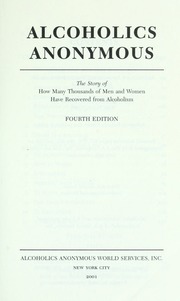
About this book
Alcoholics Anonymous (also known as the Big Book in recovery circles) sets forth cornerstone concepts of recovery from alcoholism and tells the stories of men and women who have overcome the disease. The fourth edition includes twenty-four new stories that provide contemporary sharing for newcomers seeking recovery from alcoholism in A.A. during the early years of the 21st century. Sixteen stories are retained from the third edition, including the "Pioneers of A.A." section, which helps the reader remain linked to A.A.'s historic roots, and shows how early members applied this simple but profound program that helps alcoholics get sober today. Approximately 21 million copies of the first three editions of "Alcoholics Anonymous" have been distributed. It is expected that the new fourth edition will play its part in passing on A.A.'s basic message of recovery. This fourth edition has been approved by the General Service Conference of Alcoholics Anonymous, in the hope that many more may be led toward recovery by reading its explanation of the A.A. program and its varied examples of personal experiences which demonstrate that the A.A. program works.
Summary of Key Ideas
- •
Admitting Powerlessness
Acceptance of Powerlessness: The Big Book emphasizes the critical first step of admitting powerlessness over alcohol. This acknowledgement shatters the illusion of control and sets the stage for recovery. It's about recognizing that willpower alone is insufficient to combat alcoholism, and accepting this truth is essential for moving forward. This concept is foundational, challenging the alcoholic's denial and creating an opening for spiritual awakening and a new way of life. Without admitting powerlessness, the subsequent steps become virtually impossible to undertake sincerely.
- •
Finding a Higher Power
Belief in a Higher Power: The book advocates for finding a 'Power greater than ourselves' to aid in recovery. While not explicitly religious, it encourages a spiritual approach, allowing individuals to define this higher power in a way that resonates with them—whether it's a traditional deity, the AA group itself, or the universe at large. The purpose of believing in something greater is to provide strength, guidance, and a source of hope that transcends the individual's limited capacity to overcome addiction alone. This concept broadens the scope of recovery beyond personal willpower.
- •
Taking Moral Inventory
Moral Inventory and Confession: Taking a thorough personal inventory, admitting wrongs, and making amends are central themes. This process involves honestly assessing past behaviors, identifying character defects, and acknowledging harm caused to others. Sharing this inventory with another person is a critical step, promoting humility and accountability. This rigorous self-examination and confession process aims to cleanse the individual of past burdens, foster personal growth, and pave the way for healthier relationships.
- •
Restoring Relationships Through Amends
Making Amends: The Big Book underscores the importance of actively making amends to those harmed by past actions, whenever possible, but avoiding such amends when it would cause further harm. This restorative justice approach aims to repair damaged relationships and alleviate guilt and remorse. It's not merely about apologizing but demonstrating a genuine commitment to changing behavior and making restitution for past wrongs. This process is crucial for rebuilding trust and fostering reconciliation.
- •
Helping Others to Stay Sober
Helping Other Alcoholics: Carrying the message of recovery to other alcoholics is presented as a vital component of maintaining sobriety. Sharing personal experiences, offering support, and guiding others through the Twelve Steps reinforces one's own commitment to recovery while providing invaluable assistance to those still struggling. This selfless service creates a sense of purpose and belonging, transforming the recovering alcoholic into a beacon of hope for others seeking a way out of addiction.
- •
Embracing a Spiritual Way of Life
Living a Spiritual Life: The Big Book promotes embracing spiritual principles such as honesty, humility, and service as a way of life. This involves continuous self-reflection, seeking guidance from a Higher Power, and striving to live in accordance with moral values. Spirituality, in this context, is not about religious dogma but about cultivating inner peace, developing a sense of connection to something larger than oneself, and living a life of purpose and meaning, guided by ethical principles.
- •
Following the Twelve Steps
The Twelve Steps as a Program for Living: The book outlines the Twelve Steps as a comprehensive program for recovery, involving spiritual, moral, and behavioral changes. These steps offer a structured path towards overcoming alcoholism and achieving lasting sobriety. They are not merely a one-time process but a continuous practice of self-improvement and spiritual growth. By working through the steps, individuals can transform their lives, develop healthy coping mechanisms, and find freedom from the grip of addiction.
- •
Seeking Guidance Through Sponsorship
The Importance of Sponsorship: Having a sponsor, an experienced member of AA, is heavily encouraged. A sponsor provides guidance, support, and accountability throughout the recovery process. They share their own experiences, offer practical advice, and help navigate the challenges of early sobriety. The sponsor-sponsee relationship provides a safe and supportive environment for personal growth and spiritual development, ensuring the individual does not feel alone in their recovery journey and has someone to turn to during difficult times.
Chapter Recap

About The Author
Alcoholics Anonymous.
Main Quotes
"We admitted we were powerless over alcohol - that our lives had become unmanageable."
"Came to believe that a Power greater than ourselves could restore us to sanity."
"Made a decision to turn our will and our lives over to the care of God as we understood Him."
"Made a searching and fearless moral inventory of ourselves."
"Admitted to God, to ourselves, and to another human being the exact nature of our wrongs."
"Were entirely ready to have God remove all these defects of character."
"Humbly asked Him to remove our shortcomings."
"Made a list of all persons we had harmed, and became willing to make amends to them all."
"Made direct amends to such people wherever possible, except when to do so would injure them or others."
"Having had a spiritual awakening as the result of these steps, we tried to carry this message to alcoholics, and to practice these principles in all our affairs."
Who Should Read This Book
Individuals struggling with alcohol addiction
People seeking a 12-step program for recovery
Individuals interested in the Alcoholics Anonymous recovery model
Friends and family members of alcoholics seeking to understand the addiction and recovery process
Professionals in the fields of addiction treatment, counseling, and therapy
Individuals interested in the history and foundational texts of Alcoholics Anonymous
People seeking spiritual guidance or a sense of community in overcoming addiction
Book Summaries Like
The Big Book of Alcoholics Anonymous
FAQ

Free Access to LitNotes