




 DISCORD
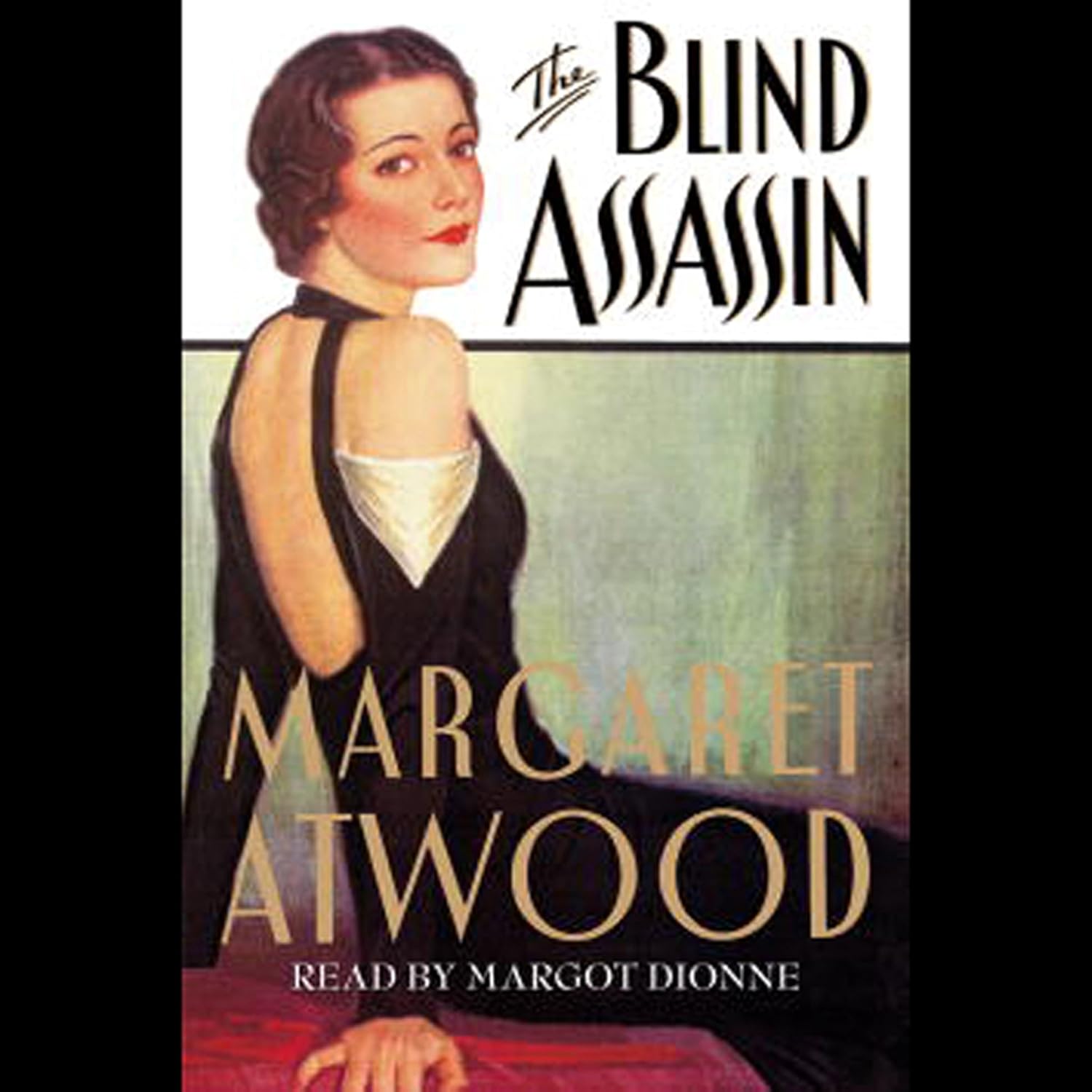
The Blind Assassin
Margaret Atwood


 Apple Books


 118 Min Reading Time
 Audio Version Available
About this book
"Ten days after the war ended, my sister Laura drove a car off a bridge." With these haunting words, The Blind Assassin unravels a mesmerizing tale of secrets, lies, and the enduring bonds of sisterhood.
Eighty-two-year-old Iris Chase Griffen, now poor and grappling with old age, reflects on her turbulent life and the enigmatic death of her sister, Laura. Their wealthy, eccentric family harbors long-guarded secrets, brought to light by Laura's scandalous novel, The Blind Assassin. Within its pages, illicit lovers meet in clandestine encounters, weaving a pulp fantasy of a blind killer on a distant planet.
As the novel-within-a-novel intertwines with Iris's recollections, gothic suspense, forbidden romance, and speculative fiction converge. Love and jealousy, self-sacrifice and betrayal, war and catastrophe—all draw closer, blurring the lines between reality and imagination.
From the Booker Prize-winning author of The Handmaid's Tale, The Blind Assassin is a spellbinding epic that explores memory, intrigue, and the profound impact of the stories we tell. Prepare to be captivated by its richly layered narratives and astonishing final twist.
Summary of Key Ideas
- •
The Constraints of Womanhood
The Disempowerment of Women: Throughout the novel, Atwood explores the various ways in which women are disempowered and controlled by societal expectations, economic dependencies, and patriarchal structures. Iris and Laura's lives are shaped by the limited options available to them, their dependence on powerful men, and the social constraints that dictate their behavior. This theme highlights the struggles women face in asserting their agency and challenging the status quo, showcasing their resilience and resistance in the face of adversity.
- •
The Corrupting Influence of Wealth
Wealth and Corruption: "The Blind Assassin" exposes the corrupting influence of wealth and power, particularly within the context of Canadian society during the early to mid-20th century. The Chase family's decline mirrors the broader societal shifts and the ethical compromises made in pursuit of economic gain. Atwood critiques the exploitation of the working class and the moral compromises that accompany the accumulation of wealth, revealing the dark underbelly of privilege and its impact on individual lives and relationships.
- •
The Deceptive Nature of Appearances
Appearance vs. Reality: The novel delves into the deceptive nature of appearances, revealing the stark contrast between the carefully constructed facades and the hidden truths that lie beneath. Characters often conceal their true emotions and motivations, creating a sense of ambiguity and uncertainty. The metafictional elements of the novel further blur the lines between reality and fiction, challenging the reader to question the reliability of narrative and the subjective nature of truth. This theme underscores the importance of critical thinking and the need to look beyond surface appearances to uncover deeper meanings.
- •
The Power of Narrative
Storytelling as a Means of Survival: Storytelling emerges as a vital tool for characters to make sense of their experiences, preserve their memories, and exert control over their narratives. Iris's act of writing her memoir and attributing "The Blind Assassin" to Laura serves as a way to reclaim her past and shape her legacy. The embedded narrative of the science fiction story provides an escape from the harsh realities of their world, offering a space for imagination and resistance. Atwood highlights the power of stories to both reflect and reshape reality, underscoring their significance in understanding individual and collective identities.
- •
The Destructive Force of Forbidden Love
Doomed Love and its Consequences: The passionate and illicit affair between Laura and Alex Thomas forms a central thread in the novel, exploring the destructive consequences of forbidden love. Their relationship is marked by secrecy, danger, and ultimately, tragedy. Atwood examines the complexities of desire, betrayal, and the societal forces that condemn unconventional relationships. The doomed nature of their love affair reflects the broader themes of oppression and the limitations placed on individual freedom and expression.
- •
The Unreliable Nature of Memory
Memory, Trauma, and the Reconstruction of the Past: Memory plays a crucial role in shaping Iris's narrative, but it is also presented as unreliable and subjective. Trauma and loss distort her recollections, leading to gaps and inconsistencies in her account. As Iris pieces together her past, she grapples with the challenge of reconstructing a coherent narrative from fragmented memories. Atwood explores the ways in which trauma can impact memory and the difficulty of attaining a definitive truth about the past.
- •
The Struggle Against Oppression
Oppression and Resistance: The novel highlights various forms of oppression, including economic exploitation, social class divisions, and sexism. Characters find themselves trapped in oppressive circumstances and struggle to resist these forces. Laura's rebellious nature and her defiance of societal expectations represent a form of resistance against patriarchal norms. Similarly, the political activism of Alex Thomas and his comrades challenges the capitalist system and its inherent inequalities. Atwood explores the different ways in which individuals and groups attempt to challenge and subvert oppressive structures.
Chapter Recap

About The Author
Margaret Atwood
Main Quotes
""In Paradise there are no stories, because there are no journeys. It's loss and regret and misery and yearning that drive the story forward.""
""Touch comes before sight, before speech. It is the first language and the last, and it always tells the truth.""
""The only way you can write the truth is to assume that what you set down will never be read.""
""…sometimes I see instead the young woman, the one who knew nothing, whose eyes were clear, who believed in everything.""
""Nostalgia, the vice of the aged. We watch the days dwindle, and the past becomes a more and more heroic landscape, the figures larger.""
""War is what happens when language fails.""
""A woman's life, always a fifteen-round fight.""
""What was it, this feeling: the sense of being invaded, occupied?""
""How can you trust something that can end so quickly?""
""Memory is a treacherous thing.""
Who Should Read This Book
Readers of literary fiction
Fans of Margaret Atwood's other works
Readers interested in historical fiction, particularly Canadian history
Individuals who enjoy complex narratives with multiple layers and perspectives
Those who appreciate novels exploring themes of memory, family secrets, and social class
Readers of feminist literature
Book club participants looking for thought-provoking discussions
Individuals interested in metafiction and unreliable narrators
Readers who enjoy novels with elements of romance, mystery, and science fiction interwoven into the main plot
Those who appreciate strong female characters and their stories
Book Summaries Like
The Blind Assassin

FAQ

Free Access to LitNotes