




 DISCORD
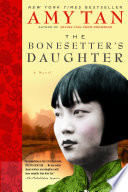
The Bonesetter's Daughter
Amy Tan, Amy Tan

 Amazon Best Sellers


 82 Min Reading Time
 Audio Version Available
About this book
In the heart of contemporary San Francisco and a remote Chinese village, a mother and daughter navigate the echoes of the past and the fragile ties that bind them. LuLing Young, facing the erosion of memory, begins to record her tumultuous life in China, seeking the name of her own mother, the legendary Bonesetter from the Mouth of the Mountain. Her daughter, Ruth, a ghostwriter struggling to find her own voice, discovers these transcribed secrets, a legacy of whispered myths, broken dreams, and a devastating curse believed to be unleashed through betrayal.
As Ruth delves into the calligraphed pages, she unearths a side of LuLing she never knew—a story of a mute nursemaid, a cave of dragon bones, and a love that endured unimaginable pain. Amy Tan masterfully excavates the human spirit, revealing the deepest wounds and most profound hopes woven into the fabric of family. "The Bonesetter's Daughter" is a haunting exploration of memory, language, and the enduring strength of love, proving that what is lost in grief can be found again in remembrance.
Summary of Key Ideas
- •
The Power of Mother-Daughter Relationships
The novel deeply explores the intricate dynamics between mothers and daughters, highlighting the complexities of love, misunderstanding, and the enduring impact of maternal influence. Ruth's relationship with LuLing, and LuLing's relationship with her own mother, Precious Auntie, reveal how unspoken words, cultural differences, and generational trauma can shape these bonds. The narrative emphasizes the importance of empathy and understanding in navigating these relationships, suggesting that true connection requires acknowledging the past and embracing vulnerability. The novel suggests that these relationships, though often fraught with challenges, are a fundamental source of identity and strength.
- •
The Burden of Secrets and Misunderstandings
Secrecy forms a significant barrier in the characters' lives, leading to misunderstandings and emotional distance. LuLing's hidden past and the unspoken truths surrounding Precious Auntie's life create a legacy of silence that affects Ruth's sense of self. The novel suggests that these secrets, though sometimes intended to protect, ultimately hinder genuine connection and create a sense of alienation. Breaking through these barriers requires courage, honesty, and a willingness to confront painful truths. The act of uncovering and sharing these secrets becomes essential for healing and forging stronger relationships.
- •
Memory, Culture, and the Preservation of the Past
The story emphasizes the importance of remembering and honoring one's cultural heritage and family history. LuLing's fading memory due to Alzheimer's disease underscores the urgency of preserving stories and traditions before they are lost forever. Ruth's journey to understand her mother's past becomes a quest to reclaim her own identity and connect with her Chinese roots. The novel highlights the power of storytelling as a means of preserving cultural memory and transmitting values across generations. It suggests that embracing one's past is essential for navigating the present and shaping the future.
- •
The Healing Power of Storytelling
Storytelling serves as a powerful tool for healing, understanding, and connection in the novel. LuLing's stories, both written and spoken, provide insight into her past and offer Ruth a way to connect with her mother on a deeper level. Ruth's profession as a ghostwriter reflects the transformative potential of narratives to shape identities and bridge cultural gaps. The act of writing and sharing stories allows characters to confront trauma, reclaim their voices, and forge meaningful connections with others. Through storytelling, characters can find solace, gain perspective, and ultimately heal from the wounds of the past.
- •
The Immigrant Experience and Generational Trauma
The novel explores the challenges and complexities of the immigrant experience, particularly the struggle to reconcile cultural heritage with the demands of a new society. LuLing's experiences as a Chinese immigrant in America reflect the challenges of adapting to a new language, culture, and way of life. The novel also examines the impact of generational trauma, as the pain and suffering experienced by previous generations are passed down to subsequent ones. Ruth's journey to understand her mother's past becomes a way to break the cycle of trauma and reclaim her own identity.
- •
Finding One's Voice and Overcoming Silence
The theme of finding one's voice is central to the novel, as characters struggle to overcome silence and express their true selves. Ruth's recurring inability to speak in August symbolizes the silencing of her own desires and needs within her relationships. LuLing's written stories become a way for her to express the emotions and experiences she could not articulate in words. Overcoming silence requires courage, self-awareness, and a willingness to challenge societal expectations. The novel suggests that finding one's voice is essential for achieving personal fulfillment and forging authentic connections with others.
Chapter Recap

About The Author
Amy Tan
Main Quotes
"A mother is always the beginning. She is how things begin."
"Writing what you wished was the most dangerous form of wishful thinking."
"I sailed for America, a land without curses or ghosts. By the time I landed, I was five years younger. Yet I felt so old."
"She was self-taught, exposed to only the old ideas. She had no chance to learn about science, to go to a university like me."
"You should think about your character. Know where you are changing, how you will be changed, what cannot be changed back again."
"In this way, Precious Auntie taught me to be naughty, just like her. She taught me to be curious, just like her. She taught me to be spoiled."
"That is the problem with modern ink from a bottle. You do not have to think."
"They know where happiness lies, not in a cave or a country, but in love and the freedom to give and take what has been there all along."
"What do you think was the very first sound to be made?"
"Was it a craving for salt, or for pain?"
Who Should Read This Book
Readers interested in intergenerational family dynamics and the complexities of mother-daughter relationships.
Readers who enjoy novels exploring Chinese-American identity and cultural heritage.
Fans of literary fiction that incorporates elements of mystery, superstition, and magical realism.
Readers drawn to character-driven narratives with emotionally rich storytelling.
Those interested in stories about overcoming personal trauma and uncovering family secrets.
Book club members seeking discussion-worthy themes and relatable characters.
Readers who appreciate lyrical prose and evocative descriptions.
Book Summaries Like
The Bonesetter's Daughter
FAQ

Free Access to LitNotes