




 DISCORD
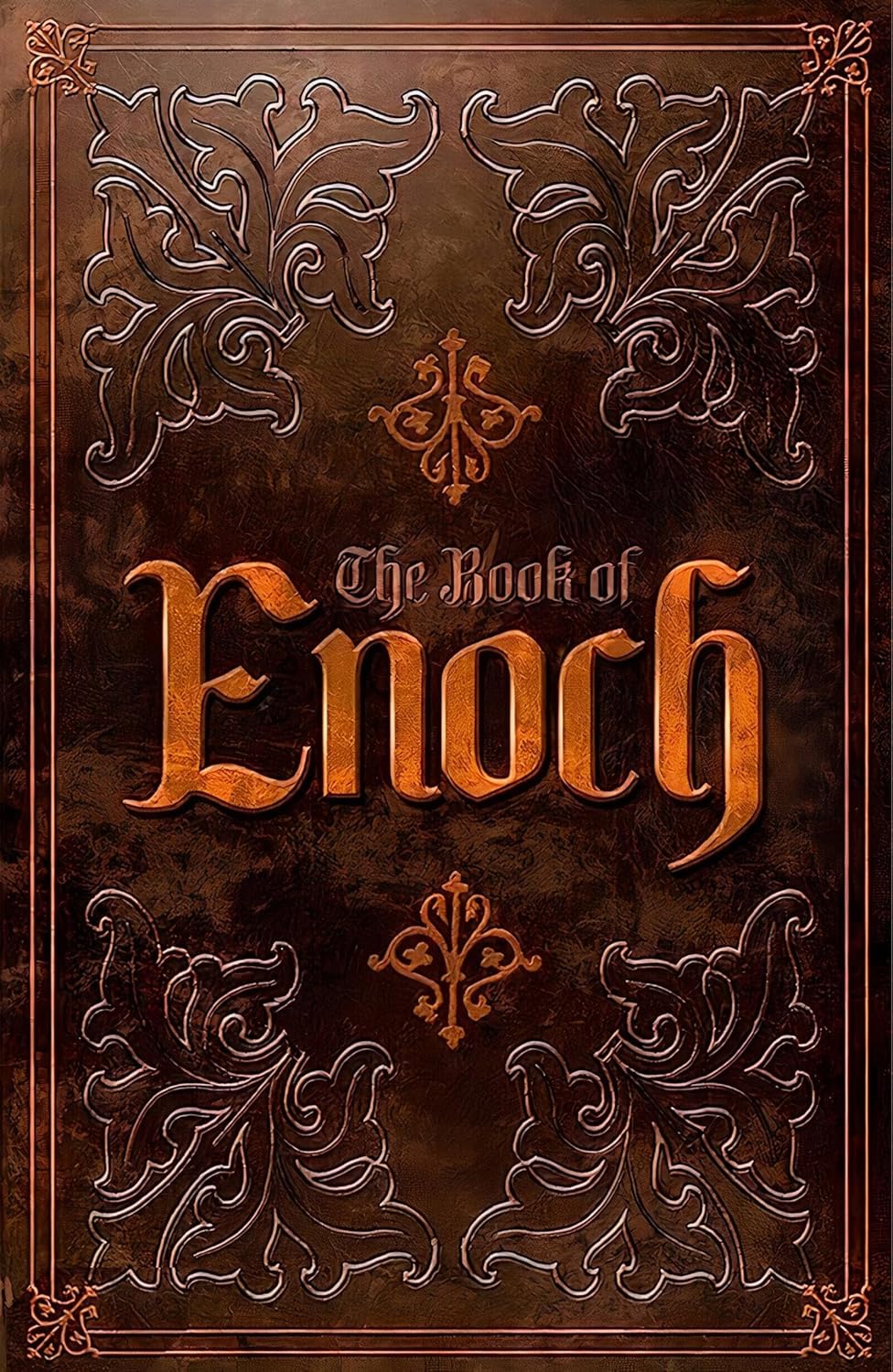
The Book of Enoch
Thomas R


 Apple Books


 60 Min Reading Time
 Audio Version Available
About this book
Unearth the secrets of the ages with The Book of Enoch, a timeless Apocryphal masterpiece brought to life by Thomas R. Horn. This ancient Jewish religious work, traditionally ascribed to Enoch, the great-grandfather of Noah, offers unparalleled insights into the beliefs of ancient Jews and early Christians.
Delve into a world where Enoch chronicles his divine revelations, unveils the fall of the angels, and forewarns of God's impending judgment upon sinners. Explore the detailed account of the fallen angels' descent to Earth, the emergence of their offspring, the Nephilim, and the celestial mechanics of a world on the brink of monumental change.
More than just a historical text, The Book of Enoch serves as a vital resource for serious researchers and students of the Bible, providing a unique lens through which to understand ancient cosmology, eschatology, and the eternal struggle between good and evil. Discover why this forbidden book has captivated readers for centuries and continues to spark debate and fascination in the modern era.
Summary of Key Ideas
- •
The Fall of the Watchers
The Fall of the Watchers details how a group of angels, known as the Watchers, descended to Earth and engaged in forbidden unions with human women. This transgression led to the birth of the Nephilim, giants who corrupted the earth and introduced wickedness. This narrative serves as a foundational explanation for the presence of evil and suffering in the world. The Watchers' actions directly disobey divine law, resulting in their eventual punishment and the cleansing of the earth through the Great Flood. This key idea explores themes of disobedience, divine judgment, and the consequences of crossing boundaries set by God.
- •
Origins of Demons
The Book of Enoch elaborates on the origins of demons, linking them to the disembodied spirits of the Nephilim who perished during the Great Flood. These spirits, now without physical bodies, roam the earth seeking to cause harm and influence humans towards evil. This explanation provides a framework for understanding the source and nature of demonic influence, offering insight into the unseen forces at play in the world. This concept reinforces the idea that evil is not merely an abstract concept but a tangible force with a specific origin and agenda. It highlights the ongoing struggle between good and evil and the constant threat posed by these malevolent entities.
- •
Cosmic Revelations and Divine Order
Enoch's journeys through the cosmos reveal a highly structured and divinely ordered universe. He witnesses the workings of celestial bodies, the paths of the stars, and the storehouses of natural phenomena like thunder and lightning. These revelations demonstrate God's meticulous planning and control over creation. This understanding of the cosmos reinforces the idea of a purposeful universe governed by divine law, where every element has its place and function. Enoch's travels serve to illustrate the immensity and complexity of God's creation and to inspire awe and reverence for His power and wisdom.
- •
The Promise of Judgment and Vindication
The Book of Enoch emphasizes the coming judgment of the wicked and the vindication of the righteous. It describes a future messianic figure who will preside over this judgment, separating the good from the evil and ushering in an era of peace and justice. This theme provides hope for the oppressed and a warning to the unrepentant. The anticipation of divine judgment serves as a moral compass, encouraging individuals to live righteously in anticipation of the final reckoning. This promise of future justice offers comfort and reassurance to those who suffer in the present, knowing that their faithfulness will ultimately be rewarded.
- •
Enoch as Intercessor
Enoch acts as an intercessor between God and the fallen angels, pleading on their behalf. Although his attempts to fully reconcile them are unsuccessful, his role highlights the importance of mediation and the potential for mercy, even for those who have transgressed. This aspect of the book explores the complexities of divine justice and the possibility of redemption. Enoch's intercession demonstrates the power of prayer and the enduring hope for reconciliation, even in the face of seemingly insurmountable obstacles. It raises questions about the limits of forgiveness and the ultimate fate of those who have rebelled against God.
- •
Depiction of Sheol (The Afterlife)
The text explores the concept of Sheol, often translated as the 'underworld' or 'abode of the dead.' It is depicted as a place of varying compartments and destinies, contingent on the moral choices made during life. This detailed depiction of the afterlife provided a more nuanced understanding of what happens after death. Sheol isn't a monolithic entity but a complex realm reflecting divine justice. The righteous experience a different fate from the wicked, thus emphasizing accountability for one's earthly actions. This detailed description reinforced the importance of ethical behavior during one's lifetime.
Chapter Recap

About The Author
Thomas R
Main Quotes
"The best evidence is the fact that this book predates Jesus and gives a multitude of prophecies for him."
"And I have observed their stars and the mountains, and all the hills, and the trees."
"And all the spirits of the fornicators and the oppressors are waiting in that great valley."
"And I blessed the Lord of glory, the Eternal King, who hath wrought all the wonders of the world."
"And He swore to them in His great name that He would prepare for them habitations of righteousness, peace, and joy."
"And I proceeded to where all things were chaotic."
"And I saw the secrets of the heavens, and how the kingdom is divided, and how the actions of men are weighed in the balance."
"And I saw the dwelling-places of the holy ones, and the resting-places of the righteous."
"And I saw their resting-places with the holy angels, and their chambers of glory, which were like a blazing fire."
"In those days the earth shall also give back that which has been entrusted to it, and Sheol also shall give back that which it has received."
Who Should Read This Book
Serious researchers of the Bible
Students of the Bible
Individuals interested in ancient religious texts
Readers interested in apocryphal literature
Those curious about the origins of certain biblical concepts
People interested in Jewish mysticism
Readers interested in eschatology
Individuals fascinated by angels, demons, and the supernatural
History buffs
Readers of Westerns
True crime enthusiasts
Book Summaries Like
The Book of Enoch
FAQ

Free Access to LitNotes