




 DISCORD
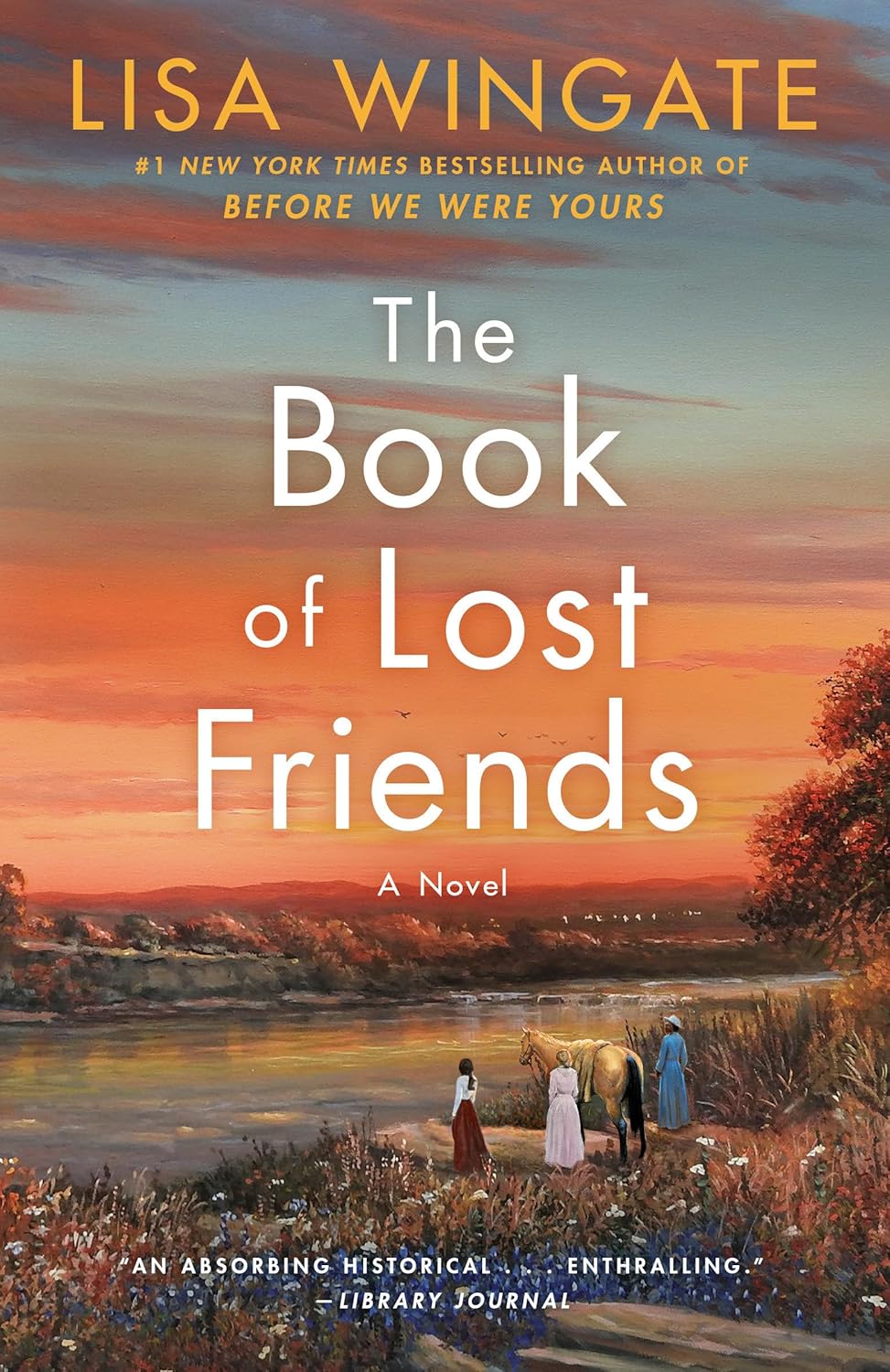
The Book of Lost Friends
Lisa Wingate


 Goodreads Choice Awards
 Apple Books


 94 Min Reading Time
 Audio Version Available
About this book
From the bestselling author of Before We Were Yours comes a sweeping story of엇 family, identity, and the enduring power of hope, set against the backdrop of the post-Civil War South and a struggling Louisiana school in 1987.
In 1875, Hannie Gossett, a former slave, embarks on a perilous journey with two young white women, seeking to reunite her family and offering a glimpse into a little-known piece of history: advertisements placed by newly freed slaves searching for loved ones after the Civil War. Their survival hinges on a “Book of Lost Friends,” a compilation of these heart-wrenching ads.
More than a century later, Benny Silva, a first-year teacher in August, Louisiana, is struggling to connect with her students. When she stumbles upon the long-forgotten "Book of Lost Friends," she sees a lifeline—a way to bridge the gap between the classroom and the painful history in their own backyards. As Benny and her students delve into the stories within the book, they uncover secrets that echo through generations, forcing them to confront the complicated legacy of the past and the enduring bonds of kinship.
Inspired by true events, The Book of Lost Friends is a powerful and ultimately uplifting novel about women, family, and the stories that connect us. It's a testament to the resilience of the human spirit and the importance of remembering those who were once lost.
Summary of Key Ideas
- •
The Power of Storytelling
The enduring power of storytelling is a central theme. The novel highlights how stories, especially those passed down orally, preserve history, culture, and identity. The 'Book of Lost Friends' itself becomes a symbol of this, representing a collection of names and stories of enslaved people seeking lost family members. Wingate emphasizes that sharing these narratives is crucial for understanding the past and connecting with future generations, giving voice to those who were historically silenced and ensuring their experiences are not forgotten. The dual timeline structure reinforces this, connecting past struggles with present-day realities.
- •
The Unyielding Search for Family
The search for family and connection forms the heart of the narrative. The post-Civil War South was a landscape of fractured families, with countless individuals separated by slavery and its aftermath. The journey of Hannie, Juneau, and Lavinia underscores the desperation and determination to find loved ones. This theme extends to Benny in the modern timeline, who is grappling with her own family history and seeking a sense of belonging. The book illustrates how the need for connection transcends time, highlighting the fundamental human desire to know one's roots and have a place within a family structure.
- •
Confronting the Legacy of Slavery
The novel confronts the brutal legacy of slavery and its lasting impact on individuals and communities. It portrays the systemic injustices, the emotional scars, and the economic hardships endured by formerly enslaved people. The 'Book of Lost Friends' serves as a poignant reminder of the countless families torn apart by this inhumane system. Wingate doesn't shy away from depicting the harsh realities of the era, emphasizing the importance of acknowledging this painful history to foster healing and reconciliation. The stories within the book highlight the resilience and strength of those who survived and continued to search for their loved ones despite overwhelming odds.
- •
Resilience in the Face of Adversity
Resilience and hope emerge as powerful forces in the face of adversity. Despite the immense challenges and heartbreak faced by the characters, they demonstrate remarkable strength and determination. The women in both timelines exhibit unwavering spirits, refusing to be defined by their circumstances. Whether it's the young women embarking on a perilous journey to Texas or Benny confronting her past, the novel celebrates the human capacity to overcome obstacles and maintain hope for a better future. This theme underscores the importance of perseverance and the belief that even in the darkest of times, healing and redemption are possible.
- •
The Strength of Female Bonds
The importance of female bonds and solidarity is a recurring theme. The relationships between Hannie, Juneau, and Lavinia provide a source of strength and support during their arduous journey. These women rely on each other for companionship, protection, and emotional sustenance. Similarly, in the modern timeline, Benny finds solace and understanding through her connections with other women in her community. The novel highlights how female friendships can provide a lifeline in times of hardship, offering a sense of belonging and empowerment. These bonds serve as a testament to the power of women supporting women.
- •
Unveiling Hidden Histories
Secrets and hidden histories play a significant role in shaping the characters' lives and driving the plot. Both timelines involve uncovering long-held secrets that have far-reaching consequences. The characters must confront these hidden truths to understand their past and move forward. The 'Book of Lost Friends' itself contains secrets, with its entries holding clues to family histories and long-lost connections. Wingate uses this theme to explore how the past can continue to influence the present, and how uncovering hidden truths can lead to healing and reconciliation. Benny's personal journey is intertwined with unraveling the secrets contained within the historical narrative.
Chapter Recap

About The Author
Lisa Wingate
Main Quotes
"We die once when the last breath leaves our bodies. We die a second time when the last person speaks our name."
"Sad thing when stories die for the lack of listenin' ears."
"Lonely perches like a buzzard on my head. It pecks at my eyes so all I can see is lonely."
"There's things worse than death."
"Hope can be a dangerous thing."
"What would be the point? she thinks. We all have scars."
"If they are in your classroom, you are responsible for keeping them there."
"Everyone has history."
"Tough times make good people and bad people."
"Civil debate is a healthy and democratic process."
Who Should Read This Book
Readers of historical fiction, particularly those interested in the Reconstruction Era and the American South
Readers interested in stories about family secrets, lost connections, and female relationships
Fans of Lisa Wingate's previous books and similar authors who write about Southern history and strong women
Book clubs looking for discussion-worthy novels with themes of race, identity, and social justice
Readers who enjoy dual-timeline narratives that weave together past and present
Those interested in stories inspired by true events, particularly those related to the lives of formerly enslaved people and their descendants
Readers who appreciate stories with emotional depth and a focus on hope and resilience
Book Summaries Like
The Book of Lost Friends

FAQ

Free Access to LitNotes