




 DISCORD
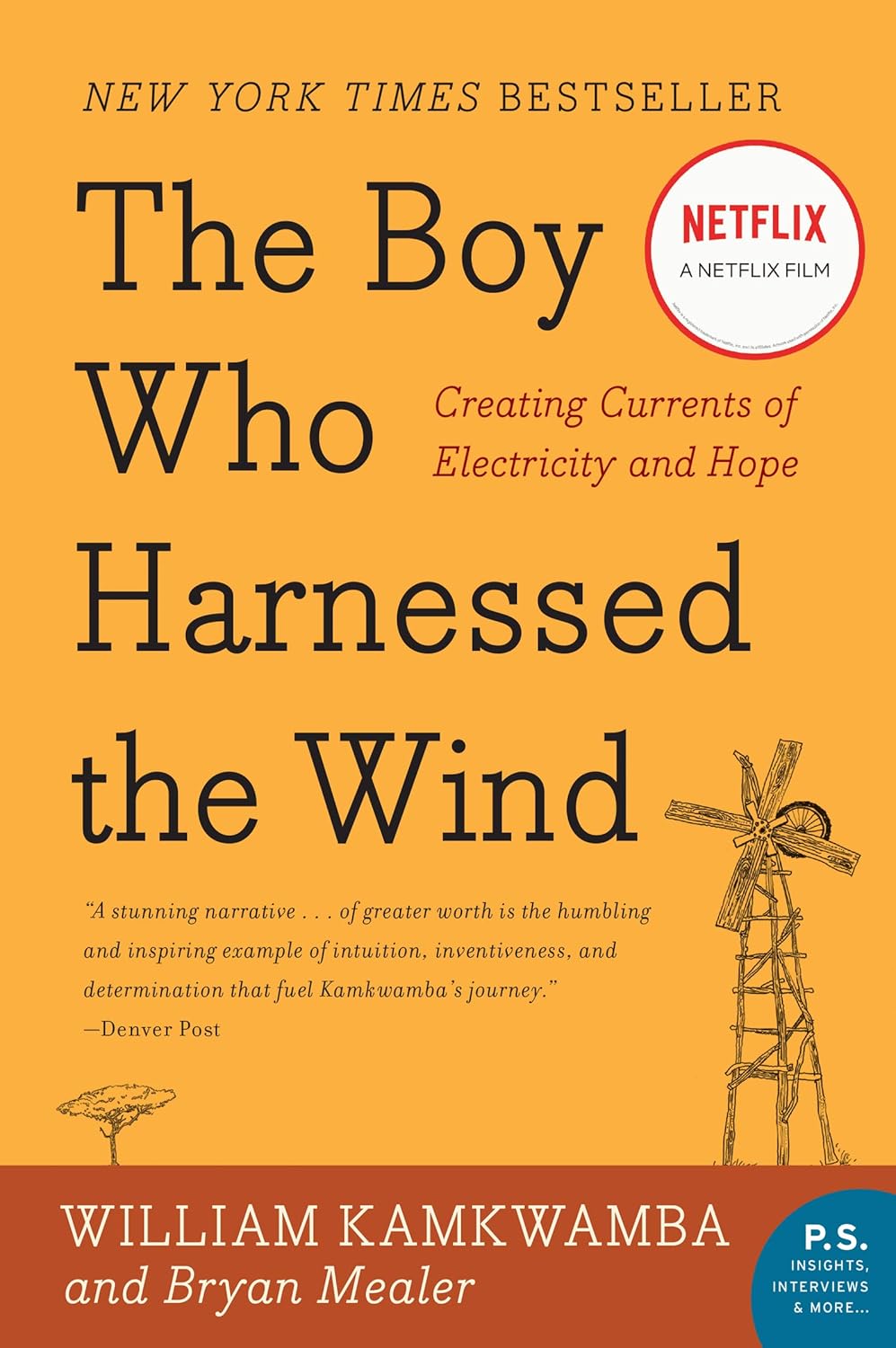
The Boy Who Harnessed the Wind
William Kamkwamba, Bryan Mealer


 The New York Times Best Sellers


 63 Min Reading Time
 Audio Version Available
About this book
When fourteen-year-old William Kamkwamba's village in Malawi is stricken with a terrible drought, famine follows, and hope seems a distant memory. Forced to drop out of school because his family can no longer afford the fees, William refuses to give up on his dreams. He secretly sneaks into the village library, a treasure trove of forgotten knowledge, and begins to devour books on science and engineering.
Inspired by a diagram of a windmill, William believes he can save his village. Using salvaged scraps of metal, old bicycle parts, and ingenuity born of necessity, he sets out to build a machine that will bring electricity and water to his community. Many call him crazy, but William's determination and unwavering belief in the power of his idea inspire him to overcome the odds.
The Boy Who Harnessed the Wind is a remarkable true story about the triumph of human innovation, the strength of family, and the unwavering spirit of a young man who refused to let his dreams be blown away. It's a powerful reminder that even in the face of seemingly insurmountable challenges, one person's vision can change the world.
Summary of Key Ideas
- •
The Power of Untamed Curiosity
The narrative underscores the transformative power of curiosity and a thirst for knowledge. William's relentless questioning and exploration of the world around him, particularly his fascination with how things work, drive him to seek solutions to the challenges facing his community. This innate curiosity leads him to the library, where he immerses himself in books on science and engineering, ultimately providing him with the knowledge needed to build the windmill. This highlights how simple curiosity, combined with access to information, can spark innovation and lead to remarkable achievements, even in resource-constrained environments.
- •
Unwavering Resilience in Adversity
Faced with immense challenges such as poverty, famine, and lack of access to education, William demonstrates extraordinary resilience and determination. Despite numerous setbacks and skepticism from his community, he perseveres in his quest to build a windmill. His unwavering commitment to his goal, fueled by a desire to improve the lives of his family and neighbors, exemplifies the power of human resilience in the face of adversity. This key idea underscores the importance of grit and perseverance in overcoming obstacles and achieving seemingly impossible feats.
- •
Education as a Catalyst for Change
The book emphasizes the significance of education as a catalyst for change and empowerment. William's access to education, even when interrupted by financial constraints, provides him with the foundational knowledge and skills necessary to innovate. His self-directed learning in the library demonstrates the potential of education to empower individuals to solve problems and improve their circumstances. This highlights the vital role of education in fostering innovation, promoting self-sufficiency, and driving social progress, especially in developing countries.
- •
Ingenuity from Limited Resources
William’s story serves as a powerful reminder that ingenuity and innovation can emerge from unexpected places, even in the face of limited resources. Using discarded materials and scrap parts, he constructs a functional windmill that provides electricity and water to his community. This demonstrates that creativity and resourcefulness are not limited by access to wealth or advanced technology. Instead, they can flourish in environments where necessity drives invention and where individuals are empowered to find innovative solutions to local problems.
- •
Environmental Challenges and Community Impact
The book portrays the profound impact of environmental challenges, particularly drought and famine, on rural communities in Malawi. William's motivation to build the windmill stems directly from the devastating effects of these environmental crises on his family and neighbors. The narrative sheds light on the vulnerability of communities dependent on agriculture to climate change and the importance of sustainable solutions to mitigate these impacts. It also underscores the need for greater awareness and action to address environmental issues in developing countries.
- •
The Power of Community and Collaboration
The book highlights the importance of community support and collaboration in achieving common goals. While William's initial efforts are met with skepticism, he eventually gains the support of his family, friends, and community members, who provide him with assistance, encouragement, and resources. This collective effort demonstrates the power of community solidarity in overcoming challenges and fostering innovation. It also underscores the importance of creating supportive environments where individuals are empowered to pursue their dreams and contribute to the well-being of their communities.
Chapter Recap

About The Author
William Kamkwamba
Main Quotes
"Before I discovered the miracles of science, magic ruled the world."
"I began to see the world as a place where anything is possible, as long as you are willing to try."
"Trust yourself and believe anything is possible."
"With hard work and belief in yourself, you can achieve anything."
"If you want to make it, you will make it."
"I had to show them that I could do it."
"I looked around my home, and I realized that everything I needed to build my windmill was right there."
"Even now, sometimes I catch myself daydreaming about that moment."
"We all laughed about it now, because it was only during the better times that we truly acknowledged the bad ones."
"Don't insult me today just because I'm poor, you don't know what my future holds!"
Who Should Read This Book
Adults interested in uplifting Third World human-interest stories
Children interested in stories of ingenuity and problem-solving
Readers interested in STEM and innovation, particularly in an African context
Educators seeking books about perseverance and overcoming adversity
Individuals interested in memoirs and biographies
Readers interested in stories about Malawi and African culture
People interested in sustainable energy and development
Young adults, particularly those interested in science and engineering
Families looking for inspiring stories to read together
Book Summaries Like
The Boy Who Harnessed the Wind



FAQ

Free Access to LitNotes