




 DISCORD
The Brothers Karamazov
Fyodor DOSTOEVSKY


 Apple Books


 354 Min Reading Time
 Audio Version Available
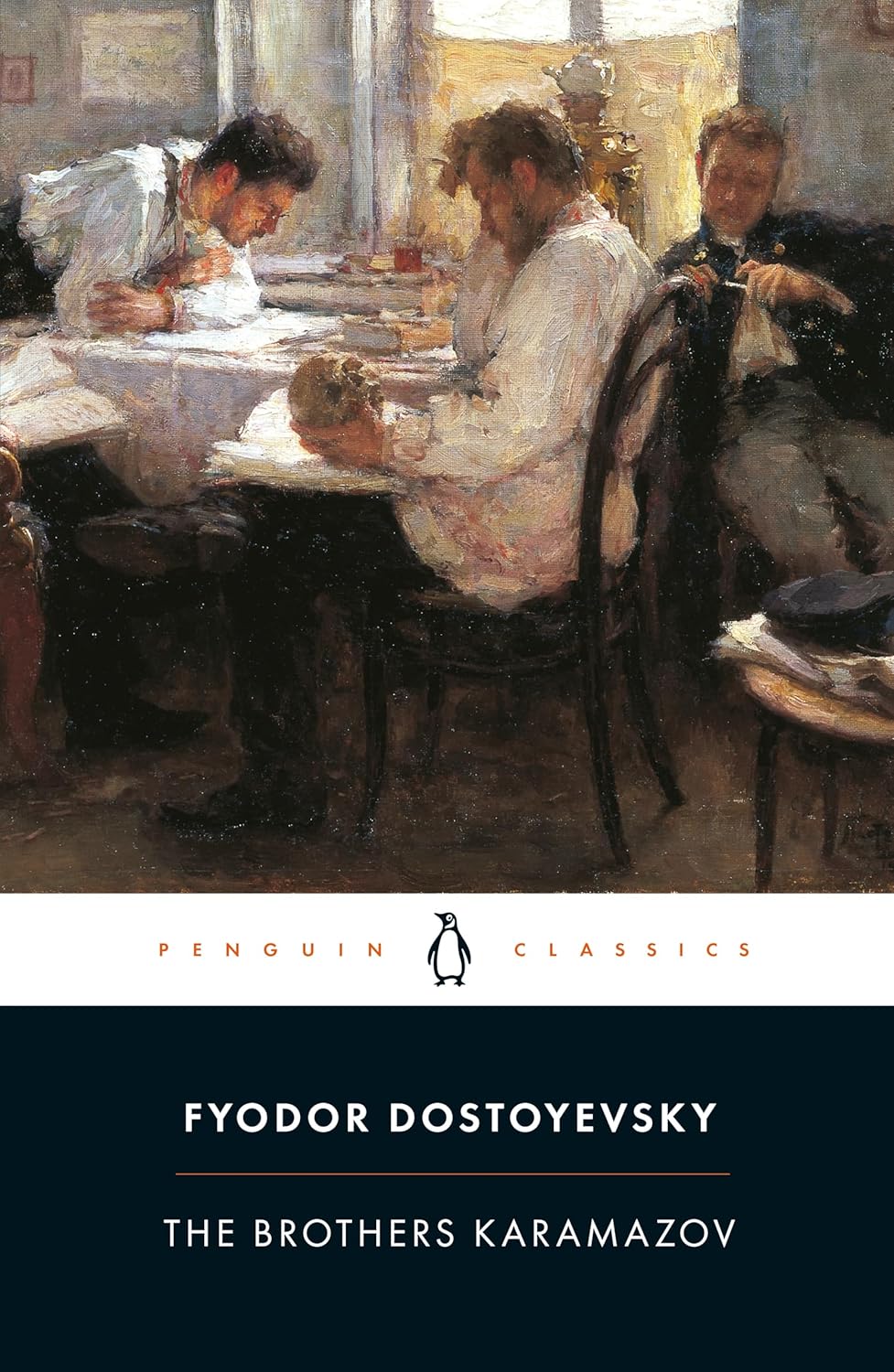
About this book
In 19th-century Russia, the lives of the Karamazovs explode in a maelstrom of passion, faith, and betrayal. When the loathsome patriarch, Fyodor Pavlovich, is murdered, suspicion falls on his three vastly different sons: Dmitri, the sensualist, consumed by lust and embroiled in a bitter inheritance battle; Ivan, the intellectual, tormented by doubt and driven to the edge of madness; and Alyosha, the gentle novice, a beacon of spiritual purity amidst the family's moral decay.
As the investigation unfolds, Dostoevsky masterfully explores the depths of human nature, probing the complex interplay of free will, morality, and the existence of God. A sweeping epic and gripping psychological drama, "The Brothers Karamazov" delves into the darkest corners of the human soul, challenging our understanding of good and evil, guilt and redemption. Prepare to be captivated by a story that transcends the boundaries of a murder mystery, evolving into a profound meditation on the meaning of life itself.
Summary of Key Ideas
- •
The Battle Between Faith and Doubt
The conflict between faith and doubt is a central theme, explored through the characters of Alyosha (faith), Ivan (doubt), and Dmitry (struggle). Dostoevsky delves into the intellectual and emotional battles that arise when traditional religious beliefs are challenged by modern rationalism and the problem of evil. Ivan's famous "Grand Inquisitor" chapter encapsulates this conflict, presenting a powerful argument against divine authority and the perceived irrationality of faith. The novel doesn't offer easy answers, instead portraying faith as a complex, often agonizing, choice in a world filled with suffering and injustice. The characters grapple with whether a belief in God is possible, or even desirable, in the face of human cruelty.
- •
Universal Responsibility and Interconnectedness
The novel explores the concept of moral responsibility, arguing that everyone is responsible for everyone else. This idea, articulated by Zosima, suggests a interconnectedness where individual actions have far-reaching consequences. Dmitry's impulsive nature and eventual conviction for his father's murder highlight this theme, as his actions are influenced by and impact those around him. Ivan's intellectual justification for amorality also contributes, showcasing the dangerous consequences of detached reasoning without empathy. Ultimately, the novel suggests that acknowledging and embracing this universal responsibility is crucial for personal and societal redemption.
- •
The Dilemma of Free Will
Free will versus determinism is explored through the characters' choices and actions. Do the characters have genuine agency, or are they driven by predetermined factors such as their upbringing, psychological predispositions, or social circumstances? The novel leaves this question open to interpretation, presenting compelling arguments for both sides. Dmitry's passionate nature might suggest a lack of control, while Ivan's intellectualism implies a calculated approach to life. Alyosha, with his faith-driven actions, attempts to find a middle ground by embracing moral responsibility while acknowledging human fallibility.
- •
The Redemptive Power of Suffering
Suffering is a pervasive element in the novel, experienced by nearly every character. Dostoevsky examines the different forms of suffering – physical, emotional, and spiritual – and explores its potential for both destruction and redemption. The suffering of children, in particular, is a recurring motif, raising profound questions about the existence of a benevolent God in a world filled with such pain. Through characters like Dmitry, Dostoevsky suggests that suffering can be a catalyst for moral growth and spiritual awakening, leading to a deeper understanding of oneself and the world.
- •
Fathers and Sons: Generational Conflict
The complex relationships between fathers and sons are central to the plot and thematic concerns. Fyodor Pavlovich Karamazov's dysfunctional relationship with his sons – Dmitry, Ivan, and Alyosha – fuels much of the conflict and drama. Each son reacts differently to their father's neglect and depravity, shaping their individual paths and contributing to the overarching themes of guilt, resentment, and the search for identity. The murder of the father figure becomes a symbolic act, representing the breakdown of traditional values and the struggle for a new moral order.
- •
The Perils of Unbridled Rationalism
The destructive nature of extreme rationalism is examined through the character of Ivan Karamazov. Ivan's intellectual arguments, while seemingly logical, lead him to nihilism and a rejection of traditional morality. His famous statement, "If God is dead, everything is permitted," encapsulates the dangerous consequences of a worldview devoid of moral constraints. While Ivan does not directly commit the murder, his ideas indirectly contribute to the tragedy, highlighting the responsibility intellectuals bear for the impact of their philosophies. Dostoevsky cautions against the allure of pure reason without compassion or ethical grounding.
- •
The Multifaceted Nature of Love
Love, in its various forms (agape, eros, philia), is explored as a complex and often contradictory force. The novel contrasts the self-sacrificing love of Alyosha with the passionate, often destructive, love of Dmitry and the intellectualized love (or lack thereof) of Ivan. Grushenka embodies a more earthly and sensual form of love, highlighting its potential for both redemption and ruin. Through these diverse portrayals, Dostoevsky examines the power of love to heal, inspire, and transform, but also its capacity to lead to jealousy, betrayal, and even violence.
Chapter Recap

About The Author
Fyodor DOSTOEVSKY
Main Quotes
"The mystery of human existence lies not in just staying alive, but in finding something to live for."
"Above all, don't lie to yourself."
"The more I love humanity in general, the less I love man in particular."
"What is hell? I maintain that it is the suffering of being unable to love."
"Beauty is a terrible and awful thing! It is terrible because it has not been fathomed and never can be, for God sets us nothing but riddles."
"Pain and suffering are always inevitable for a large intelligence and a deep heart. The really great men must, I think, have great sorrow on earth."
"It's life that matters, nothing but life — the process of discovering, the everlasting and perpetual process, not the discovery itself, at all."
"The stupider one is, the closer one is to reality. The stupider one is, the clearer one is. Stupidity is brief and artless, while intelligence squirms and hides itself. Intelligence is unprincipled, but stupidity is honest and straightforward."
"If God doesn't exist, then everything is permitted."
"A man who lies to himself, and believes his own lies, becomes unable to recognize truth, either in himself or in anyone else."
Who Should Read This Book
Readers interested in philosophical novels
Readers interested in Russian literature and culture
Readers interested in religious and spiritual themes
Readers who enjoy complex character studies
Readers of classic literature
Readers interested in moral and ethical dilemmas
Readers who enjoy psychological dramas
Students of literature and philosophy
Readers interested in crime and justice
Readers interested in family sagas
Book Summaries Like
The Brothers Karamazov

FAQ

Free Access to LitNotes