




 DISCORD
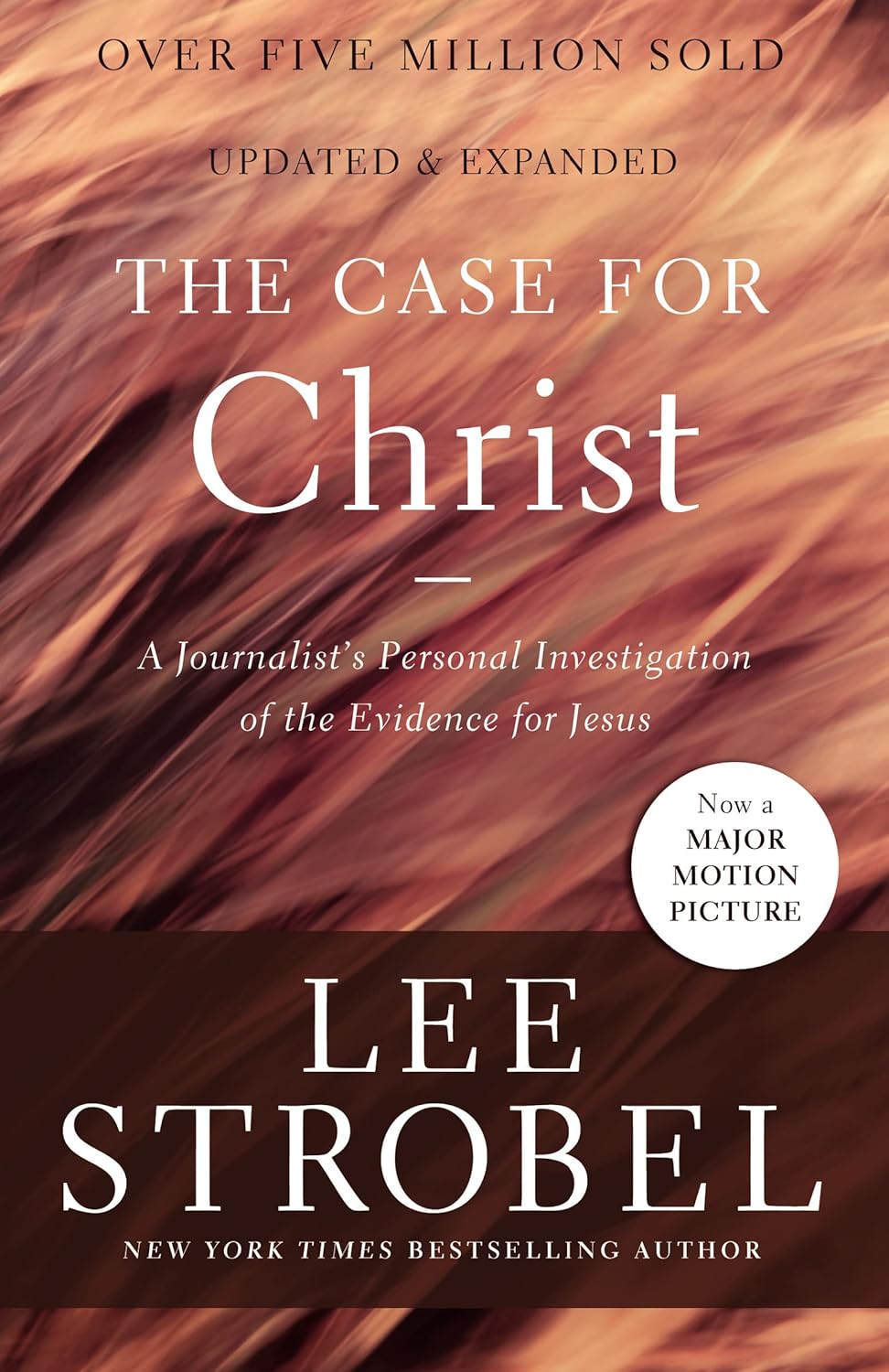
The Case for Christ
Lee Strobel


 Apple Books


 65 Min Reading Time
 Audio Version Available
About this book
Can a journalist trained to investigate the truth use his skills to disprove Christianity? Lee Strobel, award-winning legal editor of the Chicago Tribune, set out to do just that. An avowed atheist, Strobel's world was rocked when his wife, Leslie, embraced Christianity. Using his journalistic and legal training, Strobel embarked on a personal quest to debunk the claims of Christianity, hoping to save his marriage.
The Case for Christ chronicles Strobel's journey as he interviews leading experts in relevant fields—archaeology, science, and theology—probing for weaknesses and inconsistencies in the evidence for Jesus Christ. Dive into the evidence with Strobel as he relentlessly questions scholars about the historical accuracy of the Gospels, the possibility of miracles, and the reality of the resurrection.
Follow Strobel's intellectual and emotional odyssey from skepticism to faith as he wrestles with compelling evidence and grapples with the profound implications of his findings. Is there credible evidence that Jesus of Nazareth really is the Son of God? Join Strobel as he uncovers surprising, life-changing truths in The Case for Christ, a compelling investigation that will challenge your beliefs and invite you to consider the evidence for yourself.
Summary of Key Ideas
- •
Atheist-Turned-Christian's Personal Investigation
The book centers on Lee Strobel's personal journey from atheism to Christianity. As an investigative journalist with a legal background, Strobel approaches his investigation of Christianity with skepticism, aiming to disprove it using his journalistic and legal skills. This personal narrative adds a compelling layer to the book, drawing readers into Strobel's intellectual and spiritual struggles. The transformation he undergoes from a staunch atheist to a convinced Christian is a key element that resonates with readers who may be questioning their own beliefs or seeking evidence to support their faith.
- •
Investigative Journalism Meets Faith
Strobel employs his journalistic and legal expertise to rigorously examine the historical evidence supporting the claims of Christianity. He interviews various experts in relevant fields, such as theology, archaeology, and medicine, to gather evidence and analyze the reliability of the New Testament accounts. This investigative approach is central to the book, as Strobel meticulously evaluates the evidence for the life, death, and resurrection of Jesus Christ. By applying his analytical skills, he challenges readers to consider the evidence and draw their own conclusions.
- •
Gospels as Reliable Historical Accounts
One of the central arguments in the book is the reliability of the Gospel accounts as historical documents. Strobel questions the accuracy and consistency of the Gospels, examining whether they can be trusted as eyewitness accounts of Jesus' life and teachings. He interviews experts who argue for the Gospels' historical reliability, citing archaeological evidence, manuscript studies, and corroborating historical sources. This emphasis on the Gospels' trustworthiness is crucial to Strobel's case for Christ, as it establishes the foundation for the rest of his arguments.
- •
The Reality of Jesus' Death on the Cross
Strobel investigates the evidence surrounding Jesus' death on the cross, focusing on whether it is historically plausible and whether Jesus truly died. He consults with medical experts to analyze the physical effects of crucifixion, confirming that Jesus' death was a genuine event. This examination of Jesus' death is a pivotal point in the book, as it addresses a critical aspect of the Christian narrative and supports the claim that Jesus' sacrifice was real and significant.
- •
The Resurrection as the Cornerstone of Faith
The resurrection of Jesus is the cornerstone of Christian belief, and Strobel dedicates a significant portion of the book to examining the evidence for it. He explores various theories that attempt to explain away the resurrection, such as the stolen body theory and the swoon theory, and presents arguments against them. Strobel interviews experts who argue for the historicity of the resurrection, citing eyewitness accounts, the empty tomb, and the rapid spread of Christianity. The evidence for the resurrection is presented as the ultimate proof of Jesus' divinity and the validity of Christian faith.
- •
Confronting Intellectual Doubts and Challenges
Throughout his investigation, Strobel grapples with intellectual doubts and challenges to his atheistic worldview. He confronts difficult questions about the existence of God, the problem of evil, and the apparent contradictions in the Bible. This intellectual struggle is a relatable aspect of the book, as many readers may share similar doubts and questions. Strobel's willingness to confront these challenges head-on and seek answers from experts adds credibility to his journey and demonstrates that faith is not blind but rather based on reason and evidence.
- •
The Life-Transforming Power of Faith
Beyond the intellectual arguments, Strobel also explores the personal impact of faith in Christ. He shares stories of individuals whose lives have been transformed by their belief in Jesus, highlighting the positive effects of Christianity on individuals and communities. This emphasis on the personal and relational aspects of faith adds a human dimension to the book, demonstrating that Christianity is not just a set of beliefs but a way of life that brings meaning, purpose, and hope. Strobel's exploration of the personal impact of faith provides a compelling reason for readers to consider the claims of Christianity.
- •
Integrating Faith and Reason
The book promotes the idea that faith and reason are not mutually exclusive but can coexist and complement each other. Strobel demonstrates that it is possible to have a rational basis for belief in God and that Christianity is not simply a matter of blind faith. By presenting evidence and arguments in a logical and systematic manner, Strobel encourages readers to approach faith with an open mind and to consider the evidence before making a decision. This integration of faith and reason is a key theme of the book, appealing to readers who value intellectual integrity and seek a faith that is both meaningful and rational.
Chapter Recap

About The Author
Lee Strobel
Lee Strobel has a journalism degree from the University of Missouri and a Master of Studies in Law degree from Yale Law School, and was the award-winning legal editor of the Chicago Tribune and a spiritual skeptic until 1981. Now a strong Christian, he focuses his books on apologetic topics. His books include four Gold Medallion winners and the 2005 Christian Book of the Year (coauthored with Garry Poole). He and his wife live in Colorado.
Main Quotes
"Faith is trust or confidence in someone or something."
"Christianity hinges on the belief that Jesus was resurrected from the dead."
"The only way to truth is through facts."
"I was driven by skepticism and a quest for the truth."
"Christianity either is or isn't true. If it is, then it merits our belief and allegiance. If it isn't, then we should reject it forthrightly."
"If Jesus is the Son of God, his teachings are more than just good ideas from a wise teacher; they are divine insights on which I can confidently build my life."
"I felt like I was investigating a crime scene."
"Christianity is a religion of evidence."
"The resurrection is the cornerstone of Christianity. It's the basis of Christian hope. It's the miracle of all miracles."
"Ultimately, I allowed the evidence to lead me to the truth, regardless of whether it fit my original presuppositions."
Who Should Read This Book
Skeptics and atheists open to exploring Christianity
Christians seeking apologetic resources to defend their faith
Individuals struggling with doubts about their faith
People interested in the evidence for the resurrection of Jesus
Those who enjoy reading personal stories of conversion
Readers of Christian apologetics and evangelism books
Individuals interested in the intersection of faith and journalism
People seeking answers to questions about the historical Jesus
Book Summaries Like
The Case for Christ
FAQ

Free Access to LitNotes