




 DISCORD
The Color of Magic
Terry Pratchett

 Apple Books


 38 Min Reading Time
 Audio Version Available
About this book
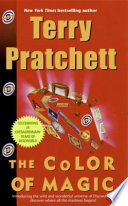
Imagine a world balanced on the backs of four elephants, who in turn stand on a giant turtle named Great A'Tuin, swimming through the cosmic void. This is Discworld, and it's about to be visited by its very first tourist.
Enter Twoflower, an incredibly naive and optimistic sightseer, complete with a camera and luggage. His guide? Rincewind, a wizard whose academic career was tragically cut short after one spell lodged itself in his brain, and who is mostly interested in running away from danger.
Together, they embark on a hilarious and perilous journey across Discworld, encountering everything from dragons (of the decidedly un-majestic variety) to ancient temples and belligerent druids. Rincewind just wants to survive, while Twoflower is determined to experience everything Discworld has to offer, even if it kills them both.
The Color of Magic is the first book in Terry Pratchett's bestselling Discworld series, a brilliantly funny and endlessly inventive fantasy that skewers genre conventions while creating a world all its own. Prepare for a wild ride filled with wit, wordplay, and a healthy dose of absurdity.
Summary of Key Ideas
- •
The Power of Perspective
The Unreliable Narrator and Perspective: Pratchett establishes a narrative voice that frequently breaks the fourth wall and offers subjective, often humorous, commentary. This unreliability extends to the characters, whose motivations and perceptions are skewed, creating a world where truth is relative and often absurd. The reader is constantly reminded that they are experiencing the story through a distorted lens, encouraging a critical and questioning approach to the narrative.
- •
Fantasy Turned on Its Head
Subversion of Fantasy Tropes: The book actively undermines traditional fantasy elements. Wizards are inept, heroes are cowardly, and quests go awry. This deconstruction challenges readers' expectations, inviting them to reconsider the genre's conventions. Pratchett uses humor to expose the absurdity inherent in many fantasy tropes, creating a refreshing and unconventional reading experience. This subversion establishes Discworld as a distinct and satirical world.
- •
Embracing the Absurd
The Importance of Chance and Chaos: Events in 'The Color of Magic' are often driven by random occurrences and chaotic forces, reflecting the unpredictable nature of life. Characters stumble into adventures through sheer luck or misfortune, highlighting the role of chance in shaping destiny. This emphasis on chaos challenges the notion of preordained fate or grand designs, suggesting that life is a series of unpredictable events rather than a predetermined path.
- •
The Anti-Hero's Journey
The Ineptitude of Rincewind: Rincewind, the cowardly and incompetent wizard, serves as a focal point for the story's humor and satire. His constant attempts to avoid danger and his general lack of magical ability highlight the contrast between expectation and reality in a world of wizards and dragons. Rincewind's ineptitude becomes a commentary on the nature of heroism and the fallibility of those in positions of power.
- •
A Tourist's Eye View
Satire of Tourist Culture: The character of Twoflower, the naive and enthusiastic tourist, allows Pratchett to satirize the phenomenon of tourism and its impact on different cultures. Twoflower's unwavering optimism and willingness to embrace new experiences, often in the face of danger, provide a humorous commentary on the tourist mindset. His interactions with Rincewind highlight the clash between innocence and cynicism, further emphasizing the book's satirical tone.
- •
The Double-Edged Sword of Magic
The Allure and Danger of Magic: Magic in Discworld is a powerful and unpredictable force that can be both wondrous and destructive. The book explores the temptation of magic and the potential consequences of wielding it irresponsibly. Characters who seek power through magic often find themselves facing unforeseen challenges and moral dilemmas, highlighting the complex relationship between ambition and responsibility.
Chapter Recap

About The Author
Terry Pratchett
Main Quotes
"It was octarine, the colour of magic."
"The fabric of space/time ripped and folded."
"Tourist, Rincewind decided, meant idiot."
"The luggage wasn't designed to be subtle."
"“Words bounce,” he said. “The good ones do.”"
"This is Luggage. Handle with extreme care."
"“That’s just fantasy,” said Twoflower."
"‘I just think the world ought to be more--sort of--organized.’"
"Magic never dies. It merely fades away."
"Some pirates achieved immortality by great deeds of cruelty or derring-do."
Who Should Read This Book
Fans of fantasy literature
Readers who enjoy humorous and satirical novels
Individuals familiar with and appreciative of classic fantasy tropes
Young adults and adults seeking lighthearted and entertaining reads
Readers who enjoy British humor
People interested in parodies of the fantasy genre
Fans of Douglas Adams and other similar authors
Readers looking for a fast-paced and unpredictable narrative
Book Summaries Like
The Color of Magic




FAQ

Free Access to LitNotes