




 DISCORD
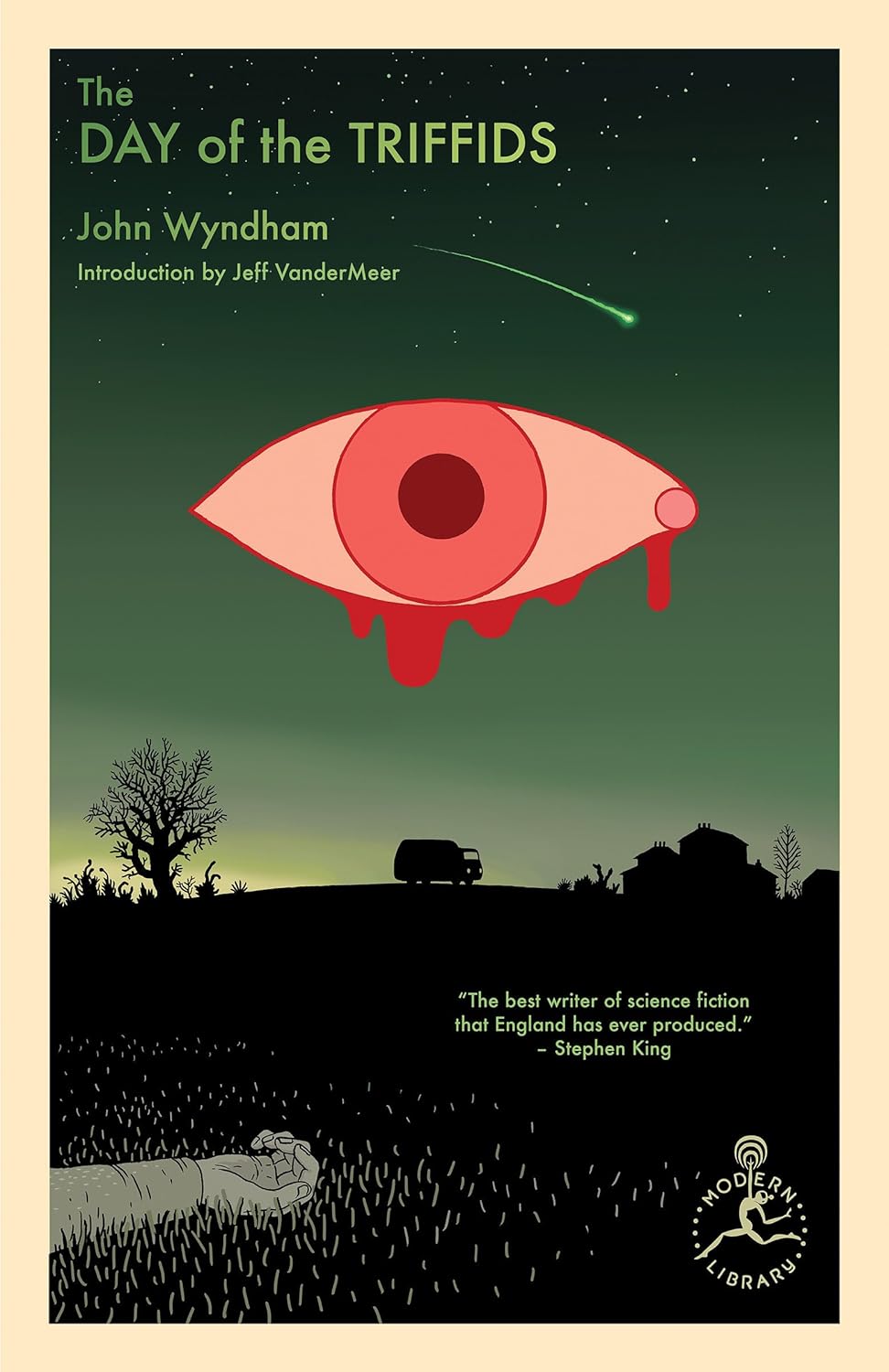
The Day of the Triffids
John Wyndham


 Apple Books


 56 Min Reading Time
 Audio Version Available
About this book
In a world plunged into darkness, a new terror rises. Bill Masen wakes in a hospital bed, bandages covering his eyes, only to discover that a meteor shower has left most of humanity blind. But the cosmic event has also unleashed another horror: the Triffids. These seven-foot-tall plants, capable of walking and armed with lethal stingers, are no longer content to be farmed for their oil.
With civilization crumbling, the sighted few must navigate a landscape of chaos, fending off desperate mobs and the ever-growing threat of the Triffids. Masen joins forces with Josella, another survivor, as they struggle to rebuild society and fight back against the relentless, man-eating plants.
In this post-apocalyptic nightmare, survival demands more than just sight. It requires courage, ingenuity, and a desperate fight to reclaim a world teetering on the brink of extinction. Can humanity adapt and overcome, or will the day of the Triffids mark the end of civilization as we know it?
Summary of Key Ideas
- •
The Fragility of Civilization
The fragility of civilization is a central theme. The novel vividly portrays how quickly societal structures can collapse when faced with a dual catastrophe: the mass blinding and the emergence of deadly, mobile plants. Law, order, and basic services disintegrate, revealing the vulnerability of human society and its dependence on interconnected systems. This collapse forces individuals to confront their own survival instincts and moral boundaries, highlighting the thin veneer of civilization that normally governs human behavior. The swiftness and totality of the breakdown serve as a stark warning about the potential for chaos lurking beneath the surface of everyday life.
- •
Individual Freedom vs. Social Order
The narrative explores the tension between individual freedom and the necessity of social order. As the world descends into chaos, characters grapple with the question of how to rebuild society while preserving individual liberties. Different communities emerge with varying approaches, some prioritizing authoritarian control for the sake of security, while others attempt to maintain democratic principles. The novel examines the challenges inherent in balancing these competing values in a post-apocalyptic world, where survival often demands difficult compromises and ethical dilemmas. This balancing act raises fundamental questions about the nature of governance and the social contract.
- •
The Instinct for Survival
Survival is a primal and pervasive theme. With the collapse of society, characters are thrust into a desperate struggle for existence. This involves securing food, shelter, and protection from both the triffids and other humans. The novel delves into the strategies and choices individuals make when faced with life-or-death situations, highlighting the resourcefulness and resilience of some, while exposing the ruthlessness and desperation of others. The will to survive becomes a driving force, shaping relationships and redefining moral codes in a world where the old rules no longer apply. The constant threat of danger underscores the precariousness of human life in the face of overwhelming odds.
- •
Ethical Dilemmas and Moral Compromise
The Day of the Triffids explores the ethical dilemmas arising from a world in crisis. Characters constantly face difficult choices with profound moral implications, such as whether to prioritize the safety of their own group over the well-being of others, or how to allocate scarce resources in a fair and just manner. The novel examines the complexities of ethical decision-making in a post-apocalyptic context, where traditional moral frameworks may no longer be adequate. It challenges readers to consider what they would do in similar circumstances and to confront the potential for moral compromise in the face of extreme pressure.
- •
The Power of Human Adaptability
The adaptability of humanity is showcased as a key factor in overcoming the apocalypse. Despite the devastation, pockets of survivors demonstrate remarkable ingenuity and resourcefulness in adapting to the new reality. They develop new skills, form new communities, and devise innovative strategies for combating the triffids and rebuilding their lives. This adaptability highlights the capacity of humans to learn, evolve, and thrive even in the most challenging circumstances. It suggests that the ability to adapt is essential for survival and that human resilience can triumph over seemingly insurmountable obstacles. This theme offers a sense of hope amidst the despair.
- •
Critique of Scientific Hubris
The book subtly critiques scientific hubris and the unintended consequences of technological advancement. The triffids themselves are a product of scientific experimentation, and their proliferation leads to global catastrophe. The novel suggests that humanity's pursuit of knowledge and technological progress must be tempered with caution and a deep understanding of potential risks. It serves as a cautionary tale about the dangers of unchecked scientific ambition and the importance of considering the ethical and environmental implications of new technologies before they are widely deployed. This critique remains relevant in an era of rapid technological change.
Chapter Recap

About The Author
John Wyndham
Main Quotes
"When a day that you happen to know is Wednesday starts off by sounding like Sunday, there is something seriously wrong somewhere."
"I don't think it had ever occurred to me that man's supremacy is not primarily due to his brain, as most of the books would have one think."
"The simple rely on a bolstering mass of maxim and precept, so do the timid, so do the mentally lazy – and so do all of us, more than we imagine."
"It was because we had our eyes closed, even when we could see. And we'd let things go on."
"The clock is the most sacred thing in a hospital."
"It is because nature is ruthless, hideous, and cruel beyond belief that it was necessary to invent morality and good taste."
"The essential quality of life is living; the essential quality of living is change; change is evolution; and we are part of it."
"Heaven alone knew as yet what others might arise—and it looked as though there would be plenty of them—but they would be new."
"There were things which simply were, and whether one believed in them or not did not alter their existence in the least."
"Say all you have to say in the fewest possible words, or your reader will be sure to skip them; and in the plainest possible words or he will misunderstand them."
Who Should Read This Book
Fans of classic science fiction
Readers interested in post-apocalyptic survival stories
Individuals who enjoy British literature
Readers who appreciate stories with themes of social commentary and the breakdown of society
Fans of suspenseful and thought-provoking narratives
Readers interested in ecological disaster stories
People who enjoy stories about humanity's struggle against unusual threats
Book Summaries Like
The Day of the Triffids


FAQ

Free Access to LitNotes