




 DISCORD
The Death of Expertise
Thomas M. Nichols


 Apple Books


 53 Min Reading Time
 Audio Version Available
About this book
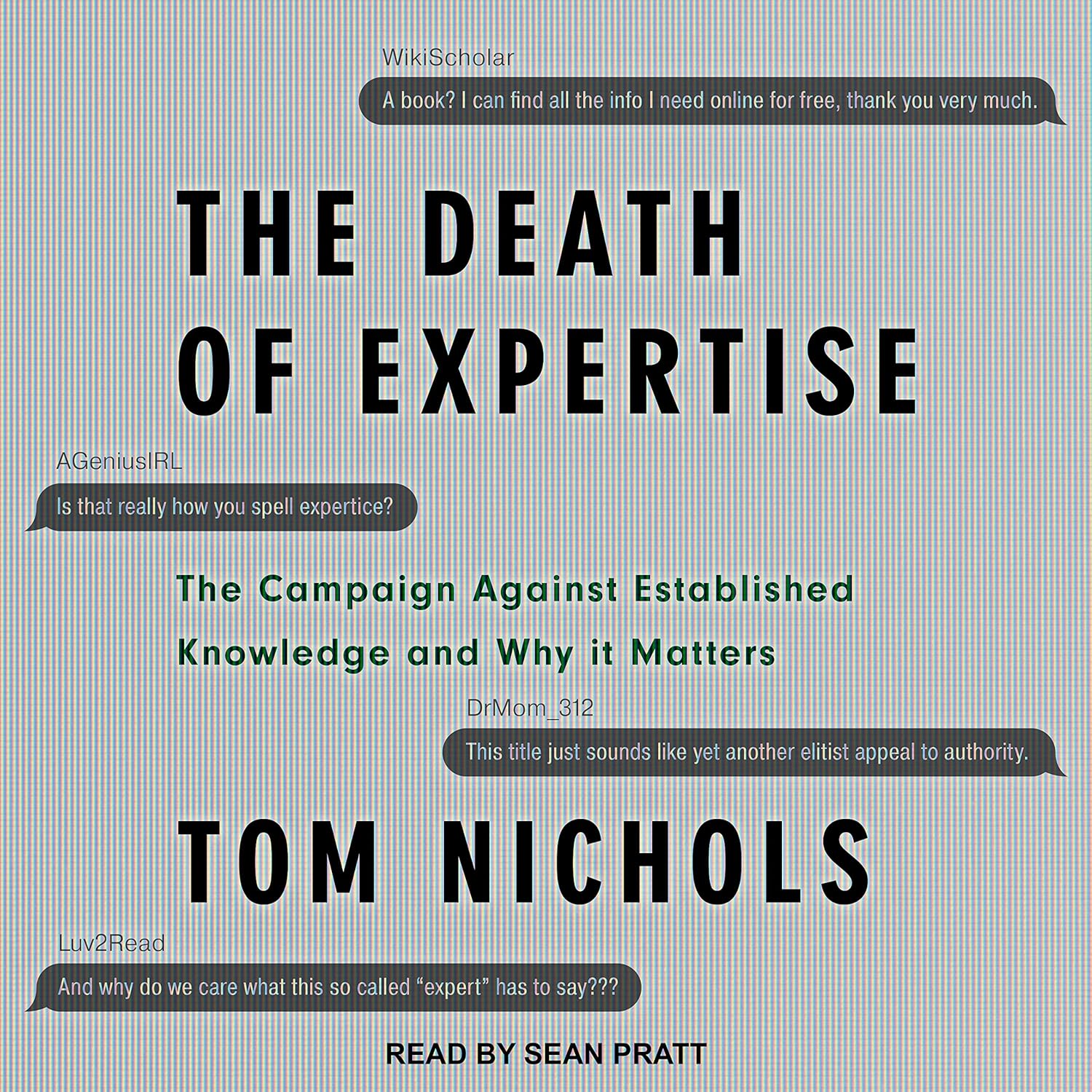
In an age defined by unprecedented access to information, are we truly more knowledgeable? Tom Nichols argues that the glut of readily available data has paradoxically fueled a dangerous rise in intellectual narcissism. With a quick search on WebMD or Wikipedia, ordinary citizens now believe they possess the same expertise as doctors and diplomats, leading to a rejection of informed discourse and a dismissal of genuine knowledge.
The Death of Expertise dissects the forces driving this phenomenon, from the open internet and the customer-service model in higher education to the 24-hour news cycle. Nichols reveals how this misguided egalitarianism breeds an army of ill-informed, angry citizens who denounce intellectual achievement and threaten the foundations of democracy. When everyone believes they're an expert, Nichols warns, we risk succumbing to populism, technocracy, or a volatile combination of both. This is not just an exploration of a troubling trend, but a vital warning about the survival of democracy in the Information Age.
Summary of Key Ideas
- •
The False Equivalence of Opinions
Egalitarianism's Peril: The book argues that the rise of the internet and the philosophy that 'everyone's opinion is equally valid' has dangerously undermined the value of expertise. Nichols contends that while equality is crucial in political and social spheres, it cannot extend to knowledge. Mistaking opinions for informed knowledge creates a false sense of parity, diluting the importance of genuine expertise acquired through rigorous study and experience. This ultimately leads to poorly informed decisions with potentially dire consequences, particularly in complex fields like medicine, engineering, and foreign policy.
- •
The Illusion of Knowledge from Google
The Google Effect: This idea highlights how easy access to information via search engines like Google has fostered a delusion of competence. People often mistake readily available information for actual knowledge, leading them to believe they are as knowledgeable as experts simply because they can quickly look up facts. This overconfidence discourages critical thinking and thorough learning, making individuals vulnerable to misinformation and reinforcing their biases. The book suggests that true expertise involves more than just knowing facts; it requires understanding context, nuance, and the limitations of one's knowledge.
- •
Knowledge as a Consumer Product
The Consumer Culture of Knowledge: Nichols explores how the consumer-driven demand for instant gratification and customized experiences has infiltrated the realm of knowledge. People now expect information to be delivered quickly, conveniently, and in a way that confirms their existing beliefs. This has led to the proliferation of simplified, sensationalized, and often inaccurate information sources catering to this demand. Experts are pressured to dumb down their knowledge or face being ignored, further eroding public understanding and respect for complex topics. This 'customer is always right' mentality undermines the authority of expertise and promotes a culture of intellectual laziness.
- •
The Perils of Unqualified Opinions
The Cult of the Amateur: This concept addresses the increasing celebration of amateurism and do-it-yourself approaches at the expense of professional expertise. While citizen science and participatory movements have their merits, Nichols warns against the uncritical embrace of amateur opinions in areas requiring specialized knowledge. The book argues that while enthusiasm and good intentions are valuable, they cannot replace the years of training, experience, and critical thinking that define expertise. This devaluation of professional knowledge can lead to dangerous outcomes, especially when applied to fields like healthcare, infrastructure, and security.
- •
Erosion of Institutional Trust
Distrust of Institutions: The book examines the growing distrust in institutions, including universities, governments, and the media, as a contributing factor to the death of expertise. This distrust stems from various sources, including perceived elitism, political polarization, and the spread of misinformation. However, Nichols argues that dismissing all institutions as inherently corrupt or biased undermines the foundations of knowledge and reasoned discourse. He emphasizes the importance of holding institutions accountable while recognizing their crucial role in generating, validating, and disseminating expertise.
- •
The Dunning-Kruger Effect in the Information Age
Dunning-Kruger Effect Amplified: Nichols implicitly addresses how the Dunning-Kruger effect—a cognitive bias where individuals with low competence overestimate their abilities—is amplified by the factors discussed in the book. The ease of accessing information, the culture of celebrating amateurism, and the distrust of experts all contribute to a situation where people with limited knowledge confidently assert their opinions, often dismissing or contradicting established expertise. This creates a cycle of misinformation and reinforces the death of expertise.
Chapter Recap

About The Author
Thomas M. Nichols
Main Quotes
"Americans have reached a point where ignorance, especially of anything related to public policy, is an actual virtue."
"To reject the advice of experts is to assert autonomy, a way for Americans to insulate their increasingly fragile egos from ever being told they're wrong about anything."
"The death of expertise is not just a rejection of existing knowledge. It is fundamentally a rejection of science and dispassionate rationality."
"These are dangerous times. Never have so many people had so much access to so much knowledge, and yet been so resistant to learning anything."
"The customer is always right is not only bad customer service, it's bad citizenship."
"We've all been encouraged to believe that everyone is an expert, that every opinion is as good as any other, and that anyone who thinks otherwise is elitist."
"The Internet has become a vast echo chamber, where people can find endless reinforcement of their own opinions, no matter how bizarre or unfounded."
"Democracy demands that we make informed judgments, but we seem increasingly disinclined to do so."
"The problem is not merely that people don't know things; it is that they don't know what they don't know."
"Public debate over almost everything devolves into trench warfare, in which the most important goal is to establish that the other person is wrong."
Who Should Read This Book
Politically engaged citizens concerned about the state of public discourse
Individuals interested in political science, sociology, and the role of knowledge in society
Academics and students in fields such as political science, communications, and education
Professionals who feel their expertise is being challenged or devalued
Anyone concerned about the spread of misinformation and the decline of critical thinking
Readers interested in understanding the relationship between experts, the public, and democracy
Book Summaries Like
The Death of Expertise
FAQ

Free Access to LitNotes