




 DISCORD
The Doors of Preception, and Heaven and Hell
Aldous Huxley


 Apple Books


 10 Min Reading Time
 Audio Version Available
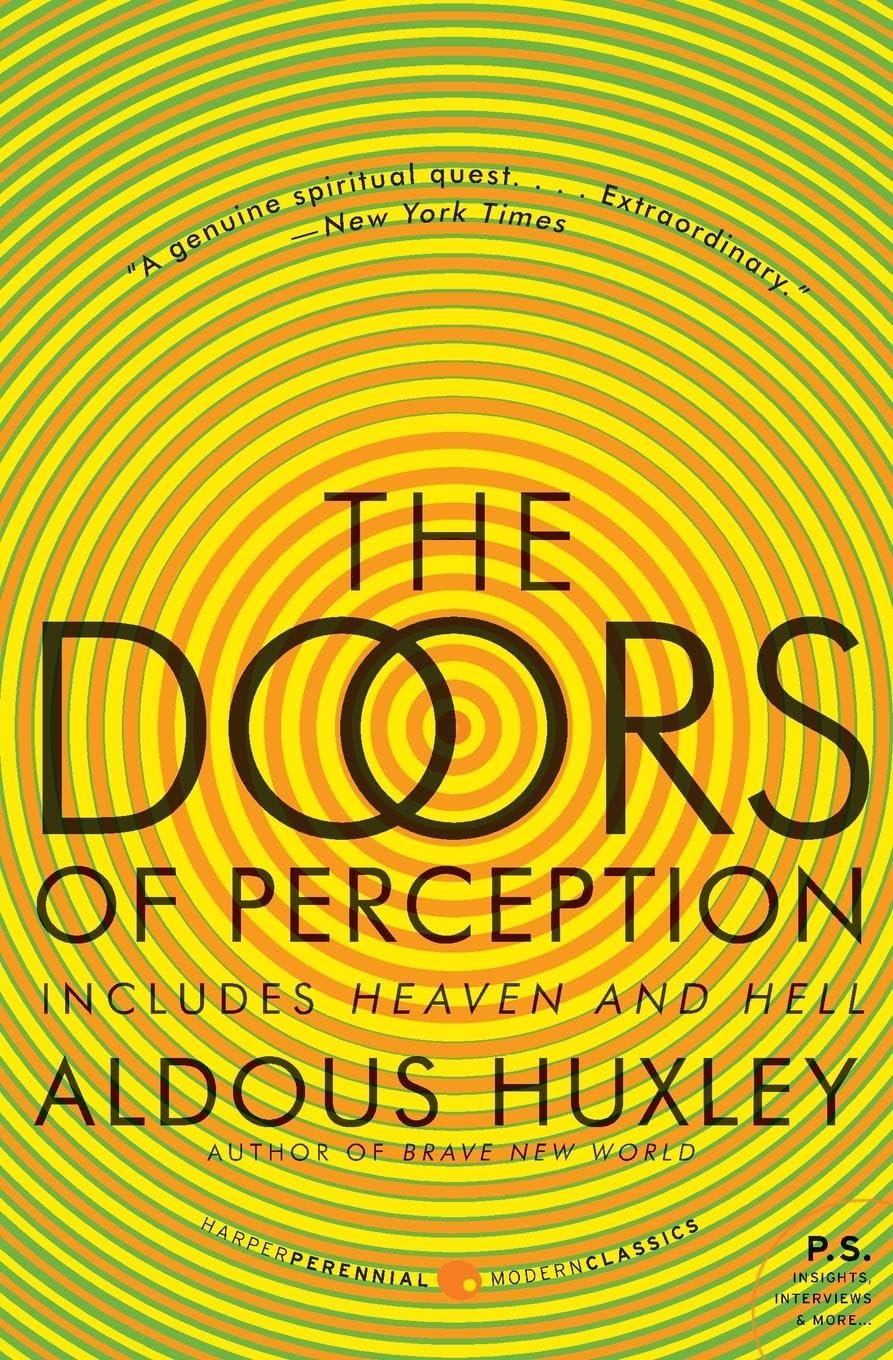
About this book
In The Doors of Perception and its companion essay, Heaven and Hell, Aldous Huxley pioneers the exploration of inner space, examining the mind's capacity to transcend ordinary consciousness. With unflinching honesty and intellectual rigor, Huxley recounts his mescaline experiment, vividly detailing the altered states of perception, the intensification of beauty, and the overwhelming sense of unity he experienced.
More than a mere chronicle of a drug-induced experience, this seminal work delves into the philosophical implications of expanded awareness. Huxley connects these visionary states to art, religion, and the very nature of reality, questioning our conventional understanding of self and the world. Heaven and Hell further explores the spectrum of visionary experience, from the beatific to the terrifying, illuminating the hidden landscapes of the human psyche.
Provocative, insightful, and beautifully written, The Doors of Perception remains a groundbreaking exploration of consciousness and a testament to the untapped potential of the human mind. Prepare to have your perceptions challenged and your understanding of reality forever altered.
Summary of Key Ideas
- •
The Brain as a Reducing Valve
The Reducing Valve of the Brain: Huxley proposes that the brain normally functions as a 'reducing valve,' filtering the vast amount of sensory information available to us. This filtering process is essential for survival, as it allows us to focus on what is immediately relevant. However, it also limits our perception of reality. Mescaline, and other psychedelic substances, temporarily disable this reducing valve, allowing a wider range of experiences to flood the consciousness.
- •
Ego Dissolution and Unity
Transcending the Self: A central theme is the potential for psychedelic experiences to dissolve the ego and allow for a sense of unity with the universe. Huxley details his own experience of losing his sense of self, leading to a profound feeling of interconnectedness with objects and the surrounding environment. This ego dissolution is presented as a pathway to spiritual insight and a deeper understanding of reality, detaching from personal anxieties and limitations.
- •
Exploring Visionary Realms
The Nature of Visionary Experience: Huxley explores the nature and validity of visionary experiences, particularly those induced by mescaline. He differentiates between 'good' and 'bad' visionary experiences, suggesting that the state of mind and intentions of the individual play a crucial role in shaping the experience. He argues that these experiences, even when drug-induced, can offer genuine insights into the nature of reality and the human condition, challenging conventional perceptions.
- •
Enhanced Aesthetic Perception
Aesthetic Revelation: Huxley emphasizes the enhanced aesthetic appreciation he experienced under the influence of mescaline. Ordinary objects, such as furniture and flowers, took on extraordinary beauty and significance. This heightened aesthetic sensitivity suggests that psychedelics can reveal a deeper level of beauty inherent in the world, often obscured by the brain's filtering mechanisms and habitual perception. This experience broadens the scope of artistic and creative potential.
- •
Mind Over Matter?
The Relationship Between Mind and Matter: The book investigates the complex relationship between the mind and the material world. Huxley questions whether our everyday perception accurately reflects reality or if it is merely a construct of our minds. Psychedelics, by altering perception, offer a glimpse into alternative ways of experiencing reality, suggesting that the mind may have a more significant role in shaping our experience of the world than we typically assume.
- •
The Spectrum of Consciousness
Heaven and Hell of the Mind: In 'Heaven and Hell,' Huxley delves into the potential for both ecstatic and terrifying experiences within the human mind. He discusses how certain stimuli, whether drug-induced or naturally occurring, can unlock states of profound bliss or intense suffering. This exploration highlights the delicate balance within the psyche and the power of the mind to create its own realities, independent of external circumstances.
- •
Art as a Gateway
Art, Symbolism, and Archetypes: Huxley considers the role of art and symbolism in expressing the ineffable aspects of human experience. He suggests that art can serve as a bridge between the everyday world and the deeper realms of consciousness, capturing and communicating visionary insights. Furthermore, he touches upon the concept of archetypes, universal patterns of thought and imagery that emerge in visionary states, connecting individual experiences to a collective human consciousness.
- •
Questioning Reality's Boundaries
Critique of Everyday Perception: Throughout both essays, Huxley critiques the limitations of ordinary perception. He argues that our conventional way of seeing the world is narrow and restrictive, preventing us from accessing deeper levels of reality and understanding. By challenging these limitations, Huxley encourages readers to question their assumptions about the nature of reality and to seek out alternative ways of knowing and experiencing the world.
Chapter Recap

About The Author
Aldous Huxley
Main Quotes
"To be shaken out of the ruts of ordinary perception, to be shown for a few timeless hours, the outer and inner world, not as they appear to an animal obsessed with survival or to a human being obsessed with words and notions, but as they are apprehended, directly and unconditionally, by Mind at Large."
"The man who comes back through the Door in the Wall will never be quite the same as the man who went out. He will be wiser but less sure, happier but less self-satisfied, humbler in acknowledging his ignorance yet better equipped to understand the relationship of words to things, of systematic reasoning to the unfathomable mystery which it tries, forever vainly, to comprehend."
"That humanity at large will ever be able to dispense with Artificial Paradises seems very unlikely. Most men and women have an almost infinite capacity for taking things for granted."
"The urge to escape, the longing to transcend the limiting self is...a principal appetite of the soul."
"We live together, we act on, and react to, one another; but always and in all circumstances we are by ourselves."
"The mind is its own place, and in itself can make a heaven of hell, a hell of heaven."
"Our brains filter out the irrelevant and the practically useless."
"The mescaline taker knows that he is seeing what Adam saw the morning of creation – the miracle, moment by moment, of naked existence."
"The kingdom of heaven is not a place; it’s a state of mind."
"The schizophrenic is like a man permanently under the influence of mescaline; he is merely unlike the mescaline taker in that he has no control over the experience."
Who Should Read This Book
Readers interested in philosophy and metaphysics
Individuals exploring altered states of consciousness and the effects of psychedelics
Those interested in the history of ideas and counterculture movements
Students of literature and intellectual history
Readers interested in psychology, particularly perception and the nature of reality
People seeking personal growth and spiritual exploration
Admirers of Aldous Huxley's other works, such as Brave New World
Individuals interested in art, aesthetics, and the nature of beauty
Book Summaries Like
The Doors of Preception, and Heaven and Hell
FAQ

Free Access to LitNotes