




 DISCORD
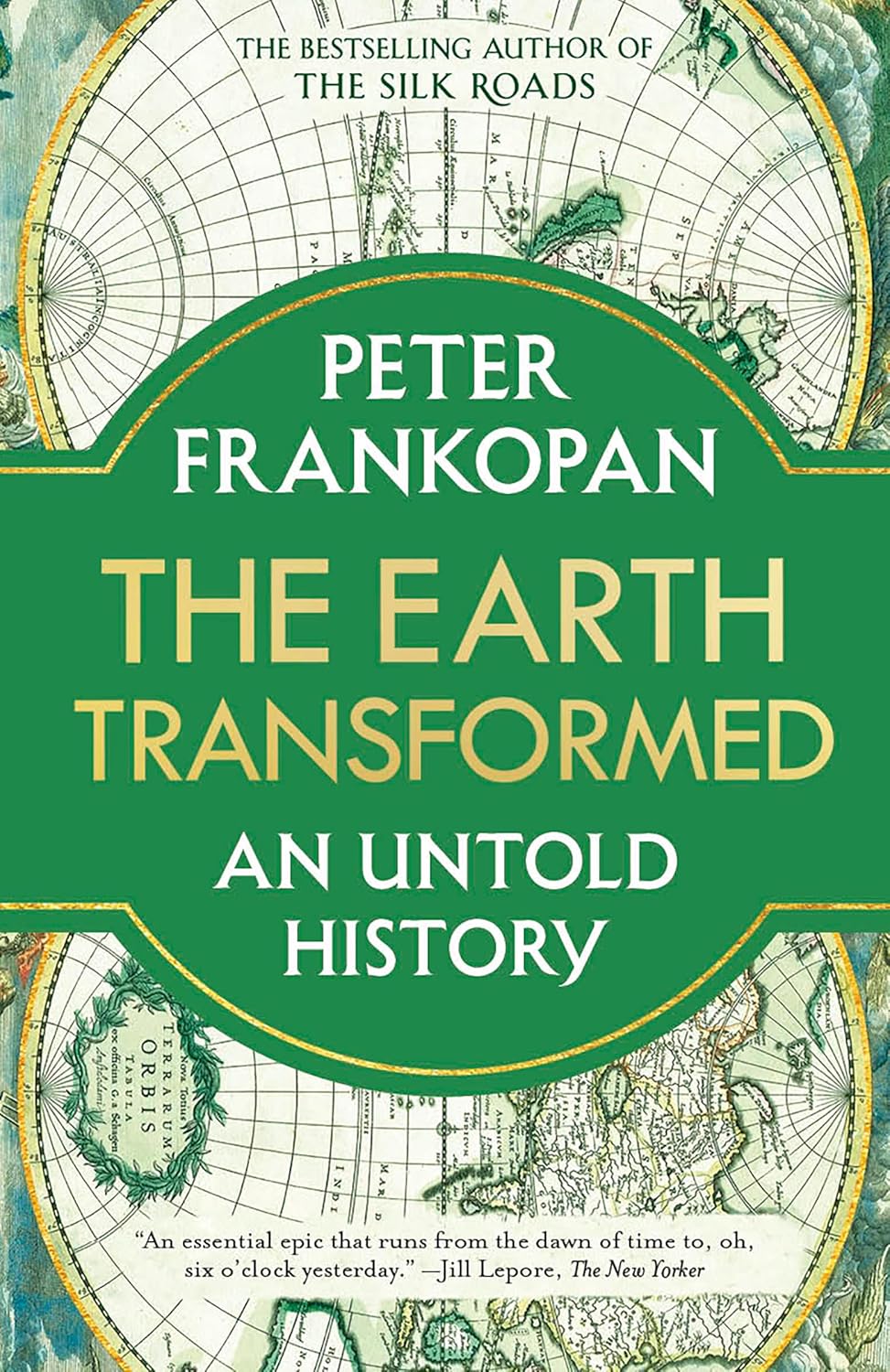
The Earth Transformed
Peter Frankopan


 Goodreads Choice Awards


 210 Min Reading Time
 Audio Version Available
About this book
From the international bestselling author of The Silk Roads comes a revolutionary history that reveals how climate change has dramatically shaped the development—and demise—of civilizations across time.
We tend to remember history through its leaders and battles, but Peter Frankopan argues that the most powerful forces have often been the most elemental: devastating floods, brutal winters, catastrophic droughts, and shifting ecosystems. In The Earth Transformed, Frankopan masterfully connects our present-day environmental crisis to the long sweep of human history, demonstrating that nature has always played a fundamental role in the rise and fall of empires.
Drawing on cutting-edge science and brilliant historical scholarship, this epic narrative spans centuries and continents. Discover how volcanic eruptions toppled the Ottoman Empire, how crop failure fueled the rise of the Vikings, how climate patterns dictated regime change in Baghdad, and how solar activity influenced westward expansion in North America. Frankopan reveals how humanity's relationship with the natural world—from the origins of religion and language to the quest for agricultural surplus and efforts to control the weather—has consistently shaped our destiny.
Blending profound insights with compelling storytelling, The Earth Transformed offers a vital and urgent re-evaluation of our past, offering salutary lessons for our precarious future and radically reframing how we understand our world and our place within it.
Summary of Key Ideas
- •
Environmental Determinism: Nature as a Primary Historical Driver
Frankopan posits that the natural environment, including climate, geography, and natural disasters, has been a crucial, if not the defining, factor in shaping global history. This perspective, known as environmental determinism, suggests that environmental conditions significantly influence the development of human societies, cultures, and civilizations. The book challenges traditional historical narratives that often prioritize human agency and socio-political factors, arguing instead for a more holistic understanding that acknowledges the profound impact of the Earth's systems. From the rise and fall of empires to migrations and technological innovations, Frankopan illustrates how environmental forces have consistently molded human trajectories throughout time. This key idea reframes our understanding of history by placing the environment at the forefront of the narrative.
- •
Climate Change and Societal Transformation: Lessons from the Past
The book explores the historical relationship between climate change and societal transformation, demonstrating how shifts in climate patterns have triggered significant changes in human societies. Frankopan examines instances of droughts, floods, volcanic eruptions, and other climate-related events and analyzes their impact on agriculture, trade, migration, and political stability. By drawing parallels between past climate challenges and contemporary concerns about global warming, the book suggests that understanding historical responses to climate change can provide valuable insights for addressing current and future environmental crises. It underscores the importance of learning from past successes and failures to build more resilient and adaptable societies in the face of ongoing climate change.
- •
Human Agency and Environmental Impact: A Two-Way Street
While emphasizing the influence of the environment on human history, Frankopan also acknowledges the reciprocal relationship between humans and the environment. The book explores how human activities, such as deforestation, agriculture, and urbanization, have altered the natural world and contributed to environmental change. It examines the unintended consequences of human actions and highlights the growing impact of human activities on the Earth's systems. By recognizing the two-way interaction between humans and the environment, the book avoids a purely deterministic view of history and emphasizes the importance of responsible environmental stewardship. It calls for a greater awareness of the environmental impact of human actions and the need for sustainable practices to mitigate future harm.
- •
The Interconnectedness of Global Systems: Environmental Events and Global Consequences
Frankopan highlights the interconnectedness of global systems, demonstrating how environmental events in one part of the world can have far-reaching consequences across the globe. The book examines historical examples of how climate anomalies, such as El Niño events, have impacted agricultural production, trade routes, and political stability in distant regions. It underscores the importance of understanding the complex interactions between different environmental and human systems to anticipate and manage global challenges. By emphasizing the interconnectedness of the world, the book encourages a global perspective on environmental issues and calls for international cooperation to address shared threats.
- •
Natural Disasters as Catalysts for Change: Destruction and Innovation
The book analyzes how natural disasters have acted as catalysts for change throughout history, leading to both destruction and innovation. Frankopan examines instances of earthquakes, volcanic eruptions, and other natural disasters and explores their impact on human settlements, infrastructure, and social structures. While acknowledging the devastating consequences of these events, the book also highlights how they have spurred innovation in architecture, engineering, and disaster preparedness. It suggests that natural disasters, while destructive, can also create opportunities for societies to rebuild and adapt, ultimately leading to greater resilience and sustainability. This perspective underscores the importance of learning from past disasters to mitigate future risks and build more resilient communities.
- •
The Role of Technology in Shaping Environmental Interactions
Frankopan explores the role of technology in shaping human interactions with the environment, highlighting how technological innovations have both enabled humans to exploit natural resources and provided tools for mitigating environmental damage. The book examines the impact of technologies such as irrigation systems, mining techniques, and transportation networks on the environment, as well as the development of renewable energy sources and other sustainable technologies. It suggests that technology can play a crucial role in addressing environmental challenges, but also cautions against the unintended consequences of technological advancements. By analyzing the complex relationship between technology and the environment, the book encourages a thoughtful and responsible approach to technological innovation.
Chapter Recap

About The Author
Peter Frankopan
Main Quotes
""18 per cent of total global deaths in 2018 were caused by the effects of fossil-fuel pollution.""
""Peter Frankopan's The Earth Transformed: An Untold History offers timely insights into how humanity's success is intrinsically linked to the environment.""
""Humans have been hammering nature for much longer than we can imagine.""
""The Earth Transformed: An Untold History examines how climate and environment impact and shape the course of human civilization.""
""Vast, learned and timely work…The Earth Transformed is Sapiens for grown-ups….It holds lessons for a world grappling with environmental crises.""
""Climate may not serve as a catalyst to dramatic change, but could well act as a complicator.""
""It has taken me the best part of a month to read ´The Earth Transformed´ by @peterfrankopan and it was worth it! It certainly expanded my horizons.""
""This vast and timely study shows that climate change has shaped human history in profound ways, and will continue to do so.""
""The Earth Transformed shows you how everything fits together.""
""His most recent book, The Earth Transformed, is indisputably ambitious, requiring a polymath's grasp of multiple disciplines, indefatigable research, and a willingness to challenge established narratives.""
Who Should Read This Book
Readers interested in environmental history
Academics and students of history, geography, and environmental science
Individuals concerned about climate change and its historical context
General readers interested in grand narratives of human civilization
Those who enjoyed Peter Frankopan's previous works, such as "The Silk Roads"
Readers looking for a comprehensive and sweeping historical account
Book Summaries Like
The Earth Transformed

FAQ

Free Access to LitNotes