




 DISCORD
The End of Faith: Religion, Terror, and the Future of Reason
Sam Harris


 Amazon Best Sellers
 Apple Books


 49 Min Reading Time
 Audio Version Available
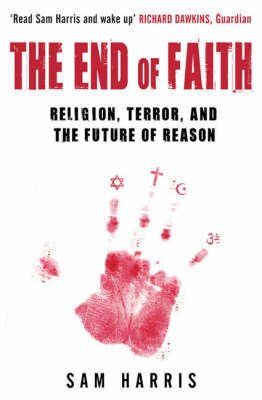
About this book
In The End of Faith, Sam Harris challenges the unchecked influence of religion in the modern world, dissecting the perilous collision between faith and reason. With unflinching clarity, Harris leads a historical exploration of humanity's tendency to embrace religious belief, even when it inspires horrific acts of violence. He argues that in an age of advanced weaponry, our continued deference to religious dogma threatens our very survival.
Harris dares to expose the dangers of religious moderation, asserting that it obscures the underlying role of faith in perpetuating conflict. Drawing from neuroscience, philosophy, and Eastern mysticism, he envisions a truly modern foundation for ethics and spirituality—one grounded in secular humanism and a scientifically informed understanding of consciousness. The End of Faith is a provocative call for a rational, evidence-based worldview, offering a path towards a more peaceful and enlightened future.
Summary of Key Ideas
- •
Religion's Immunity to Reason
Harris argues that religion, unlike other areas of human knowledge, is largely immune to rational criticism. He contends that religious beliefs are often based on faith, dogma, and ancient superstitions, rather than empirical evidence or logical reasoning. This immunity allows harmful ideas to persist and influence behavior, leading to social conflict and hindering progress. He critiques the uncritical acceptance of religious doctrines, which he believes prevents individuals from questioning and challenging beliefs that may be detrimental to themselves and society.
- •
The Connection Between Faith and Violence
A central theme in the book is the link between religious belief and violence. Harris asserts that certain religious doctrines can directly inspire acts of terror and intolerance. He points to historical and contemporary examples of religious extremism and violence to support his argument. He emphasizes that while not all religious people are violent, the specific beliefs within some religions can provide justification for violence, particularly when those beliefs are interpreted literally or when they foster a sense of righteous indignation against those who hold different views. The book does not shy away from naming specific religions and doctrines that Harris believes are particularly problematic.
- •
The Superiority of Reason and Science
Harris champions reason and science as superior methods for understanding the world and making moral decisions. He contrasts the empirical, evidence-based approach of science with the faith-based approach of religion, arguing that science offers a more reliable path to truth. He suggests that a commitment to reason and critical thinking is essential for building a more just and peaceful society. By embracing scientific inquiry and rational discourse, Harris believes humanity can overcome the limitations of religious dogma and create a more enlightened future.
- •
The Limits of Religious Tolerance
The book challenges the notion that all beliefs are equally valid or deserving of respect. Harris argues against religious tolerance when that tolerance extends to harmful or irrational beliefs. He contends that certain religious ideas, particularly those that promote violence or discrimination, should be openly criticized and challenged. He advocates for a more nuanced approach to tolerance, one that distinguishes between respecting individuals and respecting their beliefs, particularly when those beliefs have negative consequences.
- •
Spirituality Without Religion
Harris explores the concept of spirituality outside the framework of traditional religion. He suggests that it is possible to experience awe, wonder, and a sense of connection to something larger than oneself without relying on religious dogma or supernatural beliefs. He alludes to the potential of meditation and mindfulness practices, and altered states of consciousness (without pharmacological intervention) to cultivate spiritual experiences grounded in reason and empirical reality. This implies a pathway to profound personal experiences divorced from traditional religious frameworks.
- •
The Dangers of Religious Influence on Society
Harris raises concerns about the influence of religion on public policy and education. He argues that religious beliefs should not be allowed to dictate laws or educational curricula, particularly when those beliefs conflict with scientific evidence or ethical principles. He advocates for a secular society in which decisions are based on reason, evidence, and the common good, rather than religious dogma. This includes promoting critical thinking and scientific literacy in schools to counter the influence of religious indoctrination.
- •
Confronting Religious Extremism and Terror
The book confronts the problem of religious extremism, particularly Islamic extremism, in the context of terrorism. Harris analyzes the specific doctrines and ideologies that motivate religious terrorists, arguing that their actions are not simply the result of political grievances but are rooted in religious beliefs. He emphasizes the need to understand the theological justifications for violence in order to effectively combat terrorism. This involves directly challenging the religious narratives that fuel extremism and promoting alternative interpretations of religious texts that emphasize peace and compassion.
- •
The Problem with Faith as a Virtue
Harris critiques the concept of faith itself, defining it as belief without evidence. He argues that faith is not a virtue but a form of intellectual dishonesty that can lead to irrational and harmful behavior. He suggests that faith is often used to justify beliefs that cannot be supported by reason or evidence, and that it discourages critical thinking and open inquiry. By rejecting faith as a valid basis for belief, Harris seeks to promote a more rational and evidence-based approach to understanding the world.
- •
The Need for Secular Ethics
Harris touches on the ethical implications of religious beliefs, particularly those that promote intolerance or discrimination. He argues that religious morality is often based on outdated or arbitrary rules that are inconsistent with modern ethical principles. He advocates for a secular ethics grounded in reason, empathy, and the well-being of all individuals. This involves promoting universal values such as compassion, justice, and equality, which are not dependent on religious belief.
Chapter Recap

About The Author
Sam Harris
Sam Harris (born 1967) is an American non-fiction writer, neuroscientist and proponent of scientific skepticism. He is the author of *The End of Faith* (2004), which won the 2005 PEN/Martha Albrand Award, and *Letter to a Christian Nation* (2006), a rejoinder to the criticism his first book attracted. ([Source][1]) [1]: http://en.wikipedia.org/wiki/Sam_Harris_(author)
Main Quotes
"Faith may be defined as an uncritical belief in something for which there is no evidence."
"The problem with religion is the problem with tribalism."
"We have names for people who have sex with corpses, who eat their friends, or who kill one person in the name of another – we call them psychopaths. But when these same activities are sanctioned by religion, we call them believers."
"The conflict between science and religion is inherent and (very nearly) inescapable."
"The truth is that we simply do not know what to make of the religious impulse."
"It is time we admitted that faith is nothing more than our permission to believe things on insufficient evidence."
"The only angels we need invoke are those of our better nature: reason, honesty, and love. The only demons we must fear are those that lurk inside every human mind: ignorance, hatred, greed, and faith."
"Theologians can argue over definitions until they run out of words."
"Some propositions are so dangerous that it may even be ethical to kill people for believing them."
"The idea that each of us is an individual psyche, housed in a body, is as much an assumption as the belief in an external God."
Who Should Read This Book
Atheists and agnostics
Secular humanists
Individuals interested in the philosophy of religion
Readers concerned about the relationship between religion and violence
Those interested in rationalism and critical thinking
People seeking a non-religious ethical framework
Intellectuals and academics interested in religious studies
Individuals who have experienced religious deconstruction or are questioning their faith
Readers interested in political commentary related to religion
Those critical of religious dogma and institutions
Book Summaries Like
The End of Faith: Religion, Terror, and the Future of Reason


FAQ

Free Access to LitNotes