




 DISCORD
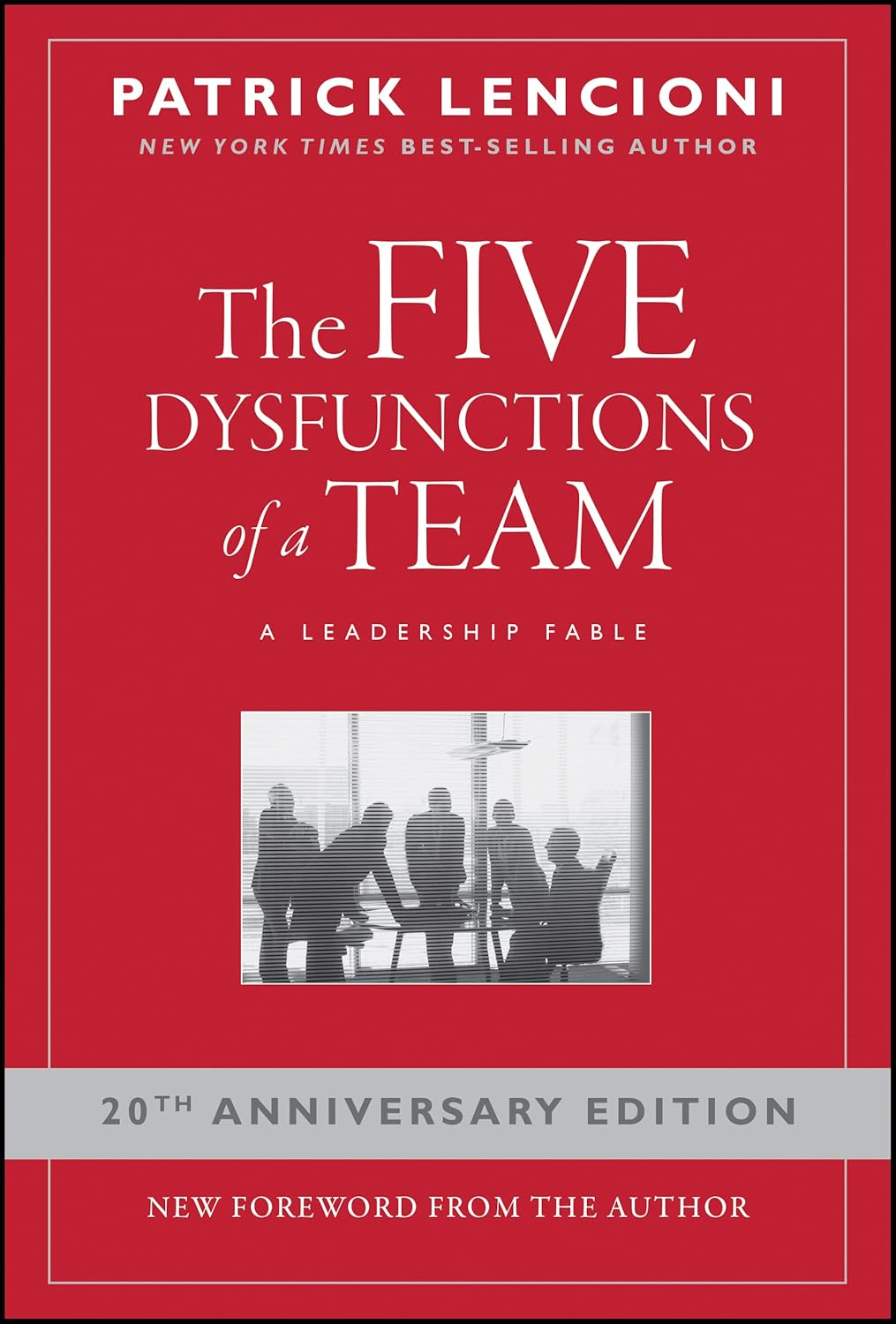
The Five Dysfunctions of a Team
Patrick M. Lencioni


 Amazon Best Sellers
 Apple Books


 38 Min Reading Time
 Audio Version Available
About this book
Kathryn Petersen, DecisionTech's new CEO, faces a daunting challenge: unite a dysfunctional team on the brink of collapse. In Patrick Lencioni's The Five Dysfunctions of a Team, a gripping leadership fable reveals the hidden flaws that sabotage even the best teams.
More than just a story, this New York Times bestseller unveils a powerful model for building cohesive, high-performing teams. Lencioni identifies the five critical dysfunctions—absence of trust, fear of conflict, lack of commitment, avoidance of accountability, and inattention to results—that hinder teamwork and provides actionable steps to overcome them.
Whether you're an executive, manager, or team leader, this book offers a timeless lesson: Courage and insight are essential to leadership. Discover how to navigate the complexities of teamwork, minimize politics, and drive extraordinary results.
Summary of Key Ideas
- •
Building Trust Through Vulnerability
Absence of Trust: The foundational dysfunction, stemming from a reluctance to be vulnerable within the group. Teams that lack trust are hesitant to admit mistakes, ask for help, or acknowledge weaknesses. This creates an environment where team members conceal their true selves, fearing judgment or punishment. Overcoming this requires leaders to foster vulnerability-based trust, where individuals feel safe enough to be authentic and open with one another. Building trust involves sharing personal histories, acknowledging imperfections, and creating space for honest feedback without fear of retribution. Without trust, the subsequent dysfunctions are inevitable.
- •
Embracing Healthy Conflict
Fear of Conflict: The second dysfunction arises from the absence of trust, leading to an artificial harmony. Teams avoid conflict to prevent hurting feelings or appearing disagreeable. However, this avoidance stifles productive debate and prevents the thorough exploration of ideas. Lencioni emphasizes that healthy conflict, characterized by passionate, unfiltered discussions around issues, is essential for effective decision-making. It allows teams to consider diverse perspectives, challenge assumptions, and arrive at the best possible solutions. Overcoming this dysfunction requires creating a culture where conflict is seen as a necessary and even positive aspect of teamwork.
- •
Securing Commitment Through Clarity
Lack of Commitment: The third dysfunction emerges from the fear of conflict. When team members don't openly debate and challenge ideas, they're less likely to fully commit to decisions, even if they outwardly agree. This lack of buy-in results in ambiguity and a lack of clear direction, as individuals harbor private reservations and are hesitant to take ownership. Commitment requires clarity and closure, ensuring that everyone understands the decisions made and is willing to support them, even if they initially disagreed. Leaders must foster an environment where dissenting opinions are heard and considered, and where decisions are clearly communicated and reinforced.
- •
Fostering Accountability and High Standards
Avoidance of Accountability: The fourth dysfunction stems from a lack of commitment. When team members are not fully on board with a plan, they're less likely to hold themselves and their peers accountable for its execution. This creates a culture of low standards, where poor performance goes unaddressed and mediocrity prevails. Accountability requires a willingness to confront difficult issues and to provide direct, constructive feedback. Teams must establish clear goals and expectations, track progress regularly, and address performance gaps promptly and fairly. This creates a culture of responsibility and ensures that everyone is contributing their best efforts.
- •
Prioritizing Collective Results
Inattention to Results: The ultimate dysfunction, resulting from the avoidance of accountability, is the inattention to collective results. When team members prioritize individual goals or ego over the team's overall objectives, the team's performance suffers. This can manifest as a focus on personal recognition, career advancement, or departmental interests, rather than on achieving shared outcomes. Overcoming this requires a strong focus on collective results, where the team's success is valued above individual accomplishments. Leaders must emphasize the importance of shared goals, track progress towards those goals, and reward team-based achievements.
- •
The Pivotal Role of Leadership
Leadership's Role: Throughout the framework, Lencioni stresses the critical role of leadership in mitigating these dysfunctions. Leaders must model vulnerability, encourage healthy conflict, drive commitment, enforce accountability, and focus on results. They must be willing to make difficult decisions, confront challenging behaviors, and prioritize the team's needs above their own. Effective leadership involves creating a safe and supportive environment where team members feel empowered to be their best selves and to contribute fully to the team's success. Ultimately, the leader sets the tone for the team's culture and its ability to overcome the five dysfunctions.
Chapter Recap

About The Author
Patrick M. Lencioni
Main Quotes
"Remember teamwork begins by building trust. And the only way to do that is to overcome our need for invulnerability."
"Great teams do not hold back with one another. They are unafraid to air their dirty laundry."
"If we don't trust one another, then we aren't going to engage in open, constructive, ideological conflict."
"A team that is not afraid of conflict is a team that is not afraid to change."
"If everything is important, then nothing is."
"The ultimate dysfunction of a team is the tendency of members to care about something other than the collective goals of the group."
"Teams that lack accountability tend to demonstrate an absence of standards."
"Without accountability, people often fail to perform. And when that happens, other team members resent it."
"When there is trust, conflict, commitment, and accountability, the team is free to focus on results."
"The best teams accomplish great things because their members willingly put aside their individual needs and agendas and focus on what is best for the team."
Who Should Read This Book
Business leaders
Managers
Team leaders
Project managers
Human resources professionals
Organizational development consultants
Executive teams
Team members in any industry
Individuals interested in improving teamwork and collaboration
Students of management and leadership
Individuals seeking to improve team dynamics
Those interested in organizational behavior
Readers of business fables
Book Summaries Like
The Five Dysfunctions of a Team




FAQ

Free Access to LitNotes