




 DISCORD
The Free Press
Hilaire Belloc


 Apple Books


 18 Min Reading Time
 Audio Version Available
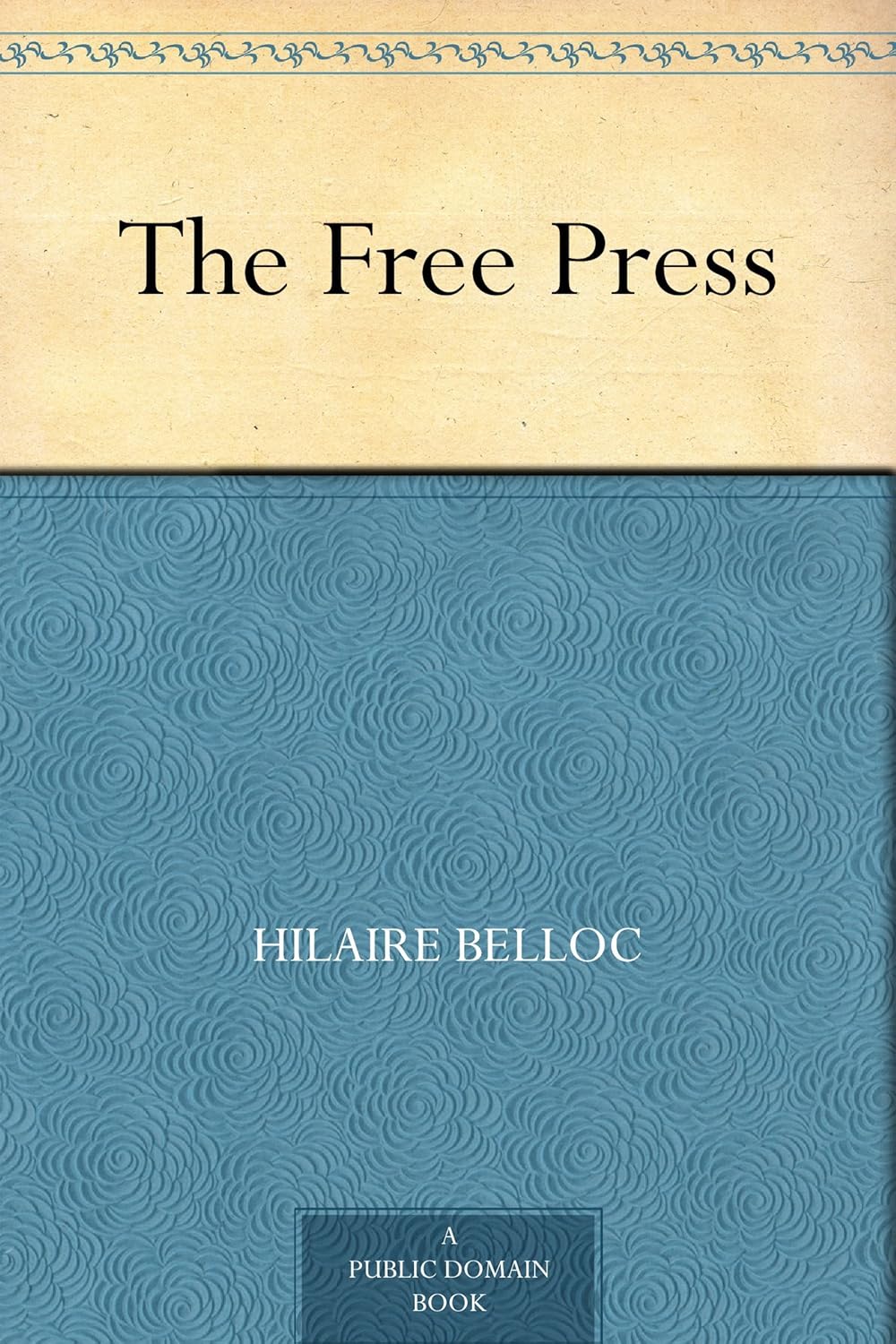
About this book
In Hilaire Belloc's The Free Press, published in 1918, a prescient critique of the modern news media unfolds. Belloc argues that the press, a child of capitalism, has become beholden to advertisers and driven by profit, sacrificing truth and manipulating public opinion. He exposes how powerful media outlets suppress genuine political discourse in favor of manufactured narratives, a reality that resonates even more strongly today.
Belloc's remedy lies in the creation of a truly independent press, one that fosters diverse perspectives and empowers readers to discern the truth for themselves. He champions the idea that by engaging with a multitude of voices, even extreme ones, individuals can arrive at informed opinions, much like assessing testimonies in a trial. The Free Press is a call to rethink our consumption of news and to recognize the vital importance of a media landscape free from undue influence, offering a timeless analysis of media ethics and accountability that remains profoundly relevant in the digital age.
Summary of Key Ideas
- •
The Necessity of a Truly Free Press
Belloc argues that a truly free press is essential for a healthy democracy. He contends that the public needs access to unbiased information from diverse sources to make informed decisions. Without a free press, citizens are vulnerable to manipulation and propaganda, undermining the foundations of self-governance. This concept emphasizes the importance of independent journalism in holding power accountable and ensuring transparency in government and other institutions. The absence of such a press leads to an uninformed citizenry, susceptible to the agendas of those who control the flow of information.
- •
The Influence of Powerful Interests
Belloc asserts that the mainstream press of his time was heavily influenced, if not outright controlled, by powerful financial interests. He suggests that these interests, often Jewish financiers, used their influence to shape public opinion and advance their own agendas. This control manifested in biased reporting, suppression of dissenting voices, and the promotion of specific political and economic ideologies. Belloc viewed this as a grave threat to democracy, as it prevented the public from receiving a balanced and accurate portrayal of events, leading to manipulated consent.
- •
The Dangers of Media Concentration
A core argument in "The Free Press" is that concentrated ownership of media outlets leads to a lack of diversity in viewpoints. When a few powerful entities control the majority of newspapers and other news sources, dissenting voices are marginalized, and alternative perspectives are suppressed. This creates an echo chamber where certain narratives are amplified while others are ignored, resulting in a skewed and incomplete understanding of the world. Belloc advocates for a more decentralized media landscape to foster a wider range of opinions and promote a more informed public discourse.
- •
The Establishment's Grip on the Press
Belloc criticizes the "Official Press" for prioritizing the interests of the establishment over the public good. He argues that these established media outlets are often complicit in maintaining the status quo, even when it is detrimental to the majority of citizens. This can manifest in a reluctance to investigate powerful figures or institutions, a tendency to promote government propaganda, and a general unwillingness to challenge dominant narratives. Belloc contrasts this with the ideal of a free press, which should act as a watchdog, holding power accountable and exposing corruption.
- •
The Promise of Independent Publications
Belloc champions the idea of independent publications as a counterweight to the mainstream press. He envisions a network of smaller, independent newspapers and journals that are free from the influence of powerful financial interests and government control. These publications would be dedicated to providing alternative perspectives, challenging dominant narratives, and holding power accountable. By offering a diverse range of viewpoints, the independent press would help to foster a more informed and engaged citizenry, capable of making independent judgments.
- •
The Potential of Emerging Media
Belloc anticipates the emergence of new technologies and platforms that could potentially democratize the media landscape. While he did not foresee the internet as we know it today, his vision of a "free press" aligns with the potential of online platforms to empower independent voices and bypass traditional gatekeepers. The internet has indeed created opportunities for citizen journalism, alternative news sources, and direct communication between individuals and audiences, offering a challenge to the dominance of the mainstream media. However, Belloc's concerns about manipulation and control remain relevant in the digital age.
Chapter Recap

About The Author
Hilaire Belloc
Main Quotes
"For the strength of a newspaper owner lies in his power to deceive the public and to withhold or to publish at will hidden things: his power in this respect is absolute and unchecked."
"The power of the Press is not a direct and open power. It depends upon a trick of deception; and no trick of deception works if the trickster is known."
"The direct assertion of falsehood is not the gravest of the many methods whereby the free expression of opinion can be destroyed."
"It is perfectly easy, by the selection and presentation of news, to make a public believe anything."
"The principle of selection is governed entirely by the financial interests of those who control the press."
"The newspaper press of this country has become an instrument of injustice."
"The control of the sources of information is the first necessity for any stable tyranny."
"The suppression of unwelcome truth and the suggestion of falsehood."
"The Press to-day, in the hands of a few, has become almost entirely an instrument for preventing the nation from exercising its will."
"There can be no question that the capitalist press has a very strong and direct influence."
Who Should Read This Book
Readers interested in media criticism and analysis
Individuals concerned about media bias and propaganda
Students and scholars of journalism, media studies, and political science
Those interested in early 20th-century perspectives on media ownership and influence
Readers of Hilaire Belloc's other works, particularly those interested in his social and political commentary
Individuals interested in Catholic social thought and its critique of modern institutions
Those researching the history of media criticism and alternative media models
Readers concerned about the influence of finance and advertising on news content
People interested in the history of ideas and critiques of capitalism
Individuals seeking a historical perspective on contemporary debates about "fake news" and media manipulation
Book Summaries Like
The Free Press
FAQ

Free Access to LitNotes