




 DISCORD
The Frozen People
Elly Griffiths


 Apple Books


 50 Min Reading Time
 Audio Version Available
About this book
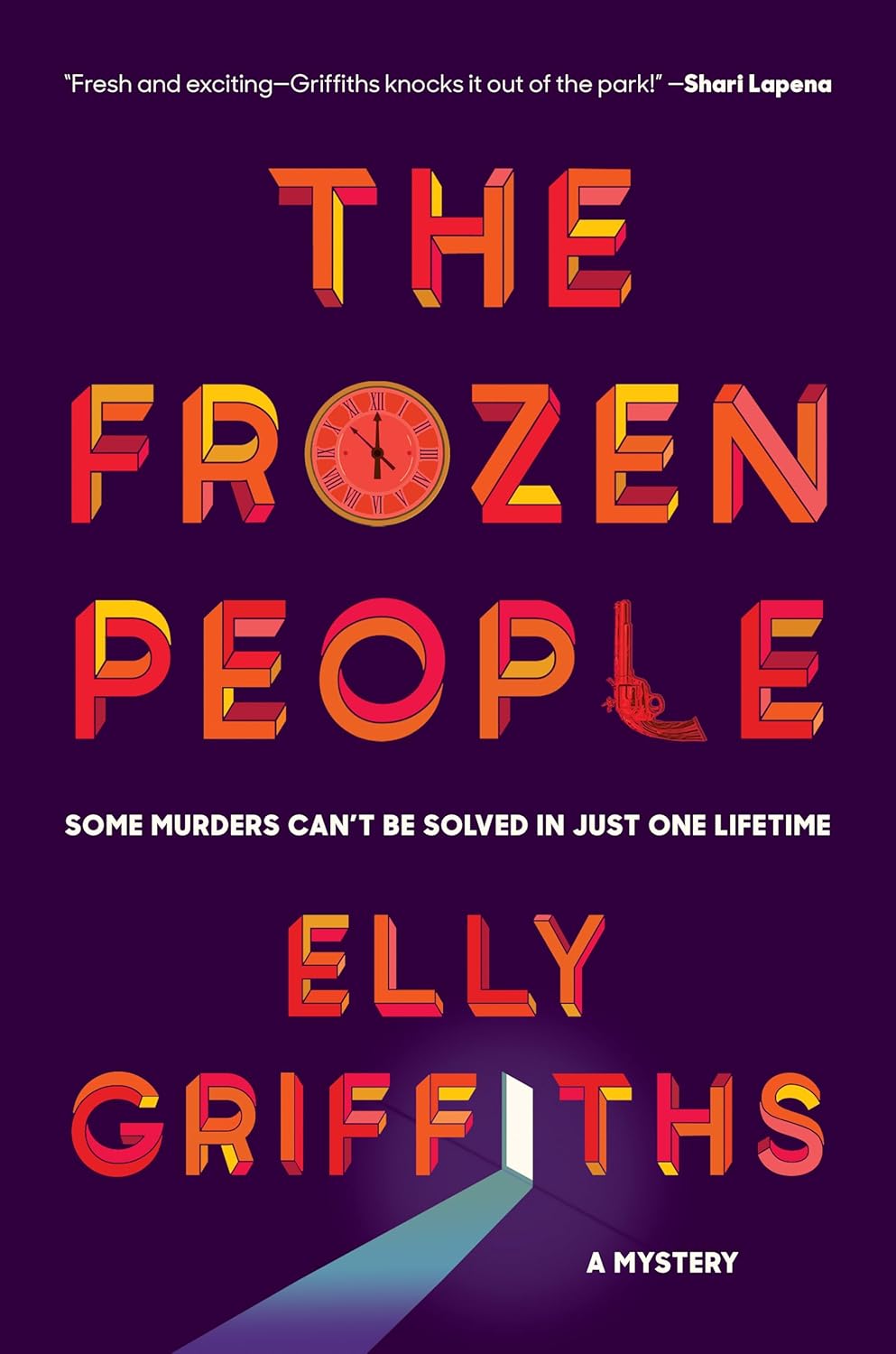
“A pleasure from finish to start.” —Anthony Horowitz “Fresh and exciting, with both humor and thrills, Griffiths’ first book in her new series knocks it out of the park!” —Shari Lapena Some murders can’t be solved in just one lifetime. Ali Dawson and her cold case team investigate crimes so old, they're frozen—or so their inside joke goes. Nobody knows that her team has a secret: they can travel back in time to look for evidence. The latest assignment sees Ali venture back farther than they have dared before: to 1850s London to clear the name of Cain Templeton, an eccentric patron of the arts. Rumor has it that Cain is part of a sinister group called The Collectors. Ali arrives in the Victorian era to another dead woman at her feet and far too many unanswered questions. As the clock counts down, Ali becomes more entangled in the mystery, yet danger lurks around every corner. She soon finds herself trapped, unable to make her way back to her beloved son, Finn, who is battling his own accusations in the present day. Could the two cases be connected? In a race through and against time, Ali must find out before it’s too late.
Summary of Key Ideas
- •
Time-Traveling Cold Case Investigations
The novel introduces the concept of a cold case unit that literally investigates 'frozen' cases by traveling back in time. Ali Dawson and her team use a unique method to solve crimes that are centuries old, adding a speculative fiction twist to the traditional crime procedural. This blending of genres allows Griffiths to explore historical mysteries with a modern perspective and technological advantage. The core idea revolves around the possibilities and challenges of revisiting the past to uncover hidden truths.
- •
Contrasting Victorian and Modern Worlds
A central theme revolves around the stark contrast between Victorian society and the present day. Ali's journey back to 1850s London highlights the differences in social norms, policing methods, and the overall way of life. This exploration allows for commentary on societal progress while also revealing timeless aspects of human nature and criminal behavior. The juxtaposition underscores the evolution of justice and the enduring quest for truth across different eras.
- •
Exploring Women's Status in Victorian Society
The narrative delves into the limited roles and expectations placed on women in Victorian England. Through Ali's interactions and observations, the novel exposes the constraints faced by women in the 19th century, including their lack of autonomy and professional opportunities. This exploration highlights the historical struggles for female empowerment and provides a lens through which to examine contemporary gender dynamics. The novel uses the past to reflect on the ongoing fight for equality.
- •
Unearthing Historical Secrets with Modern Repercussions
The plot is driven by a specific case involving the ancestor of a prominent modern-day politician. This setup connects the past to the present, suggesting that historical events and actions can have lasting repercussions. The investigation into the ancestor's alleged crimes reveals potential scandals and hidden truths that could impact the politician's career. This connection underscores the importance of historical accountability and the idea that the past is never truly buried.
- •
Balancing Motherhood and Time-Traveling Crime-Solving
The protagonist, Ali Dawson, grapples with the personal challenges of being a single mother while navigating her complex and dangerous job. Her dedication to her work is balanced against her responsibilities as a parent, creating a relatable and humanizing element within the fantastical premise. This aspect of the narrative explores the universal struggles of balancing career and family, adding depth and emotional resonance to the story.
- •
Ethical Dilemmas of Time Travel
The novel examines the ethical dilemmas inherent in time travel, particularly the potential to alter the past. Ali and her team must navigate the complexities of intervening in historical events without causing unintended consequences. This raises questions about the nature of free will, the responsibility that comes with advanced technology, and the potential dangers of tampering with the timeline. The narrative explores the moral implications of playing with time and its potential impact on the present and future.
Chapter Recap

About The Author
Elly Griffiths
Elly Griffiths is the pen name of Domenica de Rosa[1] (born 17 August 1963, in London),[2] a British crime novelist. She has written three series as Griffiths, one featuring Ruth Galloway, one featuring Detective Inspector Edgar Stephens and Max Mephisto, and the Harbinder Kaur series.
Main Quotes
"All the lines point downwards."
"Am I going through the gate?"
"He has to believe in her but he knows that there is a chance that he could be trapped in this strange world forever."
"So many missed opportunities to shine..."
"Some murders can't be solved in just one lifetime."
"Ali Dawson and her cold case team investigate crimes so old, they're frozen—or so their inside joke goes."
"Ali is fifty, a Detective Sergeant in a cold case team that investigates crimes in a unique way – by travelling back in time, physically, to do their research"
"I like having different characters in your head at different times."
"A five-star start to a dazzling new series ."
Who Should Read This Book
Readers of historical mysteries
Fans of Elly Griffiths' other books
Readers interested in speculative fiction and science fiction blends
Fans of Victorian-era mysteries
Readers who enjoy strong female protagonists
Readers of authors like Ambrose Parry, E.S. Thompson, and Alis Hawkins
Readers who enjoy mysteries with elements of time travel
Readers of detective fiction
Book Summaries Like
The Frozen People


FAQ

Free Access to LitNotes