




 DISCORD
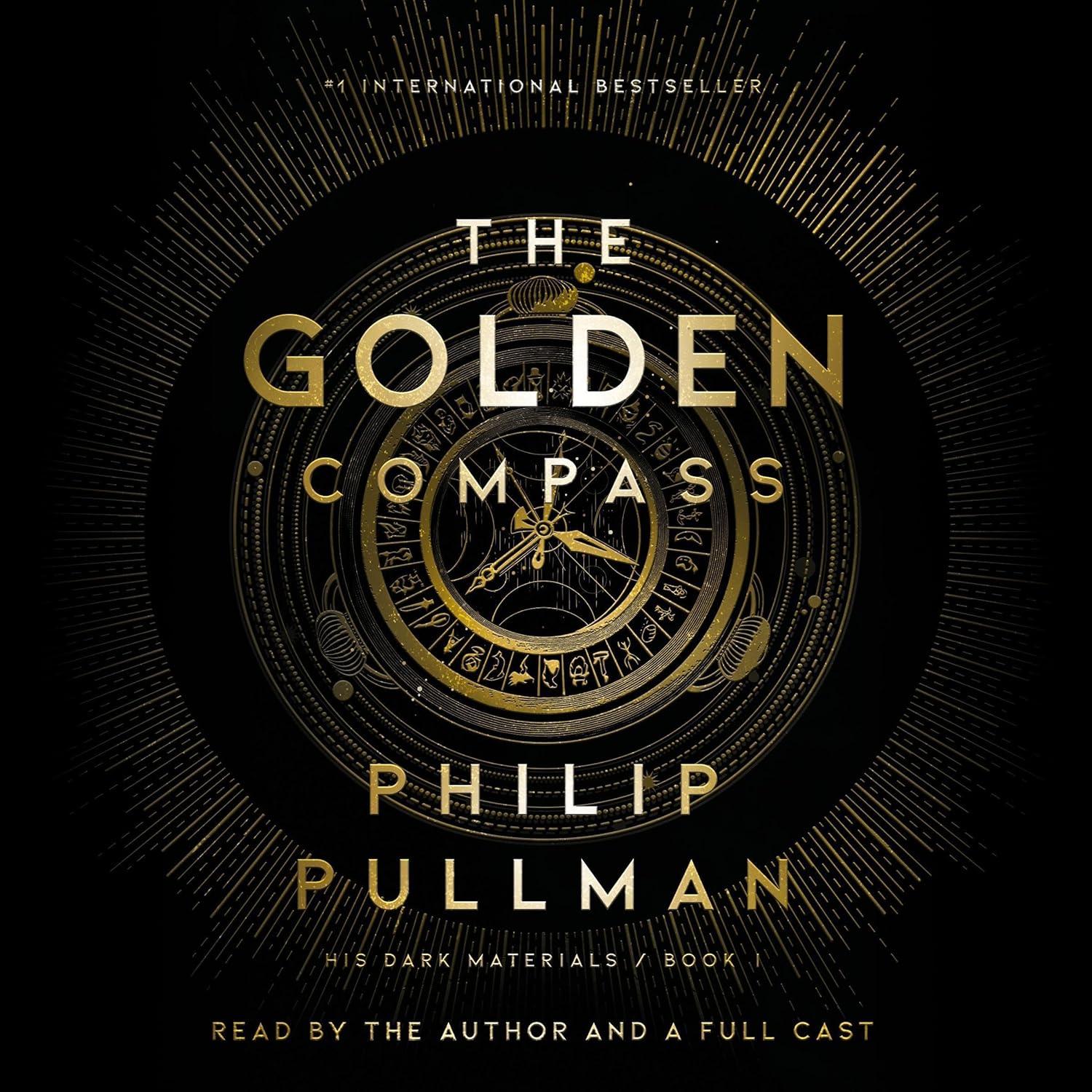
The Golden Compass
Philip Pullman, Stéphane Melchior-Durand


 Apple Books


 79 Min Reading Time
 Audio Version Available
About this book
In a world where every human soul takes the form of an animal companion called a dæmon, young Lyra Belacqua's carefree life at Oxford's Jordan College is shattered by shadows of a looming war. Her fearsome uncle, Lord Asriel, returns from the Arctic with tales of a mysterious Dust and a city shimmering in the Northern Lights, sparking a dangerous quest for answers.
When children begin to vanish, snatched away by the monstrous Gobblers, Lyra embarks on a perilous journey to the icy North to rescue her kidnapped friend, Roger. Guided by a truth-telling golden compass, she finds herself entangled with armored bears, powerful witches, and a glamorous, enigmatic woman named Mrs. Coulter.
But as Lyra races closer to the truth, she discovers a sinister conspiracy involving experiments that sever the bond between humans and their dæmons. To save the children and unravel the mysteries of Dust, Lyra must confront formidable forces and make impossible choices that will determine the fate of not just her world, but countless others.
Summary of Key Ideas
- •
The Significance of Dust and Consciousness
The concept of Dust, also known as Shadows, is central to the narrative. Dust is a mysterious particle associated with consciousness, experience, and adulthood. The Magisterium, the ruling religious authority, views Dust as original sin and seeks to eradicate it, believing it corrupts innocence. Lyra's journey is intertwined with understanding the true nature of Dust and its importance to human potential and knowledge. The exploration of Dust challenges readers to consider the nature of consciousness, morality, and the suppression of knowledge.
- •
The Profound Bond Between Humans and Dæmons
Dæmons are physical manifestations of a person's inner self, appearing as animals that accompany individuals throughout their lives. Children's dæmons can change form, reflecting their evolving personalities, but settle into a final form upon adulthood. The connection between a person and their dæmon is profound; separation causes immense pain and can even be fatal. Dæmons represent the multifaceted nature of the human soul and the importance of self-discovery and acceptance. They serve as a constant companion and a visual representation of inner character.
- •
Unveiling Truth Through the Alethiometer
The Alethiometer is a truth-telling device that Lyra learns to use intuitively. It allows her to uncover hidden truths and answer complex questions by interpreting symbols and their interrelationships. The Alethiometer represents the power of knowledge and the importance of critical thinking. Lyra's ability to master the Alethiometer highlights her innate intelligence and her capacity for understanding the world beyond surface appearances. It underscores the idea that truth can be found through careful observation, interpretation, and a willingness to challenge established beliefs.
- •
Critique of Dogma and Authority
The Magisterium represents a powerful, theocratic organization that seeks to control knowledge, suppress dissent, and maintain its authority through dogma and fear. It parallels historical religious institutions and critiques the dangers of unchecked power and the suppression of scientific inquiry. The Magisterium's actions drive much of the conflict in the story, as it attempts to control and eliminate anything that threatens its worldview. Its portrayal serves as a cautionary tale about the importance of questioning authority and resisting oppressive forces.
- •
Lyra's Transformation and Coming of Age
Lyra Belacqua's journey is a coming-of-age story where she transitions from a naive child to a courageous and resourceful young woman. Throughout the novel, she faces numerous challenges, makes difficult choices, and learns to trust her instincts. Her experiences shape her character and prepare her for the larger conflicts to come. Lyra's development underscores the importance of self-discovery, resilience, and the power of individual agency in the face of adversity. Her growth is central to the overarching themes of free will and destiny.
- •
The Interplay of Science and Religion
The Golden Compass explores the complex relationship between science and religion, portraying them as often conflicting but also potentially complementary forces. The Magisterium's opposition to scientific inquiry highlights the dangers of dogmatic adherence to religious doctrine. However, the novel also suggests that both science and spirituality can offer valuable insights into the nature of existence. The story encourages readers to consider the importance of balancing reason and faith, and to question the boundaries between the known and the unknown.
- •
The Complexities of Loyalty and Betrayal
Loyalty and betrayal are recurring themes throughout the narrative, testing the bonds between characters and shaping the course of events. Lyra experiences both profound loyalty from her friends and shocking betrayals from those she trusts. These experiences teach her valuable lessons about the complexities of human relationships and the importance of discernment. The theme of betrayal underscores the dangers of blind faith and the necessity of questioning motives, while loyalty highlights the strength and resilience that can be found in genuine connections.
Chapter Recap

About The Author
Philip Pullman
Main Quotes
"“We all have to face things that hurt us.”"
"“That's the duty of the old, to be anxious on behalf of the young. And the duty of the young is to scorn the anxiety of the old.”"
"“You can't go around measuring things that don't really exist.”"
"“If we are going to be masters of our destiny, we must understand that destiny.”"
"“Words are all we have, you know.”"
"“He was wild, and he was beautiful. And he was fierce. And he was mine.”"
"“...it's a poor life that achieves freedom from fear.”"
"“We are all subject to the fates. But we must all act as if we are not.”"
"“I’m going to live. And I’m going to fight.”"
"“The only way to be truly alive is to be truly yourself.”"
Who Should Read This Book
Young adults interested in fantasy and adventure.
Readers who enjoy thought-provoking themes related to religion, morality, and free will.
Fans of strong female protagonists.
Readers who appreciate complex world-building and imaginative storytelling.
Adults who enjoy young adult fiction with philosophical undertones.
Readers interested in alternative history and parallel universes.
Individuals seeking books that spark conversation and debate.
Book Summaries Like
The Golden Compass

FAQ

Free Access to LitNotes