




 DISCORD
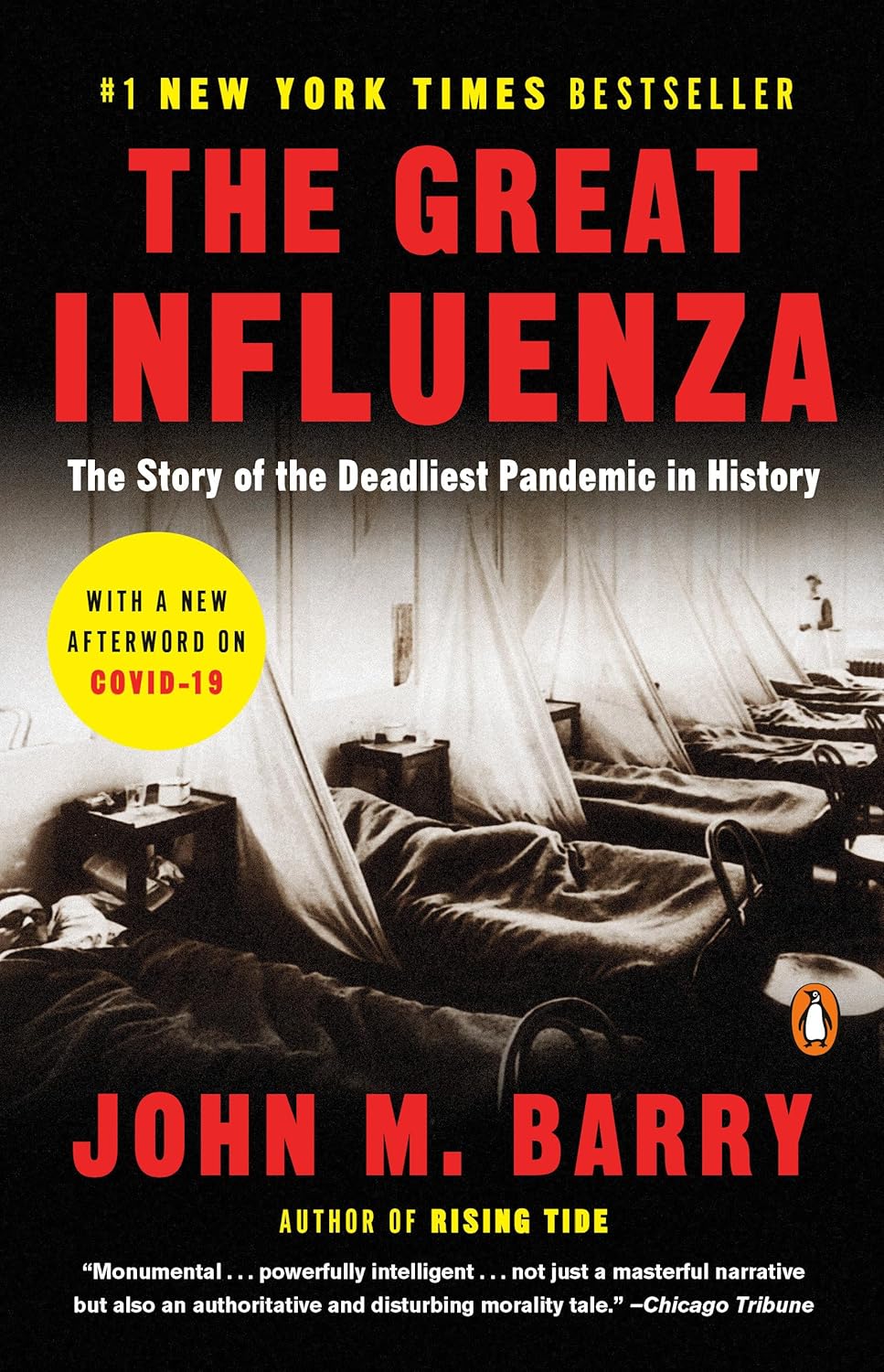
The Great Influenza
John M. Barry, Amelia Pérez de Villlar


 Apple Books


 145 Min Reading Time
 Audio Version Available
About this book
In 1918, as World War I raged, an even deadlier enemy emerged: a lethal influenza virus. Exploding from an army camp in Kansas, it swept across the globe, killing an estimated 100 million people—more in a year than the Black Death killed in a century.
In The Great Influenza, John M. Barry unveils a riveting account of this unprecedented pandemic, a time when science and epidemic disease collided for the first time. He exposes the political failures and societal strains that amplified the virus's devastation, while also highlighting the heroic efforts of scientists battling to understand and contain it.
More than just a historical record, this magisterial work offers a precise and sobering model for confronting the epidemics looming on our own horizon, reminding us that truth and trust are our strongest defenses against any pandemic.
Summary of Key Ideas
- •
The Pandemic's Unprecedented Scale
The 1918 influenza pandemic was a global catastrophe, killing an estimated 50 to 100 million people worldwide. Its rapid spread and high mortality rate dwarfed even the devastation of World War I, underscoring the vulnerability of human populations to infectious diseases. The pandemic exposed critical weaknesses in public health infrastructure and highlighted the importance of preparedness and swift response in the face of emerging threats. This idea sets the stage for understanding the sheer scale and impact of the event.
- •
The Power and Limitations of Science
The book emphasizes the critical role of science and scientific research in understanding and combating the influenza virus. It highlights the challenges faced by scientists in the early 20th century, who lacked the advanced tools and knowledge available today. The pursuit of knowledge, even in the face of uncertainty and setbacks, is portrayed as essential for developing effective treatments and preventive measures. This underscores the importance of investing in scientific research and fostering a culture of scientific inquiry.
- •
The Deadly Consequences of Misinformation
One of the most damning revelations in the book is the deliberate suppression of information by government officials during the pandemic. Driven by a desire to maintain public morale during wartime, authorities downplayed the severity of the illness, leading to a lack of public awareness and preventative measures. This highlights the ethical responsibility of leaders to be transparent and honest with the public, even in times of crisis. The consequences of suppressing information can be devastating, eroding public trust and hindering effective responses.
- •
Leadership in the Face of Crisis
The book explores the concept of 'leadership' during times of crisis. It showcases the contrasting responses of different leaders, highlighting those who demonstrated courage, honesty, and a commitment to public welfare. These leaders prioritized transparency, implemented effective public health measures, and inspired confidence in their communities. By examining these examples, the book underscores the qualities of effective leadership needed to navigate pandemics and other large-scale crises.
- •
The Pandemic's Unique Mortality Pattern
The pandemic disproportionately affected young adults, particularly those in the prime of their lives. This unusual age distribution challenged conventional understanding of influenza and added to the tragedy of the pandemic. The loss of so many young people had a profound impact on families, communities, and the economy, further illustrating the indiscriminate nature of the disease.
- •
A Lasting Legacy and Lessons for the Future
The 1918 flu pandemic left a lasting legacy, shaping public health policies, medical research, and pandemic preparedness efforts. The lessons learned from this devastating event continue to inform our responses to emerging infectious diseases today. By understanding the mistakes of the past, we can better prepare for and mitigate the impact of future pandemics. This idea emphasizes the importance of historical awareness in shaping present-day strategies.
- •
The Imperative of Preparedness
Barry underscores the importance of preparedness at all levels—individual, community, and governmental. He argues that robust public health infrastructure, clear communication strategies, and readily available resources are crucial for effectively responding to pandemics. Preparedness also involves fostering a culture of vigilance and promoting individual responsibility in adopting preventative measures. This idea reinforces that proactive planning and investment are essential for safeguarding public health.
- •
Scientific Advancements Born from Crisis
The book details the scientific advancements spurred by the pandemic, from the identification of the influenza virus to the development of vaccines. While these advancements were slow and incremental during the 1918 crisis, they laid the foundation for modern virology and immunology. The pandemic served as a catalyst for accelerating scientific progress and improving our understanding of infectious diseases. This underscores the silver lining of scientific advancement that can emerge from global health crises.
Chapter Recap

About The Author
John M. Barry
Main Quotes
"Those in authority must retain the public's trust. The way to do that is to distort nothing, to put the best face on nothing, to try to manipulate no one."
"The single most important thing about the Spanish flu was that it was far deadlier than any disease ever seen before."
"For the influenza pandemic that erupted in 1918 was the first great collision between nature and modern science."
"Science is the process of learning what is not known."
"Uncertainty is the very heart of human existence."
"The essence of science: doubt."
"The most accurate way to describe the influenza of 1918 is that it was an act of biological warfare."
"Influenza killed more people in a year than the Black Death of the Middle Ages killed in a century."
"In 1918, science was not yet a god, but it was rapidly becoming one."
"The 1918 pandemic offers a powerful lesson: those in authority must retain the public's trust."
Who Should Read This Book
Readers interested in medical history
Public health professionals and students
Readers interested in the history of science
Individuals interested in the history of the 1918 influenza pandemic
Readers interested in the societal impact of pandemics
Readers interested in government and policy during times of crisis
Those seeking to understand the scientific and medical response to the 1918 flu
Readers interested in books about epidemics
Book Summaries Like
The Great Influenza

FAQ

Free Access to LitNotes