




 DISCORD
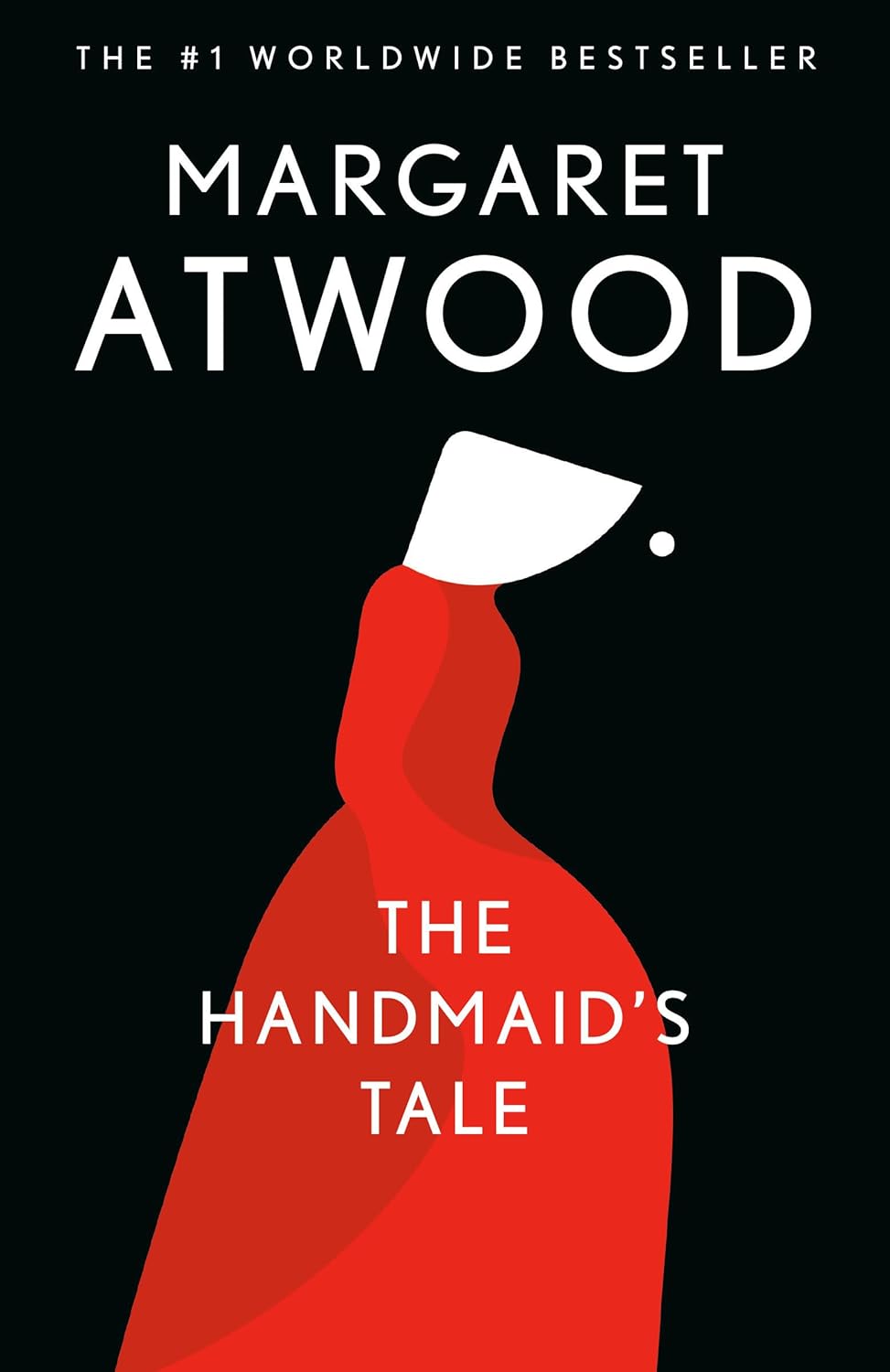
The Handmaid's Tale
Margaret Atwood


 Amazon Best Sellers
 USA Today Best Sellers


 44 Min Reading Time
 Audio Version Available
About this book
In Margaret Atwood's chilling vision of the near future, the Republic of Gilead has risen from the ashes of a fallen America. Environmental disasters and plummeting birthrates have paved the way for a totalitarian regime that strips women of their rights, their identities, and their very bodies.
Offred is a Handmaid, one of the few remaining fertile women forced into sexual servitude to repopulate the ravaged world. Stripped of her name, her family, and her freedom, she exists only to bear children for the Commanders of Gilead.
But even in this dark and brutal world, hope flickers. Haunted by memories of her past life—a life of love, family, and freedom—Offred clings to the forbidden knowledge that survival is an act of rebellion. With each act of defiance, she risks everything, daring to dream of a future where she can reclaim her name, her daughter, and her own story.
At once a scathing satire, a dire warning, and a testament to the enduring power of the human spirit, "The Handmaid's Tale" is a modern classic that continues to resonate with chilling relevance.
Summary of Key Ideas
- •
The Oppression of Women in a Patriarchal Society
The subjugation of women is central to Gilead's totalitarian regime. Women are stripped of their rights, identities, and autonomy, becoming vessels for reproduction. Their value is solely determined by their fertility, and they are subjected to strict social control and surveillance. The Handmaids, fertile women forced into sexual servitude, exemplify this oppression, highlighting the dangers of patriarchal power structures and the denial of female agency. This theme serves as a warning against the erosion of women's rights and the potential for extremist ideologies to exploit and control female bodies.
- •
The Dangers of Religious Extremism and Theocracy
Gilead uses a distorted version of religious doctrine to justify its oppressive policies and maintain control over its citizens. Biblical passages are misinterpreted and selectively applied to enforce gender roles, suppress dissent, and legitimize the regime's authority. This theme illustrates the dangers of religious extremism and the manipulation of faith for political gain. The novel critiques the use of religion as a tool for social control and highlights the importance of critical thinking and religious freedom.
- •
The Societal Obsession with Fertility and Reproduction
Fertility and reproduction are paramount in Gilead, as the regime faces a severe fertility crisis due to environmental factors and widespread infertility. Fertile women, like Offred, are highly valued and forced to become Handmaids, bearing children for the ruling class. This theme explores the societal obsession with reproduction and the consequences of environmental degradation. It raises questions about the value of human life, the ethics of reproductive technologies, and the commodification of women's bodies.
- •
The Power of Language and Storytelling as Resistance
The Handmaid's Tale explores the power of language and storytelling as tools for resistance and survival. Offred's narrative, recounted through fragmented memories and personal reflections, becomes an act of defiance against Gilead's attempts to erase individual identities and histories. By sharing her story, Offred reclaims her voice and asserts her humanity. This theme emphasizes the importance of preserving personal narratives and resisting censorship in the face of oppression.
- •
Acts of Rebellion and Resistance Against Oppression
Despite the oppressive atmosphere of Gilead, acts of rebellion and resistance emerge in various forms. Small acts of defiance, such as Offred's secret meetings with Ofglen and her internal resistance to Gilead's ideology, demonstrate the human spirit's capacity to resist even in the most dire circumstances. The Mayday resistance movement offers a more organized form of opposition, providing hope for a potential overthrow of the regime. This theme highlights the importance of resistance, both large and small, in challenging totalitarian regimes.
- •
The Importance of Memory and the Past
The novel emphasizes the significance of memory and the past in shaping individual identity and resisting totalitarian control. Gilead attempts to erase the past and rewrite history to solidify its power, but Offred's memories of her life before Gilead serve as a source of strength and a reminder of what has been lost. By clinging to her memories of her daughter, her husband, and her former life, Offred maintains her sense of self and refuses to be completely assimilated into Gilead's oppressive system. This theme underscores the importance of preserving historical memory and individual experiences in the face of authoritarian regimes.
- •
Complicity and the Spectrum of Resistance
The Handmaid's Tale explores the complexities of complicity and the different ways individuals respond to oppression. Some characters, like Aunt Lydia, actively participate in Gilead's system, while others, like Commander Waterford, benefit from it. Even Offred, despite her resistance, is forced to navigate the system and make compromises to survive. This theme raises questions about individual responsibility in oppressive regimes and the ethical dilemmas of survival.
- •
A Cautionary Tale About the Erosion of Freedom
The novel serves as a cautionary tale, warning against the dangers of complacency, political extremism, and the erosion of democratic values. Atwood draws inspiration from historical and contemporary events to create a chillingly plausible dystopia, highlighting the potential for oppressive regimes to arise even in seemingly stable societies. The Handmaid's Tale encourages readers to be vigilant in protecting their freedoms and to resist any attempts to undermine individual rights and liberties.
Chapter Recap

About The Author
Margaret Atwood
Main Quotes
"Nolite te bastardes carborundorum."
"Better never means better for everyone... It always means worse, for some."
"Ignoring isn't the same as ignorance, you have to work at it."
"Ordinary is what you are used to."
"There is more than one kind of freedom, Freedom to and freedom from."
"The moment when, after all the talk, you discover that you’re completely alone."
"A rat in a maze is free to go anywhere, as long as it stays inside the maze."
"Sanity is a valuable possession; I hoard it the way people once hoarded money. I save it, so I will have enough, when the time comes."
"But who can remember pain, once it's over? All that remains of it is a shadow, not in the mind even, in the flesh. Pain marks you, but too deep to see."
"Now I'm not ashamed of anything."
Who Should Read This Book
Readers of dystopian fiction
Feminists and those interested in feminist literature
Readers interested in political and social commentary
Individuals concerned with women's rights and reproductive rights
Those interested in speculative fiction exploring totalitarian regimes
Readers of literary fiction
Students and academics studying literature, gender studies, or political science
Individuals interested in exploring themes of power, oppression, and resistance
Readers who enjoy thought-provoking and challenging narratives
Those who appreciate strong female characters and their struggles
Book Summaries Like
The Handmaid's Tale




FAQ

Free Access to LitNotes