




 DISCORD
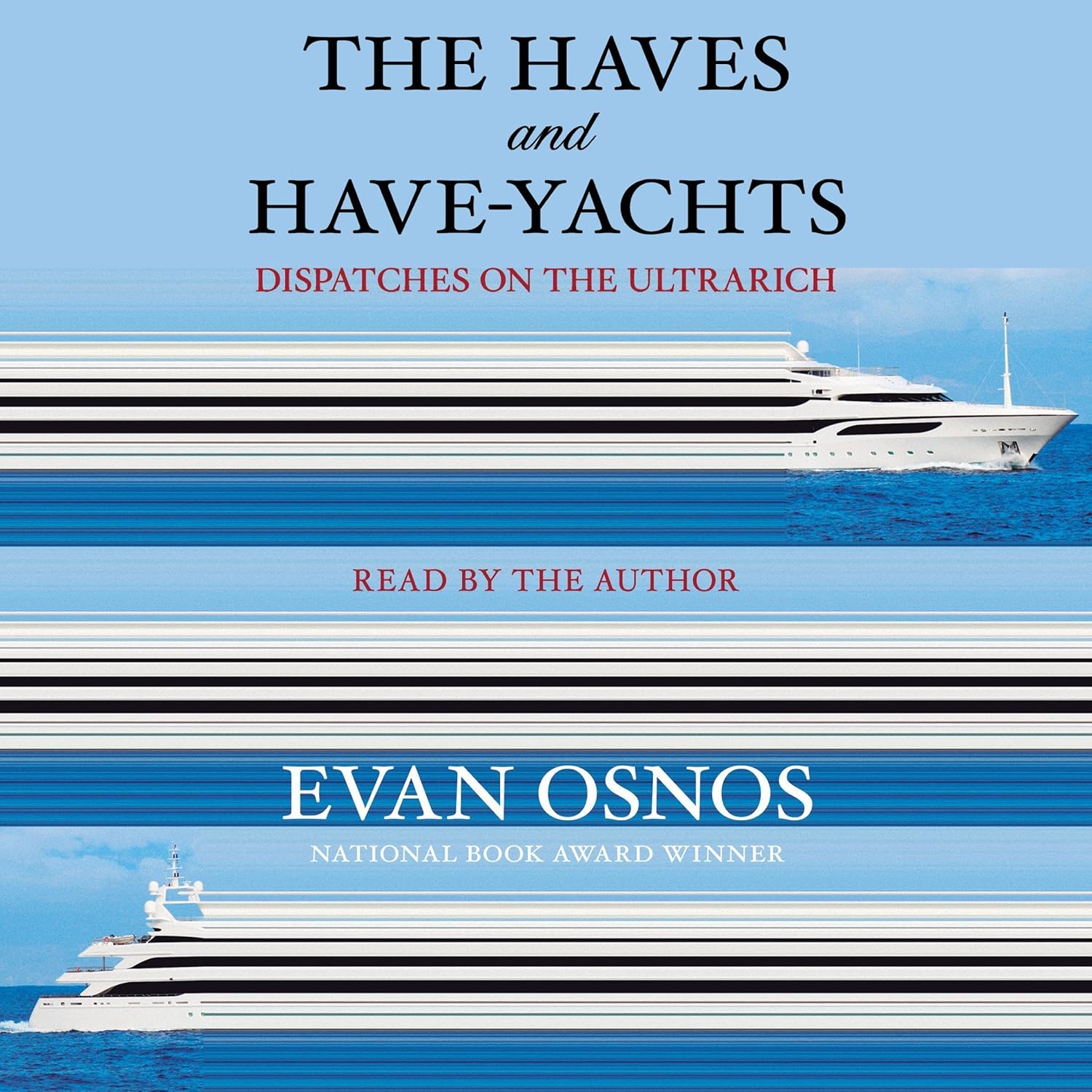
The Haves and Have-Yachts
Evan Osnos


 Apple Books


 49 Min Reading Time
 Audio Version Available
About this book
From New York Times bestselling and National Book Award-winning author Evan Osnos comes a timely and provocative collection of essays exploring American oligarchy and the culture of excess, providing a wry, unfiltered look at how the ultrarich shape—and sometimes warp—our social and political landscape. The ultrarich hold more of America’s wealth than they did in the heyday of the Carnegies and Rockefellers. Here, Evan Osnos’s incisive reportage yields an unforgettable portrait of the tactics and obsessions driving this new Gilded Age, in which superyachts, luxury bunkers, elite tax dodges, and a torrent of political donations bespeak staggering disparities of wealth and power. With deft storytelling and meticulous reporting, this is a book about the indulgences, incentives, and psychological distortions that define our economic age. In each essay, Osnos delves into a world that is rarely visible, from the outrageous to the fabulous to the ridiculous: a private wealth manager who broke with members of an American dynasty and spilled their secrets; the pop stars who perform at lavish parties for thirteen-year-olds; the status anxieties that spill out of marinas in Monaco and Palm Beach like real-world episodes of Succession and The White Lotus ; the ethos behind the largest Ponzi scheme in Hollywood history; the confessions of disgraced titans in a “white-collar support group.” A celebrated political reporter, Osnos delves into the unprecedented Washington influence of Silicon Valley and Wall Street, drawing on in-depth interviews with Mark Zuckerberg and other billionaires, about their power and the explosive backlash it stirs. Originally published in The New Yorker , these essays have been revised and expanded to deliver an unflinching portrait of raw ambition, unimaginable fortune, and the rise of America’s modern oligarchy. Osnos’s essays are a wake-up call—a case against complacency in the face of unchecked excess, as the choices of the ultrarich ripple through our lives. Entertaining, unsettling, and eye-opening, The Haves and the Have-Yachts couldn’t be more relevant to today’s world.
Summary of Key Ideas
- •
Deconstructing the Ultra-Rich
The book delves into the lives of the ultra-rich, examining their values, anxieties, and impact on society. It moves beyond simple financial metrics to explore the cultural and psychological dimensions of extreme wealth. Osnos investigates how this elite class perceives their role in society, their engagement with philanthropy, and their strategies for perpetuating their wealth and influence. The book is not just about the accumulation of riches but also about the mindset and lifestyle that accompany it, providing a nuanced understanding of the ultra-rich beyond superficial portrayals.
- •
The Growing Wealth Divide
Osnos highlights the widening gap between the ultra-rich and the rest of society, illustrating how this disparity fuels social unrest and political instability. He provides specific examples of how extreme wealth concentration affects access to opportunities, resources, and political influence for the majority. By showcasing the tangible consequences of wealth inequality, Osnos emphasizes the urgency of addressing this issue to maintain a healthy and equitable society. This exploration of disparity also includes examining how the wealthy navigate and often exacerbate existing inequalities.
- •
Ethical Quandaries of Extreme Wealth
The book scrutinizes the ethical dilemmas faced by the ultra-rich, including tax avoidance, philanthropy as a PR strategy, and the moral implications of vast wealth accumulation in a world of poverty and inequality. Osnos presents various perspectives on these dilemmas, encouraging readers to critically examine the choices made by the wealthy and their impact on society. He analyzes the justifications and rationalizations employed by the ultra-rich, as well as the criticisms leveled against them, fostering a deeper understanding of the complex ethical landscape surrounding extreme wealth.
- •
Wealth's Impact on American Values
Osnos analyzes how the pursuit of wealth has shaped American values and culture, contributing to a society increasingly focused on material success and status. He explores how this emphasis on wealth influences individual aspirations, social relationships, and overall societal well-being. By examining the cultural impact of wealth, Osnos encourages readers to reflect on their own values and priorities in a society that often equates wealth with happiness and fulfillment. The book questions whether this relentless pursuit of wealth comes at the expense of other important aspects of life and community.
- •
The Political Power of the Ultra-Rich
The book investigates the political influence wielded by the ultra-rich, including their ability to shape legislation, control media narratives, and influence elections through campaign donations and lobbying efforts. Osnos highlights the potential dangers of this concentrated political power, particularly its impact on democratic processes and the representation of ordinary citizens. He examines the mechanisms through which the wealthy exert their influence and the consequences for policy-making and social justice, raising critical questions about the role of money in politics.
- •
Raising Heirs to Vast Fortunes
Osnos explores how the ultra-rich prepare their children to inherit and manage vast fortunes, including the challenges and complexities of raising children in an environment of extreme wealth. He examines the strategies employed by wealthy families to instill values of responsibility, philanthropy, and work ethic in their heirs, as well as the potential pitfalls of such an upbringing. By providing insights into the lives of wealthy children, Osnos offers a unique perspective on the intergenerational transmission of wealth and its impact on individual development.
- •
The Psychology of the Ultra-Rich
The book delves into how the ultra-rich perceive their place in society, often developing a sense of detachment or exceptionalism. It examines the psychological effects of extreme wealth, including feelings of isolation, anxiety, and the pressure to maintain their status. Osnos explores how this detachment can lead to a disconnect from the realities faced by ordinary citizens, potentially hindering empathy and social responsibility. This exploration aims to understand the human side of extreme wealth and its implications for social cohesion.
- •
Philanthropy as Power
Osnos examines the role of philanthropy among the ultra-rich, including its motivations, effectiveness, and potential limitations. He explores whether philanthropic efforts are genuinely altruistic or driven by self-interest, such as reputation management or tax benefits. The book critically analyzes the impact of philanthropy on addressing social problems, questioning whether it is a sufficient solution to systemic issues caused by wealth inequality. This analysis encourages a more nuanced understanding of philanthropy and its role in addressing social disparities.
Chapter Recap

About The Author
Evan Osnos
Main Quotes
"The jump from believing yourself worthy of an enormous fortune to believing yourself broadly superior because of it is not a hard one to make."
"The yachts tell a whole story about a Faustian capitalism—this idea that we're ready to sell democracy for short-term profit."
"The poor man really has a stake in the country. The rich man hasn't; he can go away to New Guinea in a yacht."
Who Should Read This Book
Readers interested in social commentary and economic inequality
Individuals fascinated by the lives and behaviors of the ultra-rich
Readers of The New Yorker magazine and Evan Osnos's previous work
Those interested in American politics and society
Readers of non-fiction books exploring wealth disparity
Individuals seeking to understand the impact of extreme wealth on culture and democracy
Book Summaries Like
The Haves and Have-Yachts
FAQ

Free Access to LitNotes