




 DISCORD
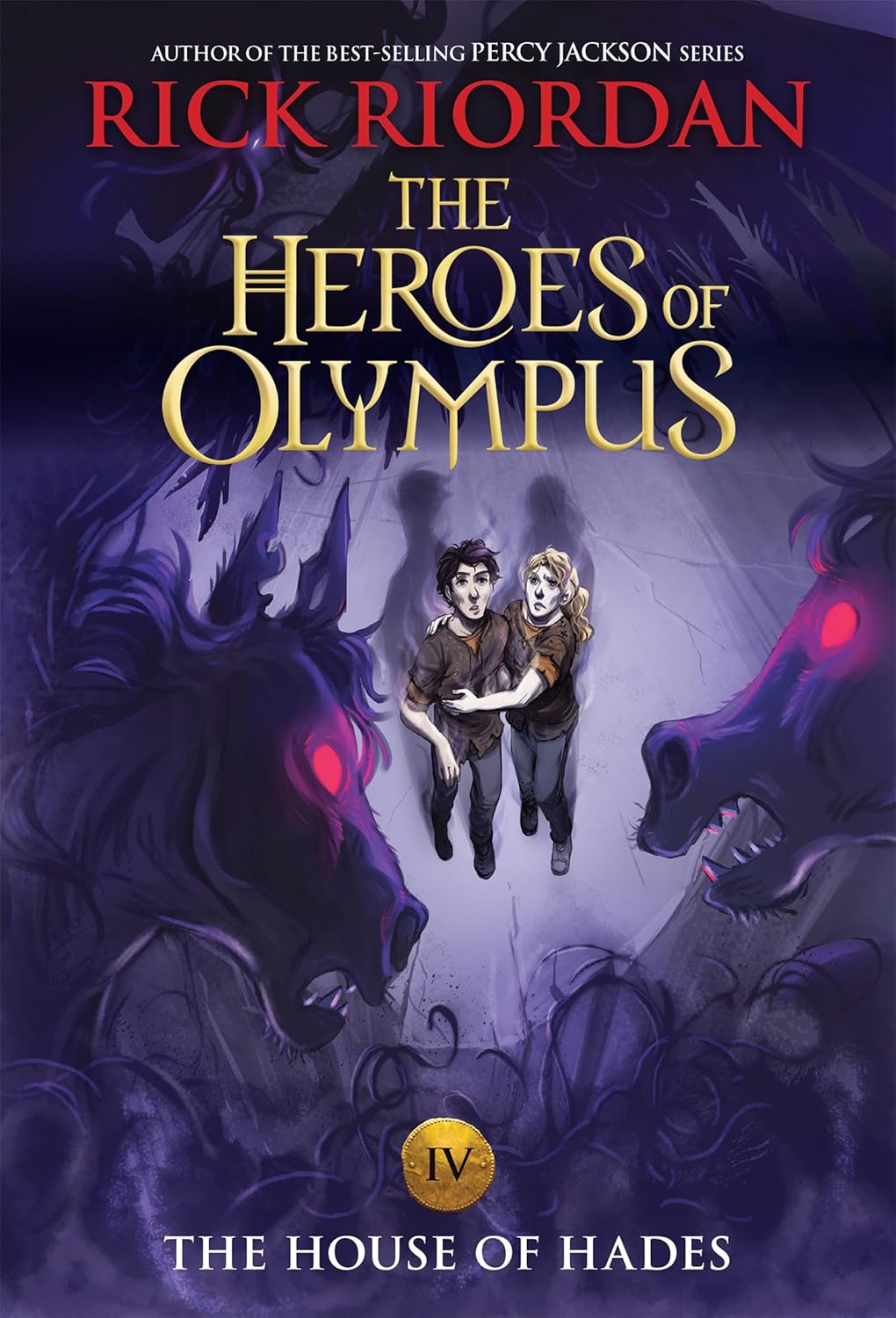
The Heroes of Olympus, Book Four: The House of Hades
Rick Riordan


 Amazon Best Sellers
 Apple Books


 77 Min Reading Time
 Audio Version Available
About this book
Annabeth and Percy have fallen into the Underworld. Now, enduring torment, hunger, and the возdrasгющих echoes of monsters they've defeated, survival seems impossible. Above, the remaining demigods aboard the Argo II fight relentless battles against Gaea's forces, desperate to reach the Doors of Death.
As the clock ticks down to Gaea's rise on August 1st and war looms between Camp Half-Blood and Camp Jupiter, the stakes have never been higher. To save their friends and prevent Gaea's victory, the seven demigods must make impossible choices, knowing that one wrong step could doom them all. Can they seal the Doors of Death in time, or will Tartarus claim Percy and Annabeth forever?
Summary of Key Ideas
- •
Descent into Darkness: Navigating Tartarus
The novel plunges Percy and Annabeth into the depths of Tartarus, the deepest part of the Underworld, immediately testing their limits. This descent symbolizes facing inner demons and the most profound fears. Their journey through Tartarus is a crucible, forcing them to rely on each other and their strengths to survive unimaginable horrors. This ordeal serves as a powerful metaphor for overcoming personal challenges and the importance of resilience in the face of adversity. The environment itself, a living embodiment of primal darkness and ancient evil, constantly assaults their senses and tests their resolve, highlighting the theme of perseverance against overwhelming odds.
- •
The Unbreakable Bonds of Love and Loyalty
Love and Loyalty are tested continuously throughout The House of Hades, especially concerning Percy and Annabeth's relationship. Their bond faces its ultimate trial as they navigate the horrors of Tartarus. Their unwavering commitment to each other becomes their greatest strength, providing them with the courage and motivation to push through seemingly impossible situations. This theme extends to the other demigods as well, whose loyalty to their friends and the quest is challenged by personal desires and fears. The importance of trusting and supporting one another becomes crucial for their survival and the success of their mission.
- •
The Power of Unity: Teamwork and Interdependence
The novel emphasizes the significance of teamwork and interdependence among the seven demigods. Each character possesses unique strengths and weaknesses, and they must learn to rely on each other to overcome obstacles. The quest to close the Doors of Death requires the combined efforts of all seven, highlighting the idea that no one person can succeed alone. This theme underscores the value of diversity, collaboration, and mutual support in achieving a common goal. The demigods' ability to put aside their differences and work together becomes essential for their survival and the fate of the world.
- •
Facing Inner Demons: Personal Growth and Self-Acceptance
Each demigod confronts personal struggles and internal conflicts, adding depth to their characters and making them relatable. Annabeth grapples with her pride and the need to ask for help, while Percy confronts his immense power and the responsibility that comes with it. Hazel deals with her past and the curse associated with her birth, while Leo struggles with feelings of inadequacy and the desire to prove himself. These internal battles highlight the idea that even heroes have flaws and insecurities, and that overcoming these challenges is essential for personal growth and self-acceptance.
- •
Challenging Destiny: Fate vs. Free Will
The House of Hades explores the complex relationship between fate and free will, questioning whether the demigods are merely puppets of destiny or if they have the power to shape their own future. Prophecies and predetermined paths play a significant role in their journey, but the characters constantly make choices that defy expectations and alter the course of events. This theme raises questions about the nature of choice, the illusion of control, and the extent to which individuals can influence their own lives. The demigods' struggle against fate underscores the importance of courage, determination, and the belief in one's own ability to make a difference.
- •
The Price of Heroism: Sacrifice for the Greater Good
Sacrifice emerges as a central theme, with characters making difficult choices and enduring personal losses for the greater good. Percy and Annabeth's willingness to sacrifice themselves in Tartarus exemplifies this theme, as does other characters' willingness to risk their lives for their friends and the quest. These acts of selflessness highlight the importance of putting others before oneself and the idea that true heroism often requires personal cost. The sacrifices made by the demigods underscore the weight of their responsibilities and the profound impact of their choices on the world around them.
- •
Good Versus Evil
The novel highlights the contrast between good and evil. The heroes sometimes do bad things, but what separates them from villains is their recognition of these actions and strive to do good. The themes explore what defines good and evil and if there is a difference. The characters struggle with making decisions that are for the greater good, or decisions that are morally right.
Chapter Recap

About The Author
Rick Riordan
Main Quotes
""But magic is neither good nor evil. It is a tool, like a knife. Is a knife evil? Only if the wielder is evil.""
""Think long and hard about how you proceed, Nico di Angelo. You cannot lie to Cupid. If you let your anger rule you... well, your fate will be even sadder than mine.""
"“That didn't happen, he told himself. I can't be in love with an immortal girl. She definitely can't be in love with me. Not possible.”"
"“We’re staying together,” Leo said. “You’re not getting away from me. Never again.”"
"“The sea does not like to be restrained.”"
""You know, Hope is like a road in the country; there is never a turn, no curves, no hills, no dales along it.""
"“He imagined the Fates up in Olympus, laughing at his wishful thinking: LOL, NOOB!”"
"“Suddenly, Hazel was kissing me like she meant it. And believe me, I know the difference between a polite peck and a real kiss.”"
"“Don’t judge people on who their parents are.”"
""My point is," he said, "that sometimes you do things for people even when you're an a**hole.""
Who Should Read This Book
Middle grade readers (ages 10-14) interested in mythology, fantasy, and adventure.
Fans of Rick Riordan's "Percy Jackson" series.
Readers who enjoy action-packed stories with humor and relatable characters.
Tweens and young teens looking for engaging fantasy novels.
Readers interested in Greek and Roman mythology.
Parents and educators seeking age-appropriate books with strong themes of friendship, courage, and teamwork.
Book Summaries Like
The Heroes of Olympus, Book Four: The House of Hades

FAQ

Free Access to LitNotes