




 DISCORD
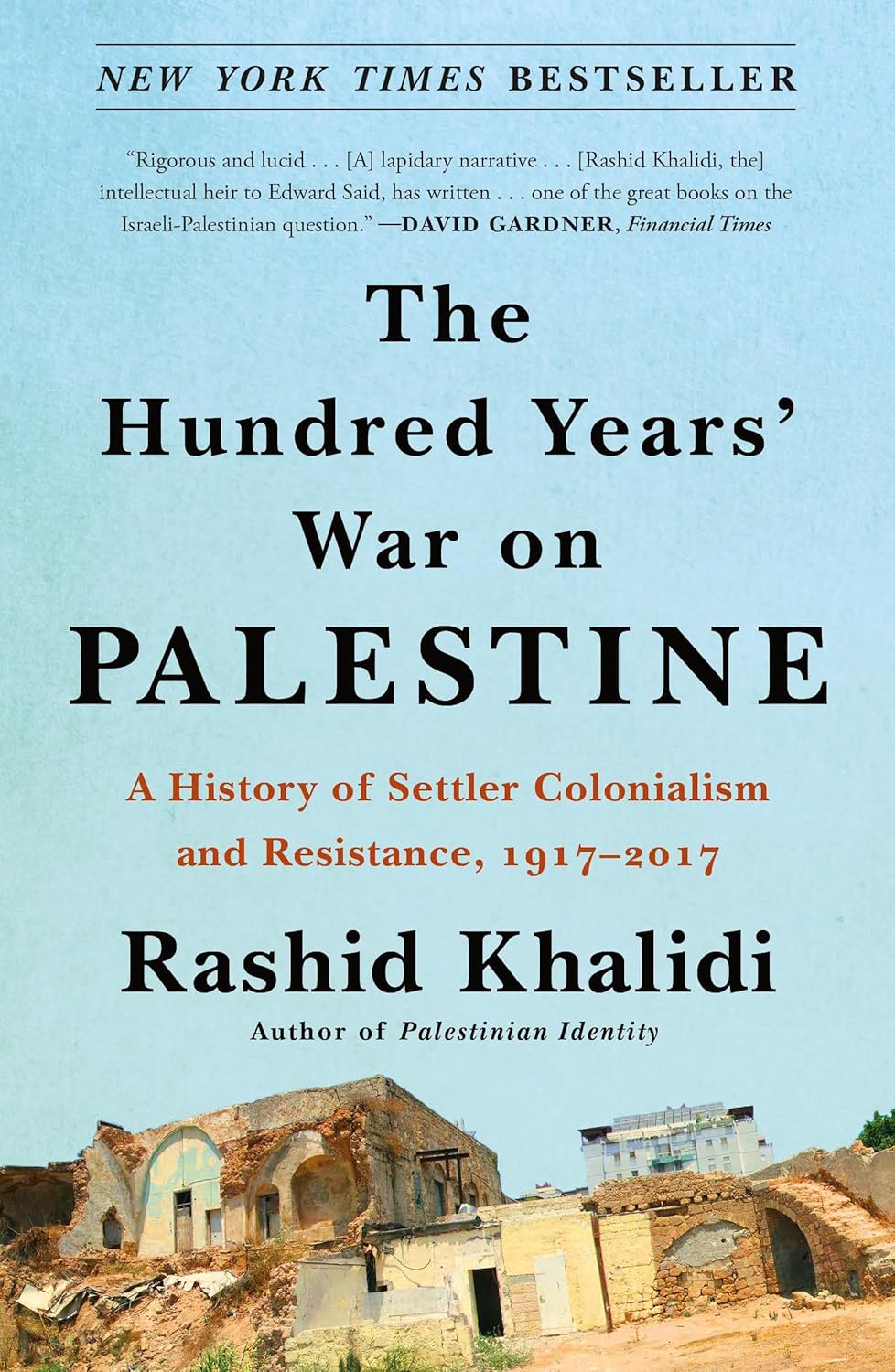
The Hundred Years' War on Palestine
Rashid Khalidi, Francisco Ramos


 Indie Bestsellers


 70 Min Reading Time
 Audio Version Available
About this book
In 1899, the mayor of Jerusalem, Yusuf Diya al-Khalidi, foresaw the coming storm when he wrote to Theodore Herzl, warning of the displacement that would befall Palestine's indigenous people. His words echo through Rashid Khalidi's The Hundred Years' War on Palestine, a sweeping and essential history of the conflict told from an explicitly Palestinian perspective.
Drawing upon previously untapped archives and generations of family reports, Khalidi, a leading historian of the Middle East, dismantles accepted interpretations of the Israeli-Palestinian conflict. He reveals a century of colonial war waged against the Palestinians, supported by global powers, from the Balfour Declaration to the ongoing struggle for self-determination.
The Hundred Years' War on Palestine is a personal and powerful reclamation of history. Khalidi weaves together the voices of journalists, poets, and resistance leaders with his own experiences, offering a profoundly moving account of occupation, dispossession, and the enduring fight for a nation's right to exist.
Summary of Key Ideas
- •
A Century of Continuous Conflict
The book frames the history of Palestine from 1917 to the present as a continuous 'hundred years' war' waged against the Palestinian people. This perspective challenges conventional understandings of the conflict as a series of isolated events, highlighting the sustained and systematic nature of the challenges faced by Palestinians. It emphasizes the ongoing impact of historical events and policies on the current situation, revealing a pattern of dispossession, displacement, and denial of self-determination. By presenting the conflict as a protracted war, Khalidi underscores the need for a comprehensive and long-term approach to achieving a just and lasting resolution.
- •
The Settler-Colonial Framework
Khalidi argues that the conflict in Palestine is fundamentally rooted in settler colonialism. This framework emphasizes the ongoing efforts to displace and dispossess the indigenous Palestinian population in favor of a foreign occupying power. He contends that understanding this colonial dynamic is crucial for analyzing the historical and contemporary realities of the conflict. This perspective sheds light on the power imbalances, discriminatory practices, and systemic inequalities that have shaped the Palestinian experience for over a century. It also highlights the importance of addressing the root causes of the conflict to achieve a just and sustainable peace.
- •
The Influence of External Powers
The book meticulously examines the role of external powers, particularly Britain and the United States, in shaping the course of the conflict. Khalidi argues that these powers have consistently favored Zionist interests over Palestinian rights, enabling the expansion of Israel at the expense of the Palestinian people. He details how their political, economic, and military support has contributed to the ongoing occupation and displacement of Palestinians. This analysis challenges the notion of impartiality and highlights the need for greater accountability from international actors in addressing the conflict.
- •
The Resilience of Palestinian Resistance
Khalidi emphasizes the importance of Palestinian resistance in the face of oppression and dispossession. He highlights the various forms of resistance, from political activism and armed struggle to cultural preservation and intellectual production. This focus on Palestinian agency challenges the narrative of Palestinians as passive victims and underscores their determination to assert their rights and reclaim their homeland. It also acknowledges the diverse strategies and approaches employed by Palestinians in their struggle for self-determination.
- •
Key Turning Points in Palestinian History
The book delves into the impact of key historical events, such as the Balfour Declaration, the 1948 Nakba (catastrophe), and the 1967 Six-Day War, on the Palestinian people. Khalidi analyzes how these events have shaped Palestinian identity, political aspirations, and collective memory. He demonstrates how these historical turning points continue to inform the present-day conflict and influence Palestinian perspectives on the future. Understanding the significance of these events is crucial for comprehending the complexities and nuances of the Israeli-Palestinian conflict.
- •
The Evolution of Palestinian Identity
Khalidi explores the evolution of Palestinian nationalism and identity in response to the challenges posed by colonialism, displacement, and occupation. He highlights the diverse expressions of Palestinian identity, encompassing religious, cultural, and political dimensions. The book also examines the role of literature, art, and music in shaping and sustaining Palestinian national consciousness. This exploration of Palestinian identity provides valuable insights into the cultural and social forces that have driven the Palestinian struggle for self-determination.
- •
The Importance of Collective Memory
The book stresses the crucial role of memory in understanding the conflict. Khalidi argues that collective memory of past injustices and traumas shapes Palestinian perceptions and aspirations. He emphasizes how the denial of Palestinian history and narratives has contributed to the perpetuation of the conflict. By reclaiming and preserving Palestinian memory, the book seeks to challenge dominant narratives and promote a more just and accurate understanding of the past. Acknowledging the role of memory is essential for fostering reconciliation and achieving a lasting peace.
- •
Critique of the Peace Process
Khalidi critiques the failures of the peace process to address the core issues of the conflict, such as the occupation, settlements, refugees, and Jerusalem. He argues that the peace process has often served to reinforce the status quo, rather than creating a genuine path towards a just and equitable solution. This analysis highlights the need for a new approach to peacemaking that prioritizes Palestinian rights and addresses the underlying causes of the conflict. It also calls for greater international pressure on Israel to comply with international law and respect Palestinian self-determination.
- •
The Right to Self-Determination
The book emphasizes the ongoing struggle for Palestinian self-determination as the central issue in the conflict. Khalidi argues that Palestinians, like all people, have the right to determine their own political future and to live in freedom and dignity. He asserts that achieving a just and lasting peace requires recognizing and upholding this fundamental right. This focus on self-determination provides a clear framework for addressing the conflict and achieving a resolution that is acceptable to both sides.
Chapter Recap

About The Author
Rashid Khalidi
Palestinian-American historian of the Middle East and the Edward Said Professor of Modern Arab Studies at Columbia University.
Main Quotes
"The surest way to eradicate a people's right to their land is to deny their historical connection to it."
"The Zionists' colonial enterprise, aimed at taking over the country, necessarily had to produce resistance."
"We must expropriate gently the private property on the estates assigned to us. We shall try to spirit the penniless population across the border by procuring employment for it in the transit countries, while denying it any employment in our country."
"Who can contest the rights of the Jews over Palestine? My God, historically it truly is your country! And what a wonderful sight would it be if..."
"in the name of God, let Palestine be left alone."
"Palestine was terra nullius to those who came to settle it, with those living there nameless and amorphous."
"The idea of Palestine as a blank slate was essential to the Zionist project."
"Zionism...was from its inception a project of settler colonialism."
"The Palestinians are not merely fighting for territory; they are fighting for their very existence as a people."
"The conflict over Palestine is...a struggle between an indigenous population and an alien implantation."
Who Should Read This Book
Individuals interested in Middle Eastern history and politics
Readers seeking a Palestinian perspective on the Israeli-Palestinian conflict
Academics and students in history, political science, and Middle Eastern studies
People interested in the history of colonialism and resistance movements
Readers looking for a detailed and meticulously researched account of Palestinian history
Individuals seeking to understand the historical context of current events in Palestine
Readers interested in the role of external powers in the Israeli-Palestinian conflict
People looking for a critical analysis of the history of Zionism
Readers who appreciate historical narratives told through personal and family stories
Individuals involved in activism and advocacy related to Palestinian rights
Book Summaries Like
The Hundred Years' War on Palestine

FAQ

Free Access to LitNotes