




 DISCORD
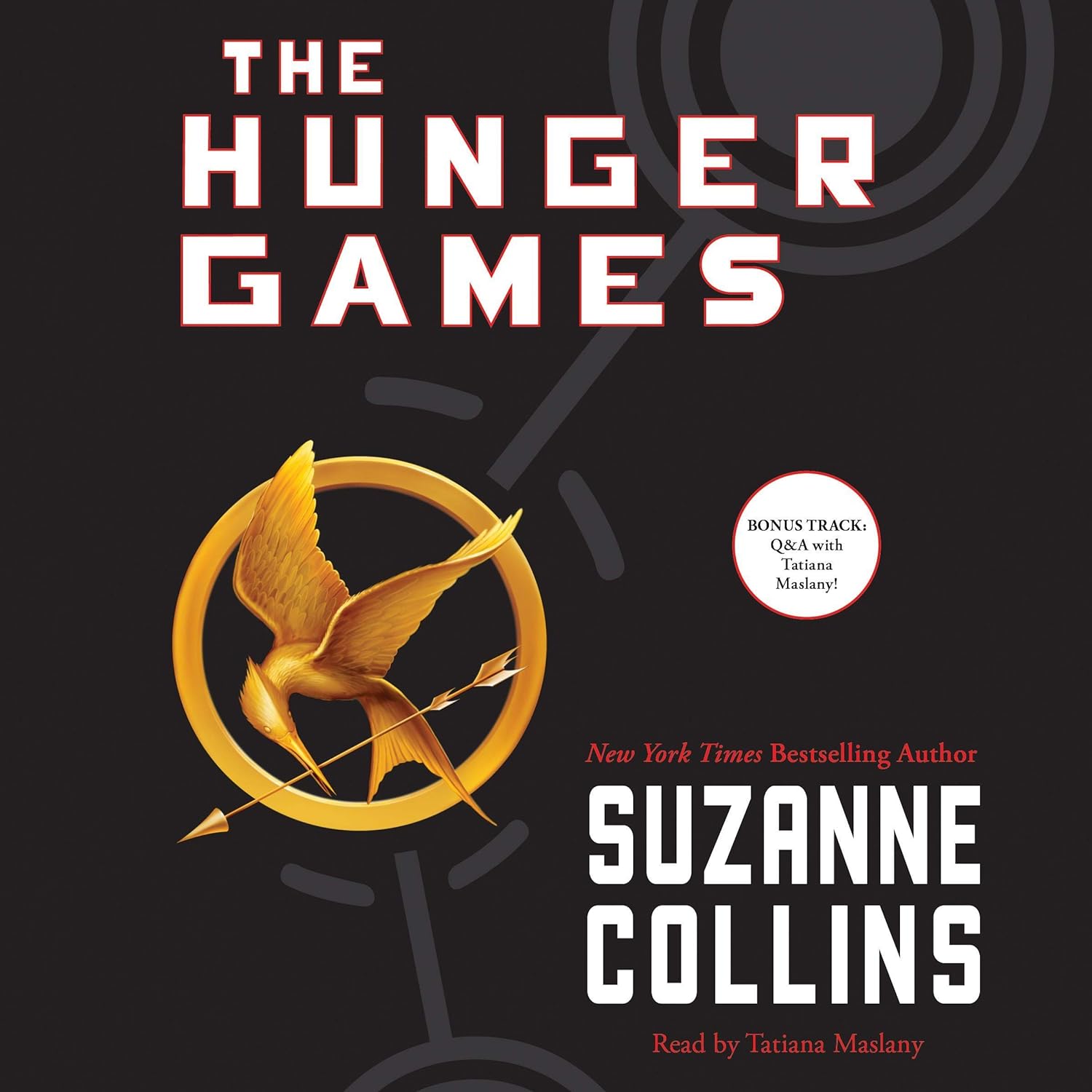
The Hunger Games (Hunger Games, Book One)
Suzanne Collins


 Amazon Best Sellers
 The New York Times Best Sellers


 82 Min Reading Time
 Audio Version Available
About this book
In the ruins of what was once North America lies Panem, a nation divided. The opulent Capitol keeps its twelve districts in check by forcing them to participate in the annual Hunger Games, a brutal televised fight to the death. When her younger sister is chosen, sixteen-year-old Katniss Everdeen volunteers as tribute, a selfless act that sends her on a perilous journey.
Pitted against skilled opponents in a savage arena, Katniss must draw upon her sharp instincts and survival skills to stay alive. But as she navigates the Games' deadly challenges, she faces a greater dilemma: can she maintain her humanity in the face of unimaginable cruelty, and what price is she willing to pay for survival? In a world where love and compassion are luxuries, Katniss's choices will ignite a rebellion and redefine what it means to be a hero.
Summary of Key Ideas
- •
Oppression and Control
The Capitol's brutal control over the districts is a central theme, highlighted by the annual Hunger Games. These games are a televised spectacle forcing children from each district to fight to the death as a punishment for past rebellions and a stark reminder of the Capitol's power. This control extends to every aspect of life in the districts, from resource allocation to freedom of movement, fostering an environment of fear and oppression. The Games serve not only as a means of control but also as a form of entertainment for the Capitol's citizens, desensitizing them to the suffering of others and solidifying their privileged position in society. The stark contrast between the Capitol's opulence and the districts' poverty underscores the injustice and inequality inherent in this system.
- •
The Moral Cost of Survival
Survival is not just a physical challenge in the arena but also a moral one. Katniss Everdeen's primary motivation throughout the Games is to survive, but she grapples with the ethical implications of her actions. She must make difficult choices that test her values, such as forming alliances and deciding when to betray them. The ever-present threat of death forces characters to confront their own mortality and the lengths they are willing to go to in order to live. The Games highlight the tension between individual survival and the preservation of one's humanity in the face of extreme adversity, creating moral ambiguities that resonate with readers.
- •
The Power of Sacrifice
Sacrifice is a recurring theme, most notably demonstrated when Katniss volunteers as tribute to save her younger sister, Prim. This act of selflessness sets the stage for her journey and defines her character. Throughout the Games, Katniss continues to make sacrifices, both big and small, for others, showcasing her empathy and compassion. These sacrifices often come at a personal cost, forcing her to endure physical and emotional pain. The theme of sacrifice underscores the importance of protecting loved ones and standing up for what is right, even in the face of overwhelming odds. It also explores the ripple effects of sacrifice, as Katniss's actions inspire hope and resistance in others.
- •
Inequality and Social Injustice
The stark social and economic inequalities between the Capitol and the districts are a driving force in the narrative. The Capitol enjoys extravagant wealth and decadent lifestyles, while the districts struggle with poverty, hunger, and disease. This disparity fuels resentment and discontent, laying the groundwork for future rebellion. The Games themselves are a manifestation of this inequality, as children from impoverished districts are forced to compete for the entertainment of the wealthy elite. The novel critiques the concentration of power and resources in the hands of a select few, highlighting the devastating consequences of unchecked capitalism and social stratification.
- •
Dangers of Unchecked Power
The Hunger Games explores the dangers of unchecked government power and the manipulation of information. The Capitol uses propaganda and surveillance to maintain its control over the population, suppressing dissent and manufacturing consent. The Games are carefully orchestrated to serve as a tool of propaganda, reinforcing the Capitol's authority and instilling fear in the districts. The novel highlights the importance of critical thinking and questioning authority, as well as the potential for media to be used as a weapon of control. It serves as a cautionary tale about the erosion of freedom and the importance of resistance in the face of tyranny.
- •
The Spark of Hope
Hope emerges as a powerful force throughout the story, even in the darkest of times. Katniss's acts of defiance, such as covering Rue's body with flowers, spark glimmers of hope in the districts. These small acts of rebellion inspire others to challenge the Capitol's authority and believe in the possibility of change. Hope becomes a catalyst for resistance, uniting the districts in their shared desire for freedom and justice. The novel suggests that even in the face of overwhelming oppression, the human spirit can endure and find strength in collective action. The ending of the novel, while not entirely conclusive, leaves the reader with a sense of hope that a better future is possible.
- •
The Seeds of Rebellion
The novel explores the theme of rebellion against an oppressive regime. Katniss's actions in the arena, though initially driven by personal survival, inadvertently become acts of defiance against the Capitol. Her refusal to play by the Capitol's rules and her genuine compassion for other tributes challenge the established order. These acts of rebellion resonate with the people of the districts, igniting a sense of collective identity and a desire for change. The theme of rebellion underscores the importance of resistance in the face of injustice and the potential for individuals to challenge even the most powerful systems.
Chapter Recap

About The Author
Suzanne Collins
Main Quotes
"Happy Hunger Games! And may the odds be ever in your favor."
"I volunteer as tribute!"
"May the odds be ever in your favor."
"You love me, real or not real?"
"If we burn, you burn with us!"
"It must be very fragile, if a handful of berries can bring it down."
"Destroying things is much easier than making them."
"As long as you can find yourself, you’ll never starve."
"Then I'll shoot you myself and rid the world of one more gamemaker."
"You never forget the face of the person who was your last hope."
Who Should Read This Book
Young adults (ages 13-18)
Fans of dystopian fiction
Readers interested in themes of survival, rebellion, and social inequality
Readers who enjoy strong female protagonists
Adults who enjoy young adult fiction
Individuals interested in action and adventure stories
People who appreciate thought-provoking narratives with social commentary
Readers looking for books with romantic elements
Fans of science fiction
Individuals seeking books adapted into films
Book Summaries Like
The Hunger Games (Hunger Games, Book One)



FAQ

Free Access to LitNotes