




 DISCORD
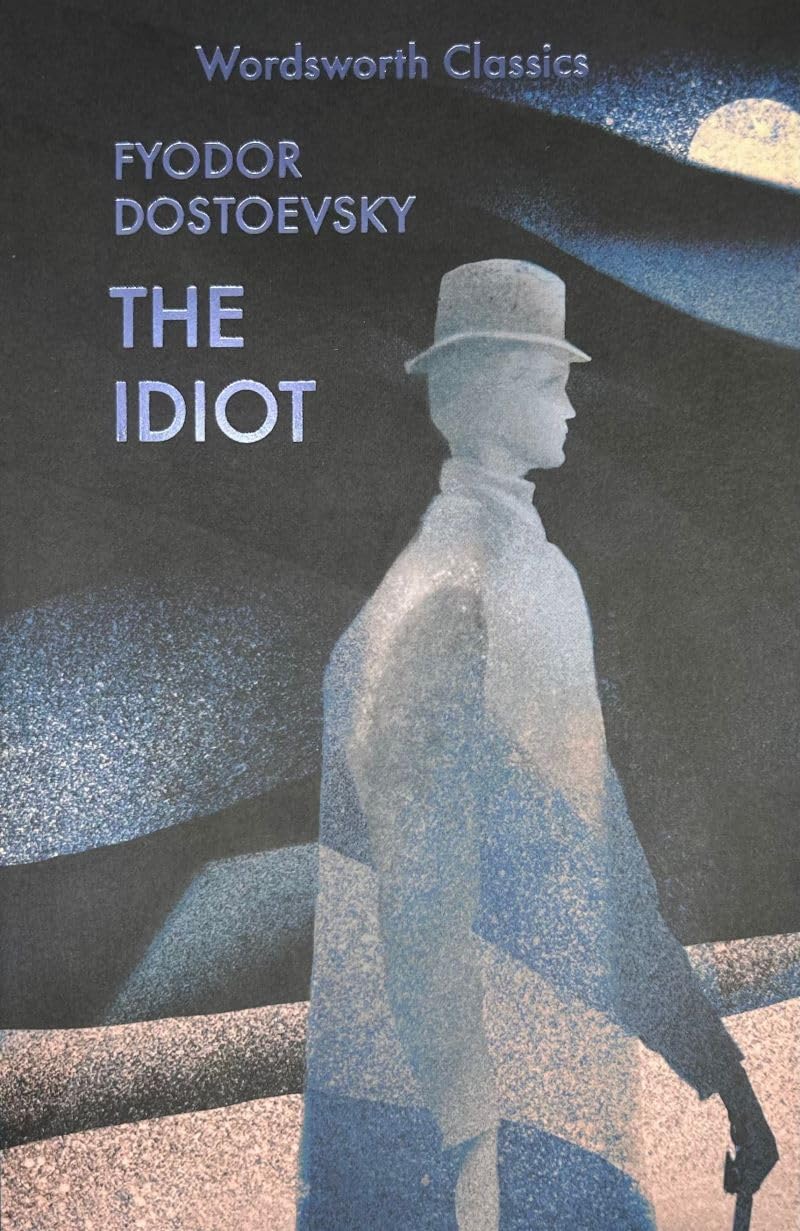
The Idiot
Фёдор Михайлович Достоевский


 Apple Books


 170 Min Reading Time
 Audio Version Available
About this book
In the heart of 19th-century Russia, a society consumed by avarice and ambition, Prince Myshkin emerges from a Swiss sanatorium, armed only with disarming innocence and a pure heart. Often mistaken for an idiot due to his guileless nature, the Prince becomes a beacon of goodness in a world desperately lacking it.
As Myshkin navigates the treacherous currents of St. Petersburg's high society, he finds himself entangled in a web of intense passions and destructive desires. Torn between the captivating but tormented Nastasya Filippovna and the radiant Aglaia, he unwittingly ignites a battle for his affection, a battle that threatens to consume them all.
Dostoevsky's "The Idiot" is a profound exploration of the consequences of innocence in a corrupt world. Will Myshkin's unwavering morality redeem the decadent society around him, or will its darkness extinguish his light? Prepare to be moved by this tragic and ultimately timeless masterpiece, where love, betrayal, and the search for meaning collide in a society on the brink of dissolution.
Summary of Key Ideas
- •
The Ideal of Innocence and Its Consequences
Prince Myshkin, the protagonist, embodies an almost Christ-like innocence and purity. His naiveté and inherent goodness stand in stark contrast to the moral corruption and materialistic desires of the Russian society he encounters. Myshkin's interactions highlight the challenges of living a virtuous life in a world driven by greed, jealousy, and social ambition. He is often perceived as an 'idiot' due to his unconventional behavior and inability to comprehend the manipulative tactics of those around him, yet his genuine compassion and empathy reveal the profound flaws in societal norms.
- •
The Destructive Nature of Passionate Love
Dostoevsky explores the destructive power of passionate love and its entanglement with jealousy, possessiveness, and societal expectations. The intense relationships between Myshkin, Nastasya Filippovna, and Rogozhin demonstrate how love can devolve into obsession and ultimately lead to tragedy. Nastasya Filippovna, a woman scarred by abuse and societal judgment, becomes the object of both Myshkin's compassionate love and Rogozhin's destructive passion, highlighting the different facets of love and its potential for both redemption and ruin. The novel questions whether true love can exist in a world tainted by ego and self-interest.
- •
Critique of Russian Society and Morality
The novel critiques the superficiality and moral decay of the Russian aristocracy and merchant class. Characters are driven by wealth, status, and social climbing, often at the expense of genuine human connection. Dostoevsky exposes the hypocrisy and moral compromises that permeate high society, contrasting them with Myshkin's simple honesty and unwavering principles. The pursuit of material wealth and social recognition leads to corruption, betrayal, and ultimately, the downfall of many characters, illustrating the corrosive effect of societal pressures on individual morality.
- •
Redemption Through Suffering
The theme of redemption through suffering is central to "The Idiot." Characters like Nastasya Filippovna, haunted by their pasts and burdened by societal stigma, seek redemption through love and forgiveness. Myshkin's unwavering compassion offers a path to redemption, but the characters' inability to fully embrace it leads to tragic consequences. The novel suggests that true redemption requires confronting one's inner demons and overcoming the destructive forces of pride, resentment, and self-pity. However, Dostoevsky also acknowledges the immense difficulty of achieving such transformation in a world filled with temptation and moral compromise.
- •
Faith, Doubt, and the Problem of Evil
Dostoevsky delves into the complexities of faith and the struggle to reconcile religious belief with the harsh realities of the world. Myshkin embodies a Christ-like figure, representing the ideal of Christian love and compassion. However, his inability to prevent suffering and his ultimate descent into madness raise questions about the efficacy of faith in a world plagued by evil. The novel explores the tension between religious ideals and human fallibility, suggesting that faith alone may not be sufficient to overcome the destructive forces of human nature.
- •
Sanity, Madness, and the Limits of Reason
The novel explores the themes of sanity and madness, blurring the lines between the two. Myshkin's epilepsy and perceived 'idiocy' often lead others to dismiss him as mentally unstable, yet his insights and moral clarity often surpass those of 'sane' individuals. Dostoevsky challenges conventional notions of sanity, suggesting that true wisdom and understanding may lie outside the realm of rational thought. The characters' descent into madness reflects the psychological toll of their moral struggles and the overwhelming pressures of societal expectations, raising questions about the nature of mental illness and its relationship to spiritual and emotional turmoil.
Chapter Recap

About The Author
Фёдор Михайлович Достоевский
Main Quotes
"Beauty is a terrible and awful thing! It is terrible because it has not been fathomed and never can be fathomed, for God sets us nothing but riddles."
"It is not worth an intelligent man to be governed by fools."
"What is hell? I maintain that it is the suffering of being unable to love."
"A man who has a conscience suffers whilst acknowledging his sin. That is his punishment."
"To be too conscious is a sickness, a real, thorough sickness."
"It is better to be unhappy and know the worst, than to be happy in a fool's paradise."
"The most momentous thing in life is to know how to choose the right door to open."
"Everyone has his grief, and therefore there is no reason to be sorry for me."
"A fool with a heart and no brains is just as unhappy as a fool with brains and no heart."
"Learn to bear and forgive."
Who Should Read This Book
Readers of classic Russian literature
Individuals interested in philosophical novels
Readers interested in exploring themes of morality, innocence, and societal corruption
Those fascinated by complex characters and psychological depth
Readers familiar with Dostoevsky's other works, such as "Crime and Punishment"
Individuals interested in 19th-century Russian society and culture
Students of literature and literary analysis
Readers who enjoy character-driven stories over plot-driven ones
Individuals interested in exploring the concept of the "positively beautiful man"
Readers who appreciate tragic and thought-provoking narratives
Book Summaries Like
The Idiot
FAQ

Free Access to LitNotes