




 DISCORD
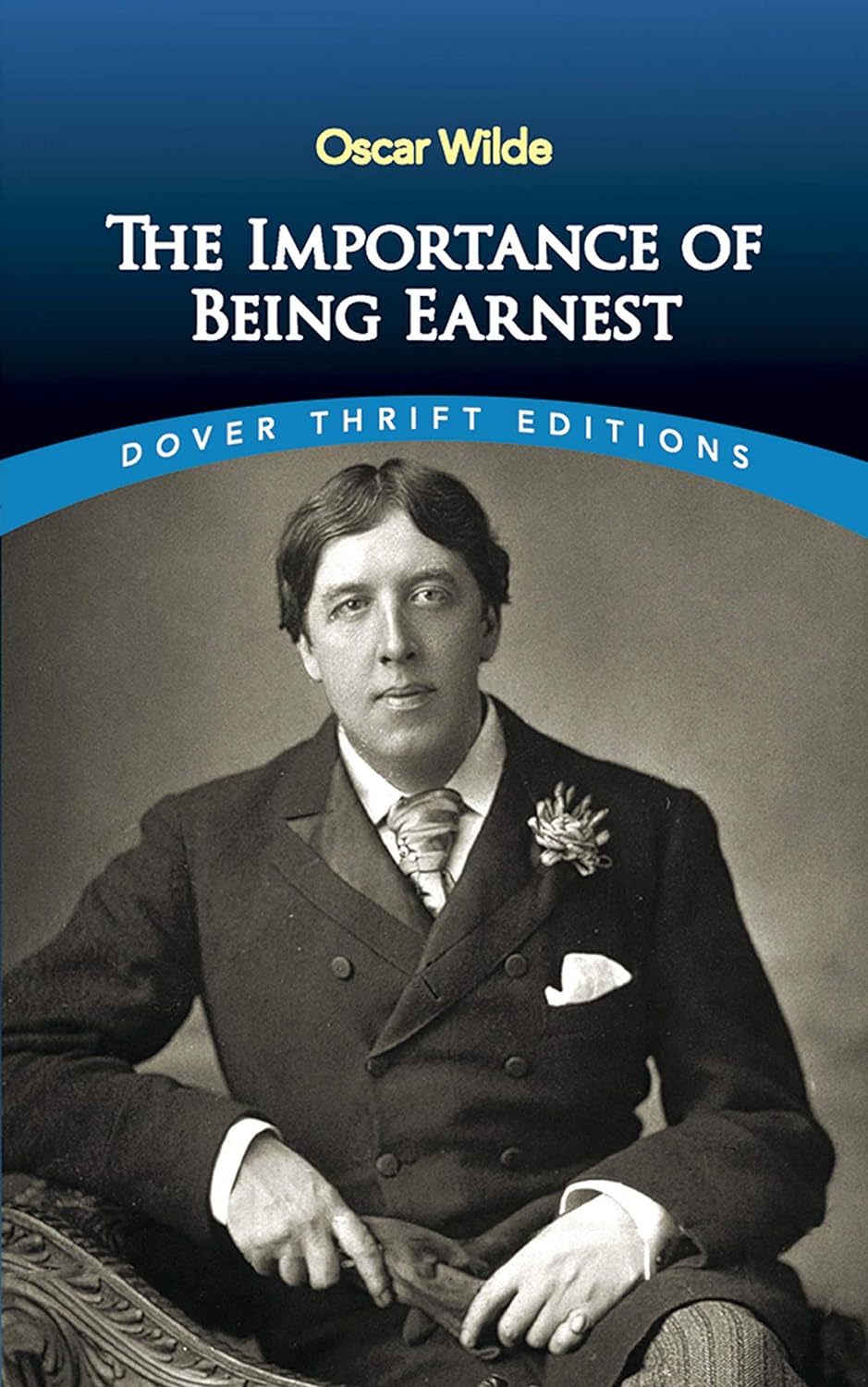
The Importance of Being Earnest
Oscar Wilde


 Apple Books


 24 Min Reading Time
 Audio Version Available
About this book
In Oscar Wilde's dazzling comedy, "The Importance of Being Earnest," two charming bachelors, Jack and Algernon, lead double lives to escape the constraints of Victorian society. Using the alias "Ernest" to woo their beloveds, Gwendolen and Cecily, they find themselves entangled in a web of deception and mistaken identity. Wilde's masterpiece sparkles with witty banter, satirical jabs at social conventions, and unforgettable characters, all while questioning the very nature of "earnestness" itself. Prepare to be captivated by this timeless tale of love, lies, and the absurdity of high society.
Summary of Key Ideas
- •
Earnestness as a Social Mask
The Duality of Earnestness: The play satirizes the Victorian concept of 'earnestness,' which implies sincerity and seriousness. Both Jack and Algernon create alter egos named 'Ernest' to escape social obligations and pursue romantic interests. This highlights the hypocrisy of Victorian society, where appearances and reputation often trump genuine character. The characters believe that being named 'Ernest' is essential for being loved, showcasing the superficiality of their affections and the societal obsession with outward respectability. Wilde uses this central conceit to critique the rigid moral standards of the time, suggesting that genuine feelings are often stifled by social expectations.
- •
Marriage and Social Status
Marriage as a Social Contract: Marriage is portrayed not as a union of love and mutual respect, but as a social contract driven by wealth, status, and superficial attributes. Lady Bracknell's interrogation of Jack about his lineage and financial prospects epitomizes this transactional view of marriage. Gwendolen and Cecily are both infatuated with the name 'Ernest,' demonstrating how shallow criteria can dictate romantic decisions. Wilde critiques the Victorian obsession with social climbing through marriage, exposing the absurdity of prioritizing societal expectations over genuine emotional connections. The characters' pursuit of marriage is often a vehicle for satire, underscoring the societal pressures and absurd conventions surrounding it.
- •
Deception and Escapism
The Art of Deception and Double Lives: The protagonists, Jack and Algernon, lead double lives to navigate the constraints of Victorian society. Jack invents a fictional brother named 'Ernest' to escape his responsibilities in the countryside, while Algernon creates a perpetually ill friend named 'Bunbury' to avoid social engagements in London. These deceptions reveal the characters' desire to evade the rigid expectations of their social class and pursue personal pleasures. Wilde uses these elaborate charades to satirize the hypocrisy and artificiality of Victorian social life, where maintaining appearances often requires constant deceit. The double lives highlight the tension between individual desires and societal norms.
- •
Superficiality of the Aristocracy
The Triviality of the Upper Class: Wilde portrays the upper class as obsessed with trivial matters, such as fashion, gossip, and social etiquette. Lady Bracknell's pronouncements on appropriate behavior and her rigid adherence to social conventions exemplify this superficiality. The characters engage in witty banter and clever repartee, often devoid of substance, highlighting the emptiness of their lives. Wilde satirizes the upper class's preoccupation with appearances and their detachment from genuine concerns, suggesting that their lives are largely performative and devoid of deeper meaning. The play's subtitle, 'A Trivial Comedy for Serious People,' underscores this critique of upper-class values.
- •
Fluidity of Identity
Identity and Invented Personas: The characters in 'The Importance of Being Earnest' grapple with their identities, often creating fabricated personas to suit their desires and ambitions. Jack's creation of 'Ernest' and Algernon's 'Bunburying' exemplify this constructed identity. The play explores how identity can be fluid and malleable, shaped by social expectations and personal aspirations. The confusion surrounding Jack's true parentage and the revelation of his actual name further complicate the theme of identity. Wilde suggests that identity is not fixed but rather a performance, subject to manipulation and reinvention. This challenges the Victorian emphasis on fixed social roles and inherited status.
- •
Satirical Social Commentary
Satire of Victorian Social Mores: Wilde masterfully satirizes the rigid social conventions and moral hypocrisy of Victorian society. Through witty dialogue, absurd situations, and exaggerated characters, he exposes the absurdity of Victorian values. The play critiques the obsession with reputation, the importance placed on social status, and the constraints imposed on individual freedom. Wilde uses humor as a weapon to challenge the prevailing norms of his time, prompting audiences to question the values they hold dear. The satire is not merely comedic but also incisive, revealing the underlying contradictions and absurdities of Victorian social life.
- •
Witty Dialogue and Language
The Power of Language and Wordplay: Oscar Wilde was a master of language, and “The Importance of Being Earnest” is replete with witty banter, epigrams, and paradoxical statements. The characters often use language to conceal their true intentions or to manipulate others. Wilde employs wordplay to create humor and to expose the superficiality of communication within the upper class. The dialogue is carefully crafted to be both entertaining and insightful, revealing the characters' personalities and their social milieu. The play celebrates the power of language to shape perceptions and to create illusions.
- •
Flaws in Education
Critique of Victorian Education: The play subtly critiques the Victorian education system, particularly its emphasis on rote learning and superficial knowledge. The characters often demonstrate a lack of genuine understanding, relying instead on memorized facts and pronouncements. Lady Bracknell's rigid expectations for Gwendolen's education reflect the narrow focus of Victorian schooling, which prioritized social graces over intellectual development. Wilde suggests that education should foster critical thinking and genuine understanding, rather than simply reinforcing social conventions. The critique of education is interwoven with the broader satire of Victorian society, highlighting the limitations of its institutions and values.
Chapter Recap

About The Author
Oscar Wilde
Main Quotes
"The truth is rarely pure and never simple."
"I never travel without my diary. One should always have something sensational to read in the train."
"To lose one parent, Mr. Worthing, might be regarded as a misfortune; to lose both looks like carelessness."
"All women become like their mothers. That is their tragedy. No man does. That’s his."
"I am sick to death of cleverness. Everybody is clever nowadays. You can’t go anywhere without meeting clever people. The thing has become an absolute public nuisance."
"In matters of grave importance, style, not sincerity is the vital thing."
"Never speak disrespectfully of Society, Algernon. Only people who can’t get into it do that."
"I have nothing to do today. I don’t belong to the leisured classes."
"The good ended happily, and the bad unhappily. That is what Fiction means."
"I hate people who are not serious about meals. It is so shallow of them."
Who Should Read This Book
Readers interested in classic literature and British comedies.
Students studying Victorian literature, drama, or Oscar Wilde.
Theatergoers and fans of stage productions.
Individuals who appreciate wit, satire, and social commentary.
Those interested in exploring themes of identity, class, and marriage in a comedic context.
Readers seeking lighthearted and humorous stories.
Fans of Oscar Wilde's other works.
Academics and literary scholars.
Members of book clubs focusing on classic plays.
Individuals interested in queer theory and its application to literature.
High school and college students.
Book Summaries Like
The Importance of Being Earnest

FAQ

Free Access to LitNotes