




 DISCORD
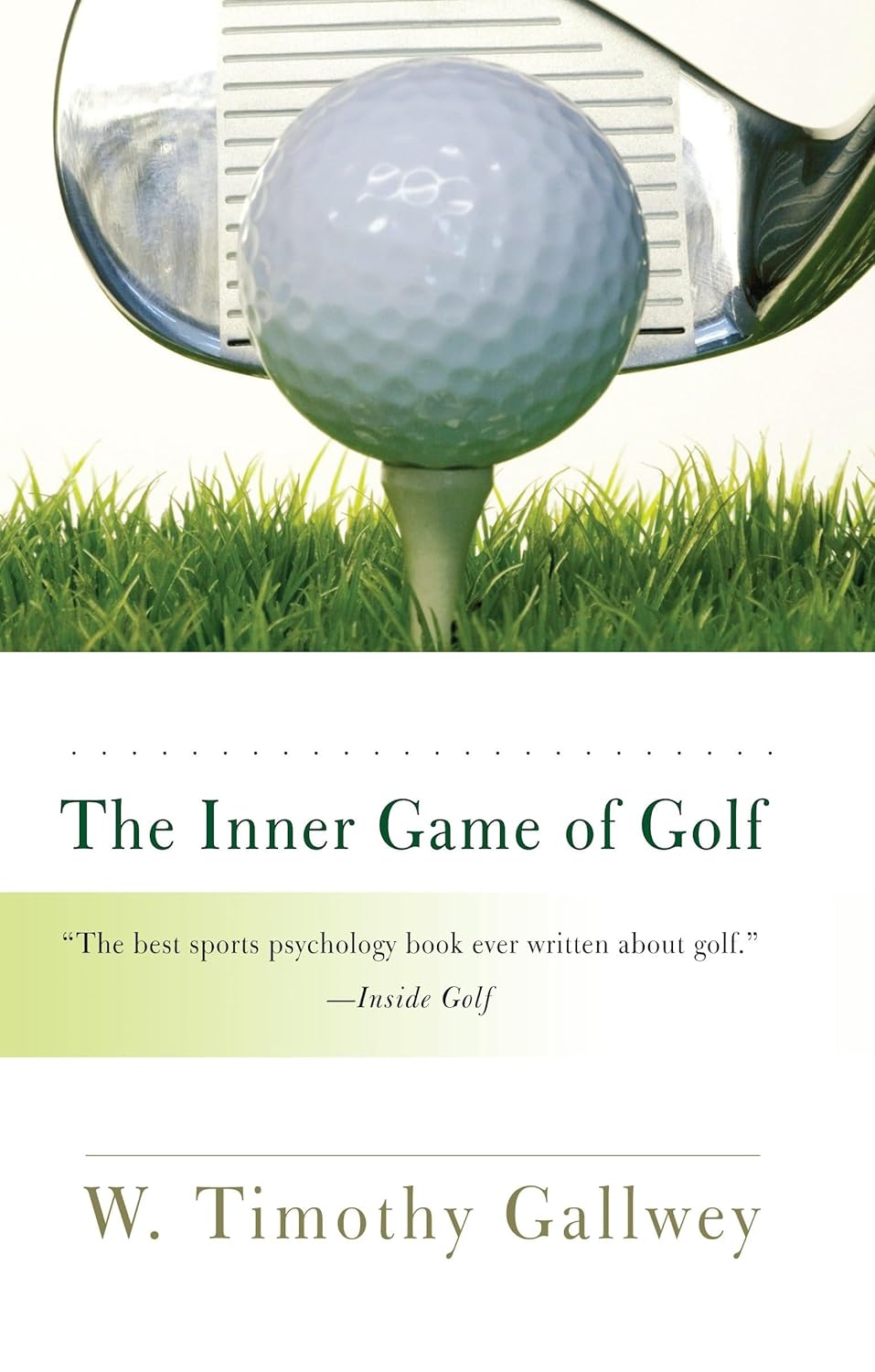
The Inner Game of Golf
W. Timothy Gallwey


 Apple Books


 42 Min Reading Time
 Audio Version Available
About this book
Unlock your golfing potential not on the range, but within. The Inner Game of Golf by W. Timothy Gallwey isn't just another instruction manual filled with swing techniques. It's a revolutionary approach that reveals how to overcome the mental obstacles that prevent you from playing your best.
Learn to quiet the critical "self 1" and unleash the natural abilities of "self 2," tapping into a state of relaxed concentration where peak performance becomes effortless. Through insightful guidance and practical exercises, Gallwey teaches you how to trust your instincts, visualize success, and cultivate a non-judgmental awareness of your game.
Whether you're a seasoned pro or a weekend enthusiast, The Inner Game of Golf offers a transformative path to lower scores and a more fulfilling experience on the course. Discover the art of relaxed focus, conquer self-doubt, and unlock the golfer you were always meant to be.
Summary of Key Ideas
- •
Taming the Inner Critic (Self 1)
Quieting the Self 1: The primary obstacle to skill development and peak performance in golf is the 'Self 1,' the conscious, judgmental mind. This inner critic constantly evaluates and interferes with the natural learning process. Gallwey emphasizes the importance of minimizing Self 1's activity to allow the 'Self 2,' the body's innate capabilities, to take over. By reducing conscious control and negative self-talk, golfers can unlock their potential and achieve a state of 'quiet mind' where performance flows more naturally.
- •
Unleashing Natural Ability (Self 2)
Trusting Self 2: 'Self 2' represents the body's natural ability to learn and perform without conscious interference. Gallwey advocates for cultivating trust in Self 2's capabilities. This involves shifting focus from explicit instructions and forced movements to allowing the body to execute the swing instinctively. By trusting Self 2, golfers can overcome overthinking and tension, leading to smoother, more effective swings. This trust is built through mindful observation and non-judgmental awareness of one's movements.
- •
Cultivating Non-Judgmental Awareness
Non-Judgmental Awareness: A core principle of the Inner Game is cultivating non-judgmental awareness of one's thoughts, feelings, and physical sensations during the game. Rather than criticizing errors or dwelling on past performance, golfers should observe their game with curiosity and acceptance. This detached observation provides valuable feedback without triggering the anxiety and self-doubt that hinder improvement. By embracing a non-judgmental approach, golfers can create a more positive and productive learning environment.
- •
Harnessing the Power of Visualization
Visualization and Imagery: Gallwey highlights the power of visualization in improving golf performance. By vividly imagining successful shots and positive outcomes, golfers can program their minds and bodies for success. Visualization helps to create a clear mental template for the desired performance, making it easier for the body to execute the necessary movements. This technique is particularly effective for overcoming mental blocks and building confidence in one's abilities.
- •
Embracing the Process Over Outcome
Focus on the Process, Not the Outcome: The Inner Game emphasizes the importance of focusing on the present moment and the process of swinging the club, rather than fixating on the outcome of the shot. By shifting attention to the feel of the swing, the rhythm, and the connection with the ball, golfers can reduce anxiety and improve their concentration. This process-oriented approach allows for a more relaxed and fluid performance, as the golfer is less concerned with the results and more engaged in the act of playing.
- •
Mastering the Art of Letting Go
The Art of Letting Go: A key element of the Inner Game is learning to 'let go' of control and allow the body to perform naturally. This involves surrendering the need to micromanage every aspect of the swing and trusting the body's innate intelligence. Letting go can be challenging, as it requires overcoming the urge to control and perfect every movement. However, by releasing this need for control, golfers can unlock a more effortless and powerful swing.
- •
Heightening Sensory Awareness
Awareness of Key Sensations: Gallwey encourages golfers to heighten their awareness of specific sensations during their swing, such as the feel of the club in their hands, the rotation of their body, or the point of contact with the ball. Focusing on these key sensations provides a clear and direct channel for feedback, allowing golfers to make subtle adjustments and improvements without overthinking. This heightened awareness enhances the connection between mind and body, leading to greater consistency and control.
- •
Embracing Mistakes as Learning
Redefining 'Mistakes' as Learning Opportunities: The Inner Game reframes the concept of mistakes as valuable learning opportunities rather than failures. By viewing errors as a source of information and feedback, golfers can cultivate a more positive and growth-oriented mindset. This shift in perspective allows them to analyze their performance without self-criticism and identify areas for improvement. Embracing mistakes as part of the learning process reduces anxiety and promotes a more resilient approach to the game.
Chapter Recap

About The Author
W. Timothy Gallwey
Main Quotes
"The mind is like a parachute, it works best when it's open."
"The player who never makes a mistake never makes anything."
"The key to better golf lies in quieting the mind."
"Your potential is realized when you stop trying to control everything."
"Awareness is curative."
"Trust yourself, and let go."
"See the ball, feel the club, trust your swing."
"Concentration is the art of filtering."
"Judgment hinders learning."
"Relaxed concentration is the key."
Who Should Read This Book
Golfers of all skill levels seeking to improve their mental game
Individuals interested in sports psychology
Readers of self-help and personal development books
Coaches and instructors looking for new methods to teach the mental aspects of golf
Business professionals interested in applying "Inner Game" principles to their careers
Readers familiar with and interested in W. Timothy Gallwey's other "Inner Game" books
Golfers seeking strategies to manage pressure and improve focus
Individuals looking for a more enjoyable and less frustrating golf experience
Book Summaries Like
The Inner Game of Golf

FAQ

Free Access to LitNotes