




 DISCORD
The Jungle Book
Rudyard Kipling


 Apple Books


 25 Min Reading Time
 Audio Version Available
About this book
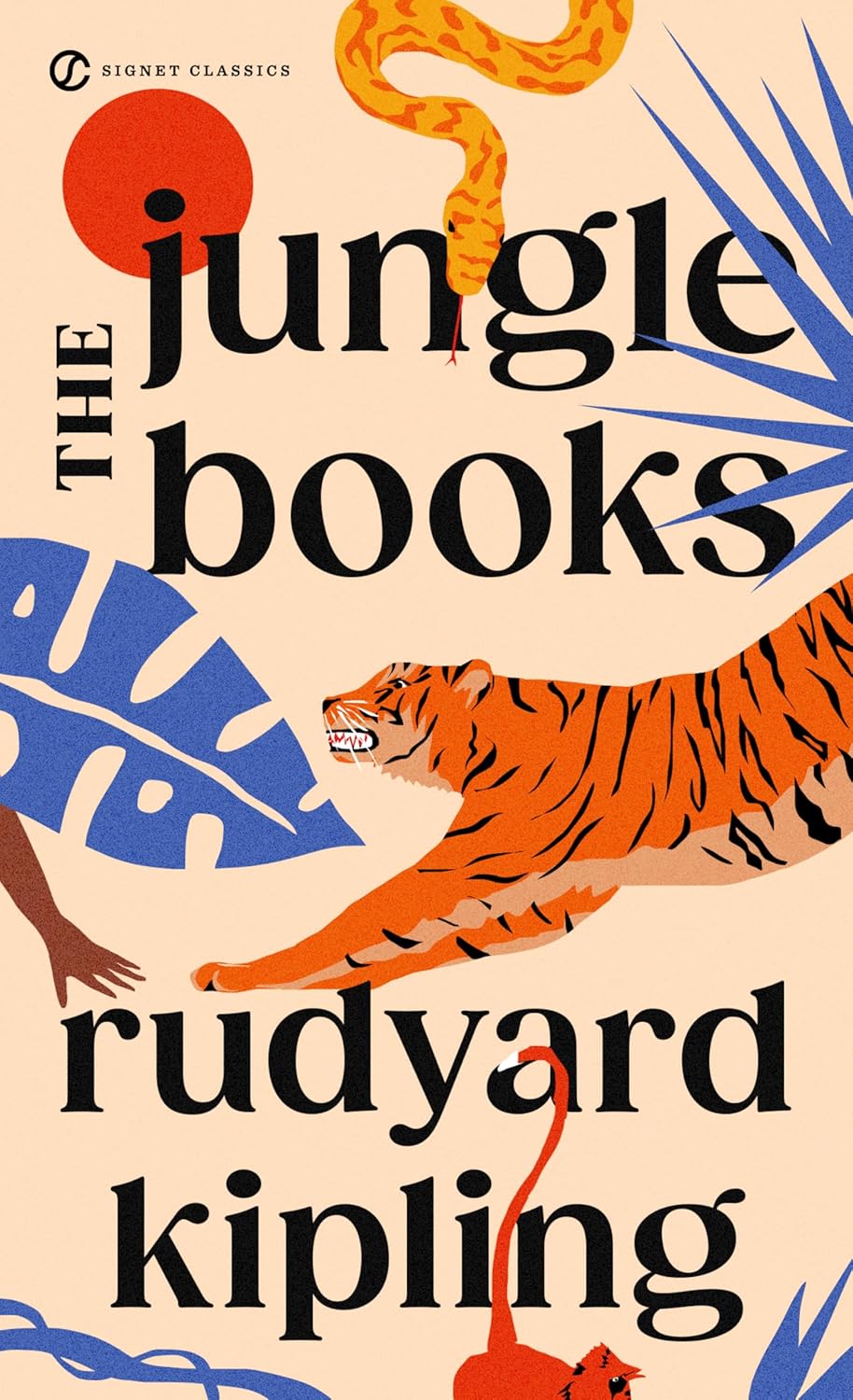
Deep in the heart of the Indian jungle, a boy named Mowgli is raised by a pack of wolves, learning the ancient laws and secrets of the wild. Tutored by Baloo the bear and Bagheera the panther, Mowgli navigates a vibrant world of cunning creatures and perilous landscapes. But the jungle holds a dark shadow: Shere Khan, the fierce Bengal tiger, who seeks to destroy the man-cub.
As Mowgli grows, he must confront his own identity, torn between the human world and the animal family he holds dear. Will he succumb to the vengeful wrath of Shere Khan, or embrace the wisdom of the jungle and forge his own destiny?
Embark on a timeless adventure of survival, friendship, and self-discovery in Rudyard Kipling's The Jungle Book, where the lines between man and beast blur, and the true meaning of belonging echoes through the trees.
Summary of Key Ideas
- •
The Importance of the Law of the Jungle
The Law of the Jungle is a central tenet, emphasizing order and survival in the wild. It's a moral code that dictates how animals should interact with each other, highlighting the importance of respect, discipline, and understanding the consequences of one's actions. The law isn't just about physical survival; it also promotes a sense of community and responsibility. Characters like Baloo and Bagheera constantly teach Mowgli the Law, underscoring its significance in navigating the dangers and complexities of the jungle. Kipling uses this concept to explore themes of social order and the necessity of rules, even in the absence of human civilization.
- •
The Search for Identity and Belonging
Mowgli's journey is fundamentally about finding his place in the world. As a human raised by wolves, he exists between two worlds, never fully belonging to either. This in-between state forces him to grapple with questions of identity and belonging, as he tries to understand where he truly fits. The jungle becomes a metaphor for the challenges of self-discovery, and Mowgli's interactions with different animals reflect his attempts to reconcile his human nature with his upbringing in the wild. Ultimately, Mowgli's choice to return to human society signifies his acceptance of his true identity, a blend of both worlds.
- •
The Conflict Between Nature and Civilization
The novel explores the inherent conflict between the natural world and human civilization. The jungle represents a space of freedom, instinct, and raw power, while the human village symbolizes order, structure, and the constraints of society. Mowgli's experiences highlight the tension between these two worlds, as he must learn to navigate the rules and expectations of both. Kipling examines the positive and negative aspects of each, suggesting that while civilization offers security and community, it also comes at the cost of individual liberty and connection to nature. Mowgli's ultimate choice to return to the human world acknowledges the pull of his own species, but also suggests a loss of innocence and freedom.
- •
The Power of Loyalty and Family
Loyalty and family bonds are crucial themes throughout the book. Mowgli's wolf pack becomes his adoptive family, providing him with protection, guidance, and a sense of belonging. The unwavering loyalty of characters like Mother Wolf, Baloo, and Bagheera demonstrates the power of chosen family and the importance of standing by those you care about. Even in the face of danger, these characters risk their lives to protect Mowgli, highlighting the strength of their familial bonds. Kipling uses these relationships to emphasize the universal need for love, support, and connection, regardless of species or origin.
- •
Courage, Adaptability, and Survival
Survival in the jungle requires courage, adaptability, and a willingness to learn. Mowgli's journey is a testament to his resilience and ability to overcome adversity. He faces numerous challenges, from dangerous predators to the complexities of jungle law, and he learns to adapt his behavior and develop new skills to survive. The book celebrates the importance of courage in the face of fear, as Mowgli confronts Shere Khan and other threats with determination and resourcefulness. Kipling suggests that true strength lies not just in physical power, but also in the ability to learn, adapt, and persevere.
- •
Imperialism and Power Dynamics
Kipling subtly explores the theme of imperialism through the lens of the jungle. The interactions between different animal species can be interpreted as a reflection of the power dynamics between colonizers and the colonized. The Law of the Jungle, while seemingly benevolent, can also be seen as a tool for maintaining order and control, similar to the ways in which imperial powers imposed their laws and customs on colonized territories. However, Kipling's portrayal is complex and nuanced, avoiding simplistic condemnation or glorification of imperialism. The jungle becomes a microcosm of the broader social and political landscape of the time, inviting readers to consider the complexities of power, control, and cultural exchange.
Chapter Recap

About The Author
Rudyard Kipling
Main Quotes
"For the strength of the Pack is the Wolf, and the strength of the Wolf is the Pack."
"Now this is the Law of the Jungle—as old and as true as the sky;"
"And the Wolf that shall keep it may prosper, but the Wolf that shall break it must die."
"The Law of the Jungle, which never orders anything without a reason, forbids every beast to eat Man except when he is killing to show his children how to kill, and then he must hunt outside the hunting-grounds of his pack or tribe."
""Remember, Bagheera loved thee," murmured Mowgli, "and remember all ye packs that I gave thee good hunting. Now I go to men.""
"We be of one blood, ye and I."
"Little Brother, wilt thou go with me?"
"And even as I returned to my jungle, so thou must go back to men at last—to the men who are thy brothers—if thou art not killed in the Council."
"Sufficient bamboo is this day's sorrow;"
"Wake before I kill! Here is no game to kill."
"His strength is in his tongue rather than in his fore-feet."
Who Should Read This Book
Children aged 8-12
Families looking for adventure stories
Readers interested in fables and moral lessons
Animal lovers
Those interested in Indian culture and folklore
Readers who enjoy classic literature
Educators seeking stories with themes of friendship, loyalty, and survival
Book Summaries Like
The Jungle Book


FAQ

Free Access to LitNotes