




 DISCORD
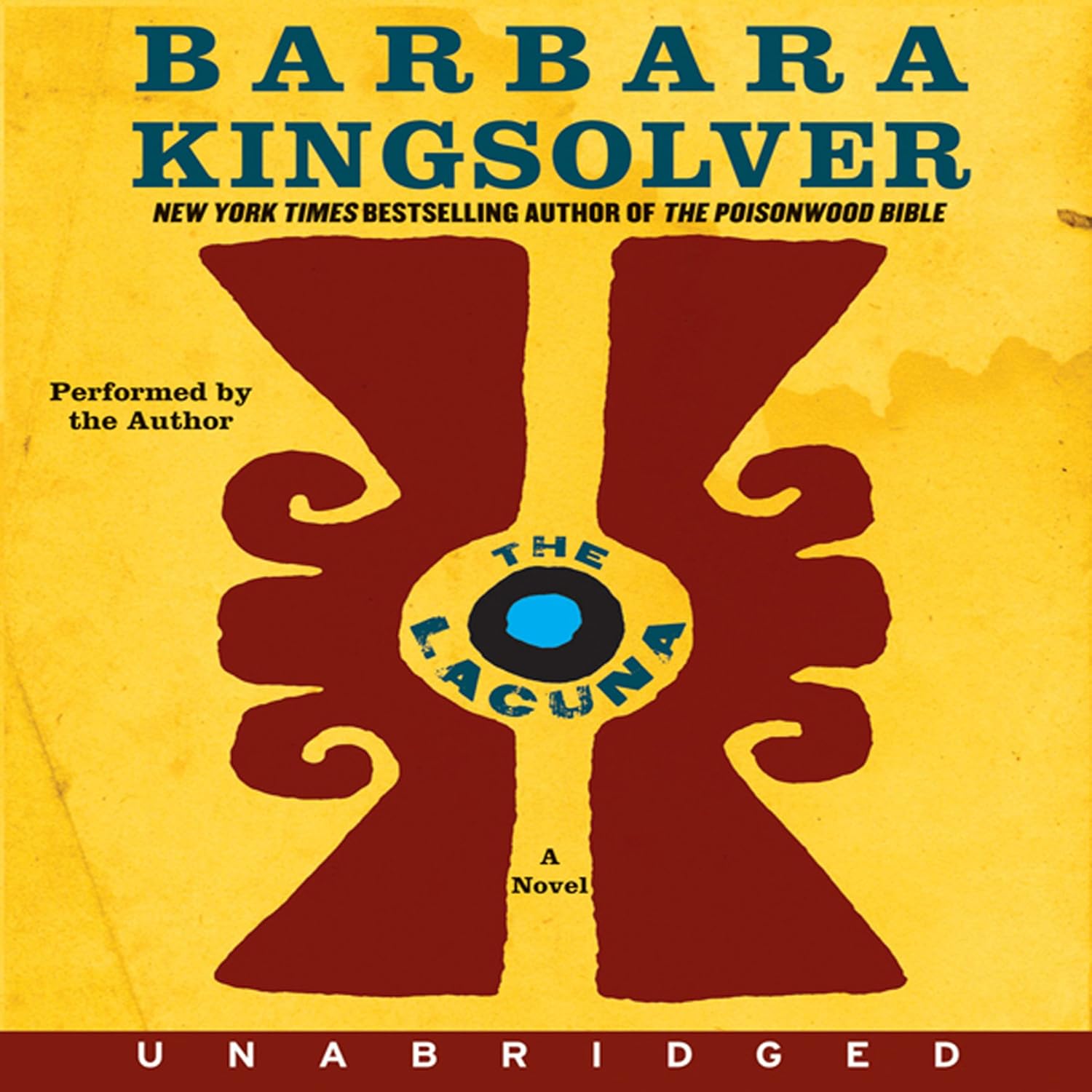
The Lacuna
Barbara Kingsolver


 Amazon Best Sellers


 113 Min Reading Time
 Audio Version Available
About this book
Born in the United States and raised in the vibrant, tumultuous landscape of Mexico, Harrison Shepherd is a man adrift, caught between two nations and two vastly different worlds. His early life is a mosaic of provisional households, from tropical jungles to the bustling streets of 1930s Mexico City, where he finds a precarious sense of belonging amidst the world of artists and revolutionaries.
As a young man, Harrison finds himself swept into the orbits of the legendary Frida Kahlo and Diego Rivera, assisting them with their art and discovering a passion for Aztec history. His life takes a dramatic turn when he becomes entangled with Leon Trotsky, the exiled political leader whose presence draws Harrison into a vortex of art, revolution, and dangerous intrigue.
When political winds propel him north to the United States, amidst the fervor of World War II, Harrison attempts to forge a new identity in the hopeful image of his homeland. Yet, the past and the political machinations of the era relentlessly pursue him, tossing him between north and south.
"The Lacuna" is a poignant and epic journey through the heart of the twentieth century, exploring the profound impact of history, art, and public perception on a single life. Through Harrison's odyssey, Barbara Kingsolver crafts an unforgettable portrait of the artist, the act of creation, and the elusive nature of truth in a world shaped by rumor and presumption.
Summary of Key Ideas
- •
The Power of Untold Stories
"The Lacuna" emphasizes the significance of uncovering and sharing hidden narratives, particularly those marginalized or suppressed by dominant historical accounts. Harrison Shepherd, the protagonist, serves as a conduit for these stories, documenting his experiences with figures like Frida Kahlo, Diego Rivera, and Leon Trotsky. The novel suggests that these personal, often intimate, accounts offer a more nuanced and complete understanding of historical events than official records alone. By giving voice to the voiceless, Kingsolver challenges readers to question established narratives and consider alternative perspectives. The novel highlights how individual experiences contribute to a broader understanding of historical and political contexts, urging us to seek out and value diverse viewpoints to gain a more comprehensive grasp of the past.
- •
Art as a Reflection of Political Turmoil
The novel intricately connects artistic expression with political upheaval, demonstrating how art often serves as a response to and commentary on societal unrest. Set against the backdrop of the Mexican Revolution's aftermath and the rise of McCarthyism in the United States, "The Lacuna" showcases how artists like Frida Kahlo and Diego Rivera used their work to express their political beliefs and challenge oppressive systems. Harrison Shepherd's writing and culinary pursuits also become forms of creative resistance, allowing him to navigate and interpret the turbulent world around him. Kingsolver suggests that art possesses the power to both reflect and shape political discourse, offering a means of protest, preserving cultural memory, and inspiring social change. The characters' artistic endeavors highlight the profound impact of political events on individual expression and the crucial role of art in documenting and critiquing power structures.
- •
The Peril of Political Paranoia and Censorship
Kingsolver exposes the dangers of unchecked political paranoia and the devastating effects of censorship on individual lives and artistic freedom. The McCarthy era in the United States is depicted as a period of intense suspicion and repression, where dissenting voices were silenced and individuals were persecuted for their beliefs. Harrison Shepherd's experiences illustrate how easily public opinion can be manipulated, leading to unjust accusations and the suppression of truth. The novel underscores the importance of protecting freedom of speech and expression, even when those expressions challenge the status quo. By depicting the consequences of political paranoia, Kingsolver cautions against the erosion of civil liberties and the dangers of allowing fear to dictate policy and public discourse. The novel serves as a reminder of the importance of critical thinking and the need to resist attempts to stifle dissent.
- •
The Search for Identity and Belonging
Harrison Shepherd's journey is fundamentally a quest for identity and a sense of belonging. As a character straddling two cultures—American and Mexican—he never fully integrates into either, remaining perpetually on the periphery. This liminal existence shapes his worldview and influences his artistic expression. His search for acceptance leads him to various relationships and experiences, but he always remains somewhat of an outsider. Kingsolver uses Harrison's story to explore the complexities of cultural identity and the challenges faced by those who don't fit neatly into predefined categories. The novel suggests that true belonging may not always be found in physical places or social groups, but rather in the acceptance of one's own unique identity and the ability to connect with others on a deeper, more meaningful level.
- •
The Fragility of Truth and Memory
"The Lacuna" explores the subjective nature of truth and the unreliability of memory. Harrison's diaries, though presented as personal accounts, are inevitably shaped by his own biases and perspectives. The novel questions the possibility of capturing objective truth, suggesting that all narratives are filtered through individual experiences and interpretations. Furthermore, the public's perception of Harrison's life and work is distorted by media sensationalism and political agendas, further obscuring the truth. Kingsolver highlights how easily memories can be manipulated or forgotten, emphasizing the importance of critical engagement with historical narratives and a recognition of the limitations of human perception. The novel urges readers to question the sources of information and to consider multiple perspectives when attempting to understand the past.
- •
The Interconnectedness of Personal and Political Realms
Kingsolver masterfully illustrates how personal lives are inextricably linked to political events. Harrison's relationships, artistic pursuits, and sense of self are all profoundly affected by the political climate in both Mexico and the United States. The novel demonstrates that even seemingly private actions can have political consequences, particularly in times of social and political upheaval. By blurring the lines between the personal and the political, Kingsolver underscores the responsibility of individuals to engage with the world around them and to recognize the impact of their choices on society as a whole. The characters' experiences highlight the importance of political awareness and the need to resist apathy in the face of injustice.
Chapter Recap

About The Author
Barbara Kingsolver
Barbara Kingsolver is an American novelist, essayist and poet.
Main Quotes
"This is what it means to be alone: everyone is connected to everyone else, their bodies are a bright liquid life flowing around you, sharing a single heart."
"A blank space on a form, the missing page, a void, a hole in your knowledge of someone--it's still some real thing. It exists. You don't get to fill it in."
"Sóli, let me tell you. The most important thing about a person is always the thing you don't know."
"In the beginning were the howlers. They always commenced their bellowing in the first hour of dawn, just as the hem of the sky began to whiten."
"Like the school of the fish, so driven to righteousness they could flout the law, declare the safety of their souls, then go home and destroy the evidence."
"Art is the most beautiful of all lies, it is the most beautiful of all truths."
"The most important thing about a person is always the thing you don't know."
"Memories do not always soften with time; some grow edges like knives."
"The very least you can do in your life is to figure out what you hope for. And the most you can do is live inside that hope."
"Life proceeds, it enrages. The untouched ones spend their luck without a thought, believing they deserve it."
Who Should Read This Book
Readers interested in historical fiction
Readers interested in literary fiction with social commentary
Readers interested in novels exploring themes of identity, art, and politics
Readers interested in the history of Mexico and the United States in the mid-20th century
Readers interested in novels featuring real historical figures like Frida Kahlo and Diego Rivera
Readers interested in Barbara Kingsolver's previous works
Book Summaries Like
The Lacuna
FAQ

Free Access to LitNotes