




 DISCORD
The Light Eaters
Zoë Schlanger


 Indie Bestsellers


 50 Min Reading Time
 Audio Version Available
About this book
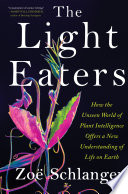
Venture into the astonishing hidden world of plants with Zoë Schlanger's The Light Eaters, a groundbreaking exploration of plant intelligence that will forever change how you perceive the natural world. Journey across the globe and into the latest botanical research as Schlanger unveils the extraordinary abilities of plants: their capacity to communicate, recognize family, adapt to their surroundings, and even trick animals.
More than just survivalists, plants possess a parallel form of intelligence that challenges our very notions of consciousness. What can we learn from these beings that thrive by adapting, consuming, and accommodating? And what is our responsibility to them, now that we're beginning to understand the true depth of their capabilities?
The Light Eaters invites you to reconsider the intricate ecosystems we inhabit and our place within them, asking: We need plants to survive, but what, if anything, do they need from us? Prepare to be mesmerized, challenged, and ultimately transformed by the drama of green life revealed in this eye-opening work of popular science.
Summary of Key Ideas
- •
Rethinking Intelligence: The Cognitive Lives of Plants
Plant Intelligence: Challenging Anthropocentric Views. "The Light Eaters" fundamentally challenges the traditional anthropocentric view of intelligence, asserting that plants possess cognitive abilities far beyond what humans typically recognize. Schlanger delves into the science behind plant perception, communication, and problem-solving, revealing that plants can learn, remember, and even make decisions. This key idea encourages readers to reconsider their understanding of intelligence, recognizing it as a diverse spectrum rather than a uniquely human trait. The book invites a sense of humility and curiosity towards the natural world, suggesting that by acknowledging plant intelligence, we can foster a more sustainable and respectful relationship with the environment.
- •
Unveiling Plant Communication Networks
Plant Communication: A Silent Language. Schlanger explores the fascinating ways plants communicate with each other and their environment through chemical signals, electrical impulses, and even sound. This intricate network of communication allows plants to warn each other of danger, attract beneficial insects, and coordinate growth. The book highlights the complexity and sophistication of these interactions, revealing that plants are not passive organisms but active participants in a dynamic web of information exchange. Understanding plant communication provides insights into the interconnectedness of ecosystems and the potential for developing new approaches to agriculture and environmental conservation.
- •
Interconnectedness: Plants in the Web of Life
Beyond the Individual: Plants as Part of a Larger Ecosystem. A core theme of “The Light Eaters” is the interconnectedness of organisms within an ecosystem. Schlanger emphasizes that plants are not merely individual entities but integral components of a larger, complex web of life. Their behaviors and survival strategies are deeply intertwined with other plants, animals, and microorganisms. This perspective challenges the notion of individualistic competition in nature, highlighting the importance of cooperation and symbiosis. The book suggests that understanding these intricate relationships is crucial for effective conservation efforts and for promoting a more holistic view of the natural world.
- •
The Art of Adaptation: Plant Survival Strategies
Adaptation and Resilience: Plant Strategies for Survival. Plants exhibit remarkable adaptability and resilience in the face of environmental challenges. "The Light Eaters" explores the diverse strategies plants employ to survive in various habitats, from arid deserts to dense rainforests. These strategies include specialized root systems, drought-resistant foliage, and intricate defense mechanisms against predators. The book showcases the ingenuity and resourcefulness of plants, highlighting their ability to thrive in even the most extreme conditions. Studying plant adaptation can provide valuable insights for addressing climate change and developing sustainable solutions for agriculture and resource management.
- •
Beyond Human Exceptionalism: Valuing Plant Life
Challenging Human-Centric Perspectives: Expanding Our Understanding of Life. Zoë Schlanger encourages readers to question anthropocentric biases and embrace a more inclusive understanding of life on Earth. By highlighting the intelligence, communication, and adaptability of plants, the book challenges the assumption that humans are the sole possessors of advanced cognitive abilities. This shift in perspective promotes a greater appreciation for the value and complexity of all living organisms. "The Light Eaters" advocates for a more ethical and sustainable approach to environmental stewardship, recognizing the intrinsic worth of plants and their vital role in maintaining the health of the planet.
- •
Unlocking Potential: The Future of Plant Research
The Future of Plant Science: Implications for Humanity. Schlanger explores the future implications of plant science, emphasizing the potential for new discoveries and innovations that can benefit humanity. Understanding plant intelligence and communication can lead to breakthroughs in agriculture, medicine, and environmental conservation. For example, learning how plants resist disease or adapt to climate change could inform the development of more resilient crops. The book suggests that investing in plant research is essential for addressing global challenges and creating a more sustainable future. By recognizing the potential of plant science, we can unlock new solutions for a healthier planet.
Chapter Recap

About The Author
Zoë Schlanger
Main Quotes
"It's not that plants are human, but that humans are just one kind of person, as are animals."
"Personhood means one has agency and volition, and the right to exert them."
"They can eat light, isn't that enough?"
"Much like plants, powerful cunning can evolve completely independently from our own."
"There are two kinds of separation. Physical and mental. From the higher perspectives the physical does not exist due to the non- existence of time."
"I am walking along a dim path. Thick hillocks of moss undulate fuzzily around me. I look up, and am dwarfed by pillars of dank and slimy wood."
"The unseen world of plant intelligence offers a new understanding of life on Earth."
"She wants people to “see...re-enchantment of the world.”"
"Climate journalist Zoë Schlanger speaks about her latest book, The Light Eaters, and how embracing plant consciousness upends the structures and hierarchies we ..."
"What Zoë's book has done for her, and what she hopes it will do for others, is induce “re-enchantment of the world.” She wants people to “see ..."
Who Should Read This Book
Readers interested in plant intelligence and consciousness
Individuals fascinated by botany, ecology, and evolutionary biology
Those seeking a new perspective on life and intelligence
Readers interested in science writing that challenges conventional thinking
Environmentally conscious individuals
Readers of Michael Pollan or Hope Jahren
People curious about the latest scientific research on plants
Book Summaries Like
The Light Eaters
FAQ

Free Access to LitNotes