




 DISCORD
The Long Walk
Stephen King


 Apple Books


 55 Min Reading Time
 Audio Version Available
About this book
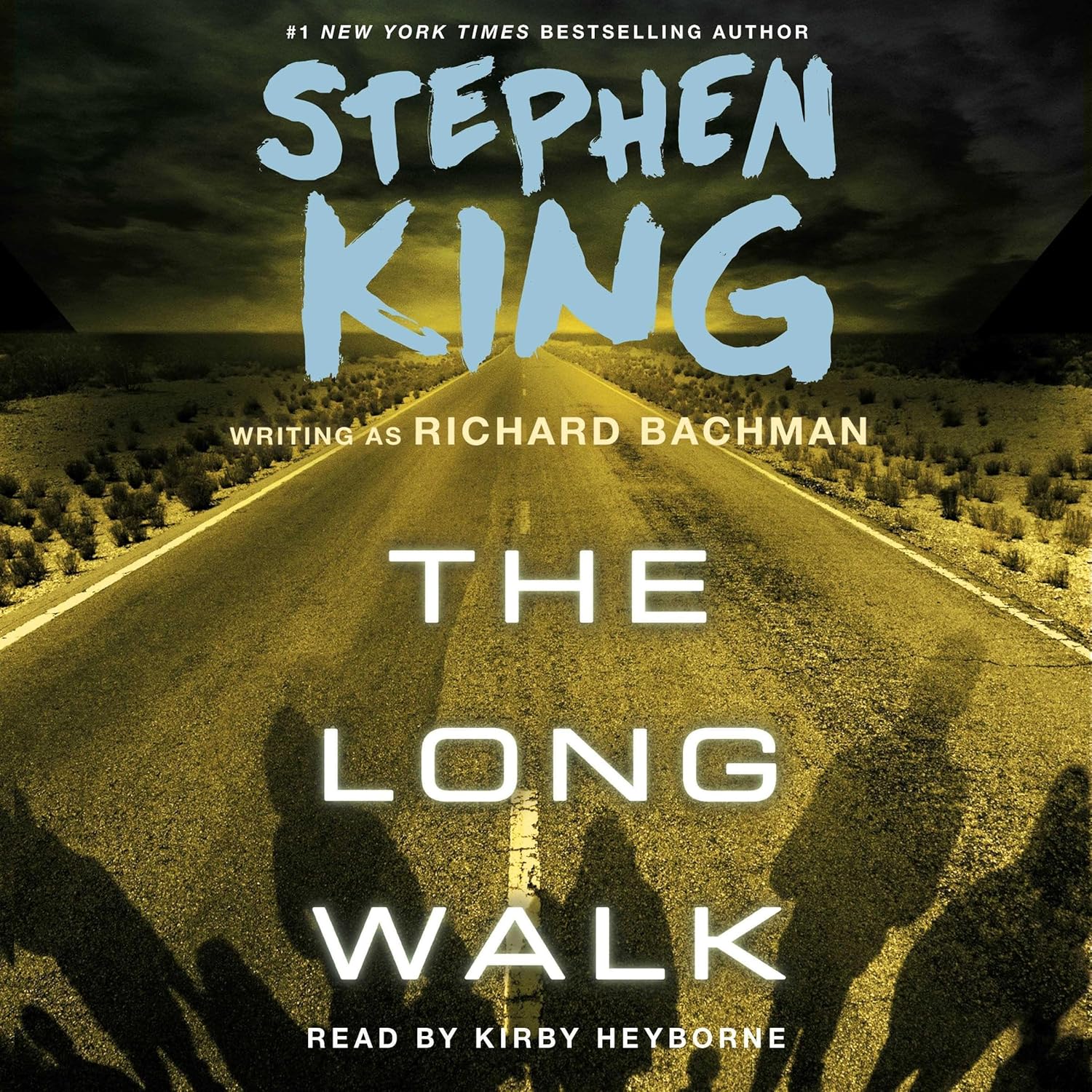
In a dystopian America, where hope is a dangerous commodity, sixteen-year-old Ray Garraty joins a macabre competition known as the Long Walk. One hundred teenage boys must maintain a relentless pace of four miles per hour, without rest, without respite. The prize for the last one standing? Anything he desires for the rest of his life.
But the rules are brutal: three warnings for slowing down, and then… permanent removal. As the Walk progresses, alliances form and shatter, sanity frays, and the stark reality of their mortality sets in. Garraty, haunted by his past and driven by a desperate need for a future, must confront not only the unforgiving road ahead but also the darkness within himself and his fellow walkers.
In this harrowing tale from Stephen King, writing as Richard Bachman, survival is more than just a game – it's a descent into the heart of despair, where every step could be your last. Who will endure, and at what cost?
Summary of Key Ideas
- •
Dangers of Totalitarianism
The Long Walk presents a stark vision of a totalitarian society where individual freedom is suppressed, and conformity is enforced through brutal means. The Walk itself, and the public's enthusiastic support for it, symbolize the regime's power and control over its citizens. The story critiques the dangers of unchecked authority and the ease with which societies can become desensitized to violence and oppression. The Major, the enigmatic leader, represents the faceless, unquestionable power that demands absolute obedience, highlighting the fragility of individual rights in the face of authoritarian rule.
- •
The Limits of Human Endurance
Endurance is a central theme, as the walkers are pushed to their physical and mental limits. The story explores what drives individuals to persevere under extreme duress, be it hope, fear, or a simple refusal to give in. Garraty's determination, despite the overwhelming odds and the constant threat of death, exemplifies the resilience of the human spirit. The Long Walk becomes a metaphor for the challenges of life, where perseverance and mental fortitude are essential for overcoming obstacles. King masterfully depicts the physical and psychological toll on the walkers, making their struggle both visceral and deeply relatable.
- •
Camaraderie vs. Competition
The novel delves into the complex dynamics of camaraderie and competition among the walkers. Despite the fact that only one can survive, bonds of friendship and empathy form as they share their stories, fears, and hopes. These relationships provide moments of solace and support, but the competitive nature of the Walk ultimately forces them to confront their own self-preservation instincts. The story explores the tension between cooperation and competition, questioning whether true friendship is possible in a situation where only one can win. The evolving relationships between the walkers reveal the complexities of human nature under extreme pressure.
- •
Loss of Innocence and Coming-of-Age
The Walk serves as a coming-of-age trial for the teenage participants, forcing them to confront mortality and the harsh realities of the world. As they march towards an uncertain future, they grapple with questions of identity, purpose, and the meaning of life. The constant proximity to death compels them to mature quickly, shedding their youthful innocence and embracing the complexities of adulthood. The Long Walk symbolizes the transition from boyhood to manhood, marked by suffering, loss, and a profound understanding of the value of life. The boys' reflections on their past lives and their hopes for the future underscore the transformative power of the Walk.
- •
The Spectacle of Violence
The novel critiques the spectacle of violence and the public's fascination with it. The Long Walk is a macabre form of entertainment, drawing spectators from across the country who cheer on the participants, seemingly oblivious to the suffering and death involved. This aspect of the story highlights the desensitization of society to violence and the voyeuristic pleasure derived from watching others struggle. King challenges the reader to question their own complicity in perpetuating such spectacles, exposing the dark side of human nature and the ethical implications of entertainment that glorifies suffering.
- •
The Role of Fate and Chance
Fate and chance play significant roles in determining the outcome of the Long Walk. While the walkers possess varying degrees of physical and mental strength, luck often dictates who survives and who falls behind. A stumble, a sudden illness, or a moment of weakness can be fatal, highlighting the arbitrary nature of survival. The story suggests that even in a contest of endurance, external factors beyond one's control can have a decisive impact. This element of chance underscores the fragility of life and the limitations of human agency in the face of unpredictable circumstances.
- •
The Diminishing Power of Hope
The Long Walk is a story of hope, or rather, the slow erosion of it. As the walkers succumb to exhaustion and despair, their initial optimism fades, replaced by a grim acceptance of their fate. However, even in the face of death, some cling to a glimmer of hope, whether it be the possibility of winning or simply the desire to keep going for one more step. The novel explores the power of hope as a motivator and a source of comfort, even when it seems irrational or unfounded. The walkers' struggle to maintain hope in the face of overwhelming adversity highlights the resilience of the human spirit and the enduring human need for meaning and purpose.
- •
Ambiguity and Allegory
The setting of the novel, a dystopian America, is intentionally vague, allowing readers to focus on the universal themes of survival, oppression, and the human spirit. The lack of specific details about the political system or the events that led to the Long Walk creates a sense of timelessness and relevance. The story could take place in any society where individual freedoms are curtailed and violence is used as a tool of control. This ambiguity enhances the novel's allegorical power, making it a cautionary tale about the dangers of unchecked authority and the importance of defending human rights.
Chapter Recap

About The Author
Stephen King
Main Quotes
"The body in peace, stillness, and order. The perfect darkness of death. How would that be? Just how would that be?"
"When all's said and done, killing's killing, whether done for duty, profit, or fun."
"There are things in this world that boys aren't meant to see."
"Just go on dancing with me like this forever, Garraty, and I'll never tire. We'll scrape our shoe on the stars and hang upside down from the moon."
"Memories were like a line drawn in the dirt. The further back you went the scuffier and harder to see that line got. Until finally there was nothing but ..."
"A sudden insane urge to stop came to him. Just to see if they really meant business. He rejected the thought indignantly and a little fearfully."
"Garraty thought that memories were like a line drawn in the dirt. The further back you went the scuffier and harder to see the line got."
""It's a long walk," Stebbins said. "Maybe that's all it is.""
"He was walking. That was the thing. Not thinking or caring. Just walking."
"He could feel his mind getting dull, and he welcomed it. It was like a warm bath."
Who Should Read This Book
Fans of Stephen King's darker, more suspenseful works
Readers interested in dystopian fiction
Young adults and older teens interested in coming-of-age stories with dark themes
Readers who enjoy stories with high stakes and psychological tension
Fans of survival stories and endurance challenges
Readers interested in exploring themes of conformity, authority, and rebellion
Readers who appreciate thought-provoking and philosophical narratives
Book Summaries Like
The Long Walk



FAQ

Free Access to LitNotes