




 DISCORD
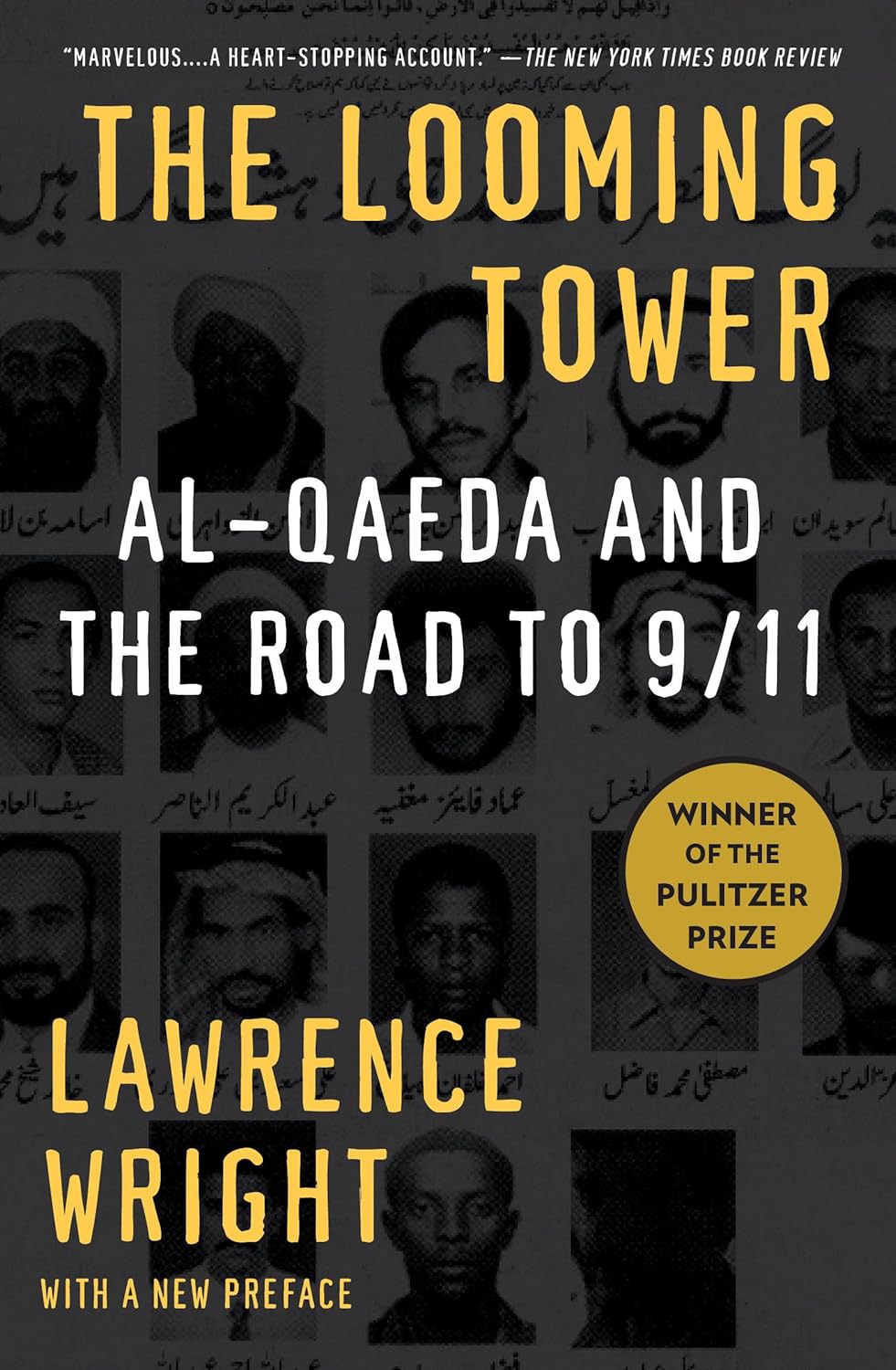
The Looming Tower
Lawrence Wright


 Los Angeles Times Book Prize
 Apple Books


 93 Min Reading Time
 Audio Version Available
About this book
The Pulitzer Prize-winning The Looming Tower is a landmark history dissecting the rise of Islamic fundamentalism and the path to 9/11. Spanning five decades, Lawrence Wright masterfully interweaves the lives of key figures, from a once idealistic Osama bin Laden and the strategic Ayman al-Zawahiri, to John O'Neill, the driven FBI counterterrorism chief who tragically foresaw the impending attack.
Based on years of research and in-depth interviews across the globe, Wright exposes the critical intelligence failures, the complex motivations behind al-Qaeda, and the cultural currents that fueled the radicalization of a generation. The Looming Tower is a gripping and essential account of the events that reshaped the world.
Summary of Key Ideas
- •
The Historical Genesis of Al-Qaeda
The book meticulously traces the historical roots of Al-Qaeda, delving into the intellectual and political currents that shaped its formation. It examines the influence of radical Islamic thinkers like Sayyid Qutb and Abdullah Azzam, highlighting how their ideologies provided the foundation for a global jihadist movement. The narrative explores the socio-political conditions in the Middle East, including the rise of Islamic fundamentalism as a response to secular Arab nationalism and Western influence, demonstrating how these factors contributed to the emergence of Al-Qaeda as a potent force.
- •
Osama bin Laden's Central Role
Wright emphasizes the critical role of Osama bin Laden in Al-Qaeda's development. He portrays bin Laden not merely as a financier or figurehead, but as a strategic leader with a clear vision for a global Islamic revolution. The book explores bin Laden's personal journey, from his early involvement in the Afghan resistance against the Soviet Union to his radicalization and eventual declaration of war against the United States. It also details his ability to unite disparate jihadist groups under a single banner, transforming a localized movement into a transnational threat.
- •
Internal Conflicts and Power Struggles
A significant portion of the book is dedicated to exploring the internal dynamics and rivalries within Al-Qaeda. Wright sheds light on the diverse personalities and motivations of key figures like Ayman al-Zawahiri, highlighting the tensions and power struggles that shaped the organization's decision-making processes. He also examines the ideological debates within the movement, revealing the complexities and contradictions that often plagued Al-Qaeda's leadership.
- •
Intelligence Failures and Missed Opportunities
Wright critically examines the failures of American intelligence agencies in anticipating and preventing the 9/11 attacks. The book highlights the bureaucratic obstacles and communication breakdowns that hampered the CIA and FBI's ability to effectively track and counter Al-Qaeda's activities. It reveals instances of missed opportunities and intelligence failures, underscoring the systemic weaknesses that allowed the terrorist group to operate with relative impunity.
- •
The Impact of Geopolitical Events
The Looming Tower analyzes the impact of key events, such as the Iranian Revolution and the Soviet-Afghan War, on the rise of Islamic extremism. It demonstrates how these conflicts served as catalysts for the radicalization of individuals and the proliferation of jihadist ideology. The book also explores the role of specific locations, such as Afghanistan and Sudan, in providing safe havens and training grounds for Al-Qaeda operatives.
- •
The Ideological Foundations of Al-Qaeda
Wright examines the ideological underpinnings of Al-Qaeda's worldview, focusing on its interpretation of Islamic texts and its justifications for violence. He explores the concept of 'jihad' as understood by Al-Qaeda, highlighting its departure from traditional Islamic teachings and its embrace of a radical, exclusivist ideology. The book also analyzes the group's propaganda efforts and its use of religious rhetoric to recruit followers and incite violence.
- •
The Human Side of Jihad
The book offers insights into the personal lives and motivations of individuals drawn to Al-Qaeda, providing a human dimension to the story of terrorism. Wright explores the factors that led young men from diverse backgrounds to join the organization, including feelings of alienation, a desire for belonging, and a belief in the righteousness of their cause. He also examines the psychological impact of violence and radicalization on these individuals.
- •
Al-Qaeda's Relationship with Nation States
The Looming Tower explores the complex relationship between Al-Qaeda and the governments of various Muslim-majority countries. It examines the support that the organization received from some regimes, as well as the efforts of others to suppress its activities. The book also analyzes the impact of Al-Qaeda's actions on regional stability and the broader geopolitical landscape.
Chapter Recap

About The Author
Lawrence Wright
Main Quotes
"Terrorism is produced by the existence of evil."
"It was as if the moderate Muslims didn't exist, or were so cowed that they were irrelevant."
"The radicals, on the other hand, seemed to have all the answers."
"The United States was now the adversary, and the idea of striking a blow against her had taken hold."
"Bin Laden's self-assurance was astounding."
"The real battlefield is America."
"Egypt was the mother of all their problems."
"The past is never dead. It's not even past."
"Bin Laden had a talent for inspiring fanatics."
"The purpose of terrorism lies not just in the violent act itself. It is to produce такому fear that the structure of authority itself begins to collapse."
Who Should Read This Book
Readers interested in the history of Al-Qaeda and the events leading up to 9/11
Individuals seeking a detailed understanding of Islamic fundamentalism
Readers of investigative journalism and non-fiction historical accounts
Those interested in US foreign policy and intelligence failures
People who enjoy books that explore the complexities of political and religious extremism
Readers of Lawrence Wright's other works
Book Summaries Like
The Looming Tower




FAQ

Free Access to LitNotes