




 DISCORD
The Man in the High Castle
Philip K. Dick, Michelle Charrier


 Hugo Awards
 Apple Books


 59 Min Reading Time
 Audio Version Available
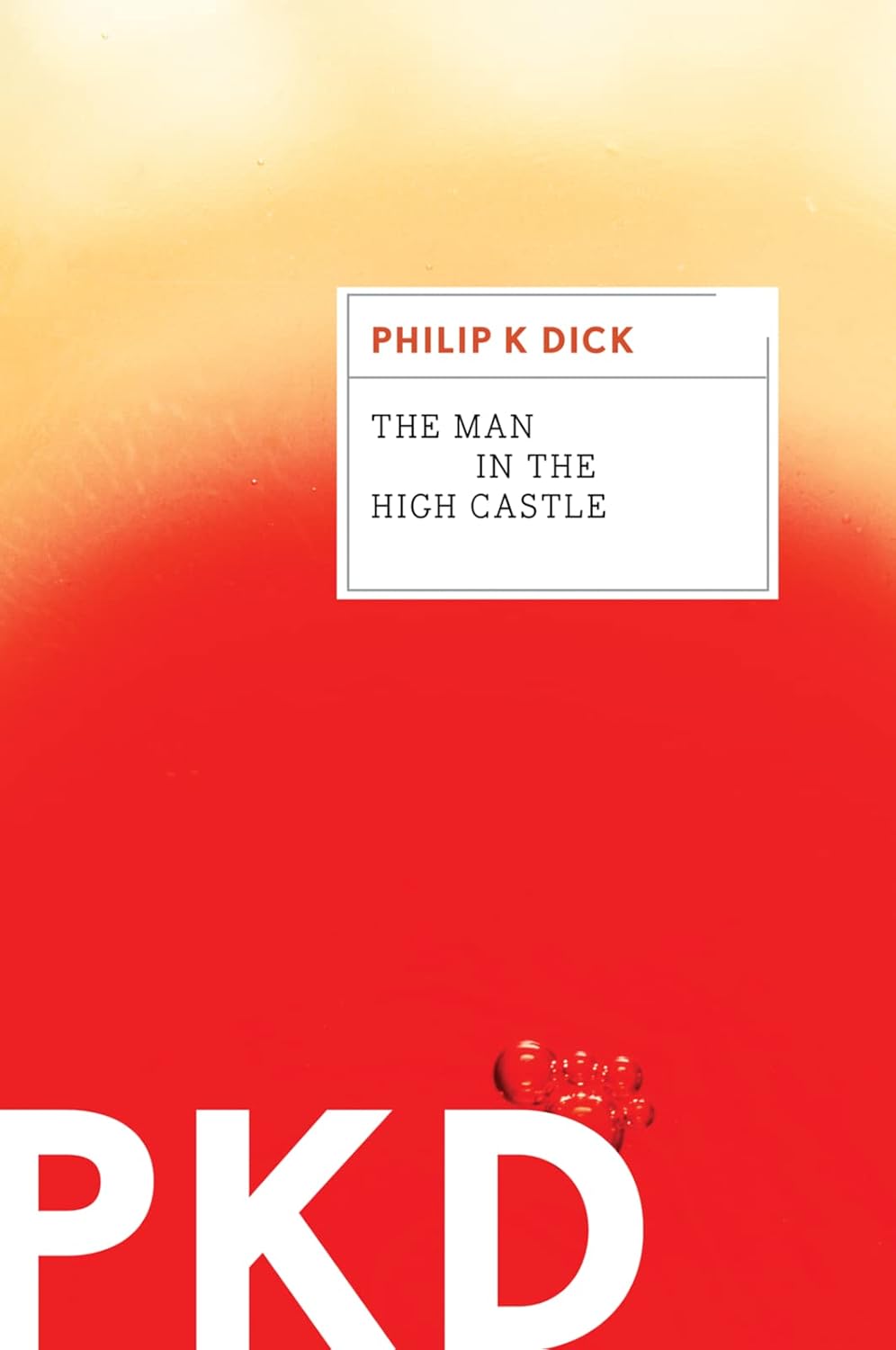
About this book
Imagine a world where the Axis powers triumphed in World War II. It's 1962, and the United States is divided: a puppet state controlled by Imperial Japan to the West, and a Nazi territory to the East, separated by a lawless Neutral Zone.
In this fractured America, lives intertwine in unexpected ways. A dealer in authentic American artifacts harbors dangerous secrets. A woman seeking her own destiny finds herself caught between powerful forces. And hidden within this world is a forbidden book, The Grasshopper Lies Heavy, which offers a disturbing glimpse of an alternate reality where the Allies were victorious. But is it truth, or a dangerous fabrication?
As the tension mounts between the occupying powers, the characters are drawn into a web of conspiracy and intrigue, all connected to the elusive "Man in the High Castle," the author of the subversive book. In a world built on lies, who can be trusted? And what is the true nature of reality itself?
The Man in the High Castle is a chilling and thought-provoking masterpiece, a Hugo Award-winning novel that explores the fragility of reality and the enduring power of hope in the face of unimaginable darkness.
Summary of Key Ideas
- •
Axis Victory and a Divided America
The central premise of "The Man in the High Castle" is an alternate history where the Axis powers won World War II. This victory reshapes the world order, with Germany and Japan dividing the United States into the Greater Nazi Reich and the Japanese Pacific States. This altered reality serves as a backdrop to explore themes of power, control, and the fragility of historical narratives. The novel compels readers to contemplate how different choices and outcomes could drastically alter the course of civilization and the lives of individuals within it. The Axis victory is not merely a plot device but a means of examining the potential consequences of human actions on a global scale.
- •
Psychological Impact of Oppression
The novel delves into the psychological impact of living under oppressive regimes. Characters in both the Nazi and Japanese zones grapple with the loss of freedom, cultural identity, and personal autonomy. The constant surveillance, the suppression of dissent, and the ever-present threat of violence create an atmosphere of fear and uncertainty. The characters' struggles reflect the broader human experience of coping with totalitarianism and the erosion of individual rights. Their resilience and their attempts to find meaning and connection in a world dominated by authoritarian powers highlight the enduring human spirit.
- •
The Search for Authenticity and Identity
Frank Frink's creation of handcrafted jewelry and Robert Childan's trade in American artifacts highlight a yearning for authenticity and a connection to the past. In a world where history has been distorted and cultural values suppressed, these objects become symbols of resistance and a means of preserving a sense of identity. The characters' engagement with these items reflects a deeper desire to reclaim what has been lost and to assert their individuality in the face of conformity. The value placed on these objects underscores the importance of cultural heritage and the power of art to transcend political boundaries.
- •
The Role of the I Ching
"The I Ching," or Book of Changes, plays a significant role in guiding the characters' decisions and shaping the narrative. Many characters consult the I Ching for advice, and its cryptic pronouncements influence their actions and interpretations of events. The presence of the I Ching introduces an element of chance and uncertainty, suggesting that even in a world controlled by powerful forces, there is room for unpredictability and individual agency. The reliance on the I Ching also raises questions about fate, free will, and the nature of reality itself.
- •
"The Grasshopper Lies Heavy" and Shifting Realities
Within the alternate reality of "The Man in the High Castle" exists another alternate history: "The Grasshopper Lies Heavy," a book that depicts a world where the Allies won World War II. This novel-within-a-novel serves as a counterpoint to the main narrative, offering a glimpse of what might have been and challenging the characters' understanding of their own reality. The existence of "The Grasshopper Lies Heavy" raises profound questions about the nature of truth, the power of narrative, and the possibility of multiple realities. It suggests that history is not fixed but is subject to interpretation and revision.
- •
The Ambiguity of Reality
The novel explores the ambiguity of reality and the difficulty of discerning truth from illusion. The characters grapple with conflicting narratives, hidden agendas, and the unsettling possibility that their world is not what it seems. The blurring of boundaries between reality and fiction challenges the reader to question their own perceptions and assumptions. This exploration of reality reflects Philip K. Dick's broader philosophical concerns about the nature of existence and the limits of human knowledge. The characters' search for truth becomes a metaphor for the human quest for meaning in a complex and uncertain world.
Chapter Recap

About The Author
Philip K. Dick
Main Quotes
"The past is changing as you change."
"We can travel anywhere we want, even to other planets. And for what? To sit day after day, declining in morale and hope."
"It will end, Childan thought. Someday. The very idea of place. Not governed or governing, but people."
"The承认 truth. They want to be told they are right. So they listen to the lies."
"You see, the Germans were so confident of victory that they were willing to risk everything."
"All I want is that we should accept one another."
"The universe is transformation; our life is what our thoughts make it."
"He can’t face the idea that what he is doing is wrong."
"No one can live in pure awareness all the time."
"The possibilities are frightening."
Who Should Read This Book
Fans of Philip K. Dick and his other works
Readers interested in alternate history and dystopian fiction
Science fiction enthusiasts
Readers interested in World War II and its potential outcomes
Individuals fascinated by Japanese and German culture
Readers who enjoy thought-provoking novels exploring philosophical and political themes
Those interested in stories about resistance and the human spirit in the face of oppression
Readers of literary fiction with speculative elements
Viewers of the Amazon Prime television series adaptation
Book Summaries Like
The Man in the High Castle
FAQ

Free Access to LitNotes