




 DISCORD
The Ministry of Time
Kaliane Bradley

 Goodreads Choice Awards
 USA Today Best Sellers


 55 Min Reading Time
 Audio Version Available
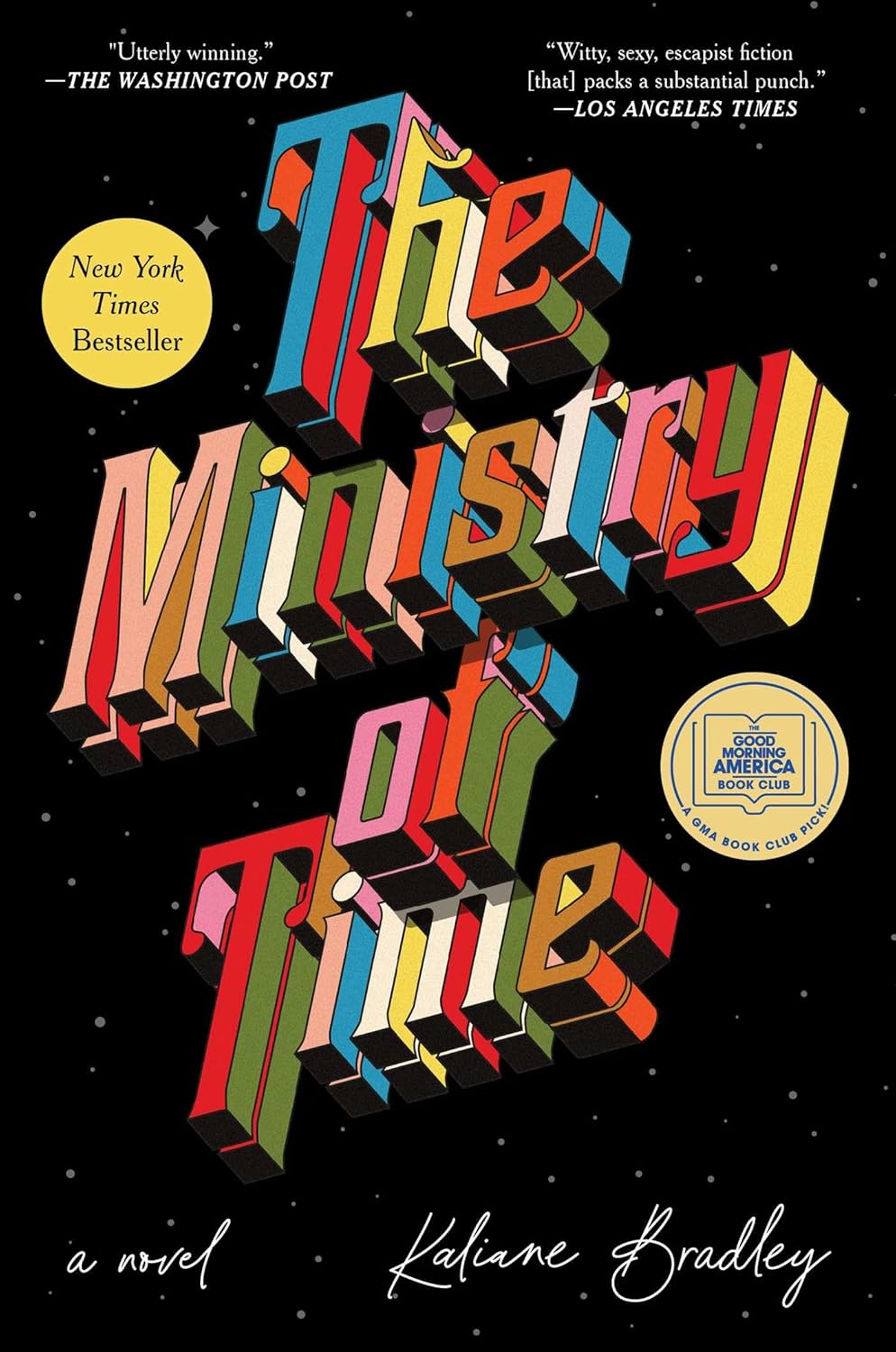
About this book
In a near-future London, a secret government ministry undertakes a radical experiment: plucking individuals from history and transplanting them into the 21st century. Tasked with easing the transition for Commander Graham Gore, a stoic officer from the doomed 1845 Franklin expedition, a pragmatic civil servant becomes his "bridge" to the bewildering modern world of washing machines, Spotify, and the fallen British Empire.
But as Gore acclimates with surprising ease, a forbidden intimacy blossoms between them, defying centuries and protocol. Their connection deepens even as the Ministry's true, potentially catastrophic agenda comes to light. Torn between duty and desire, she must confront the ethical implications of tampering with time itself. Can their love rewrite history, or will it unravel the future?
A dazzling blend of romance, spy thriller, and speculative fiction, The Ministry of Time explores the weight of the past, the seductive nature of power, and the transformative possibilities of love against all odds. Kaliane Bradley's unforgettable debut asks: What does it mean to defy history when history is living in your house—and in your heart?
Summary of Key Ideas
- •
The Ethics of Time Travel and Intervention
The Ministry of Time explores the ethical implications of interfering with the past. The novel presents a near-future Britain where the government experiments with time travel, bringing 'collateral' from the past into the present. This raises complex questions about the rights of these individuals, the potential for exploitation, and the consequences of altering historical timelines. The protagonist's role as a 'bridge' highlights the delicate balance between observation, intervention, and the responsibility to protect those displaced by time.
- •
Confronting the Legacy of Colonialism
At its core, the novel examines the lingering impact of colonialism on both the colonizer and the colonized. The character of Commandante January, a soldier from the Victorian era, embodies the complexities and contradictions of British imperialism. His presence in the present forces a re-evaluation of historical narratives, exposing the violence, prejudice, and systemic injustices inherent in the colonial project. The story critiques the romanticized view of the past, urging readers to confront the darker aspects of history and its continuing relevance in contemporary society.
- •
Trauma, PTSD, and the Weight of History
The narrative delves into themes of trauma, PTSD, and the psychological challenges faced by those who have experienced significant historical events. The 'collateral' brought from the past are not merely historical figures; they are individuals deeply scarred by their experiences. The novel explores how these traumas manifest in the present and the ethical considerations of forcing them to relive or confront those past experiences. It also examines the protagonist's own trauma and how it shapes her empathy and connection with Commandante January.
- •
Love as a Bridge Across Time
Love and connection emerge as powerful forces that transcend time and cultural differences. The relationship between the protagonist and Commandante January is central to the story, highlighting the possibility of finding intimacy and understanding across vast historical divides. Their connection challenges societal norms and expectations, demonstrating the transformative power of empathy and acceptance. This central romance underscores the human capacity for connection even in the most extraordinary circumstances.
- •
Genre Blending for Narrative Depth
The novel uses a blend of science fiction, romance, and historical fiction elements to create a unique and engaging narrative. This fusion of genres allows the author to explore complex themes in an accessible and entertaining way. The time travel aspect provides a framework for examining historical events and their contemporary relevance, while the romance adds an emotional depth that resonates with readers. This blend broadens the appeal of the story, making it both thought-provoking and enjoyable.
- •
A Critique of Contemporary Society Through Historical Eyes
The story critiques contemporary British society by juxtaposing it with perspectives from the past. The reactions of the time-travelers to modern technology, social norms, and political issues provide a satirical lens through which to examine present-day concerns. This juxtaposition highlights both the progress and the persistent inequalities of contemporary society, prompting reflection on issues such as climate change, political polarization, and social justice.
- •
Exploring Fluid Identities Across Time
The concept of identity, particularly in relation to nationality, race, and historical context, is a recurring theme. The protagonist's own mixed-race background and her experiences as an immigrant inform her perspective on the 'collateral' and their integration into modern British society. The novel questions the fixed nature of identity, exploring how it is shaped by historical events, cultural context, and personal experiences. The characters grapple with questions of belonging, displacement, and the negotiation of identity across time and cultures.
Chapter Recap

About The Author
Kaliane Bradley
Main Quotes
"The most radical thing I ever did was love him, and I wasn't even the first person in this story to do that. But you can get it right, if you try."
"Everything that has ever been could have been prevented, and none of it was. The only thing you can mend is the future."
"You can't trauma-proof life, and you can't hurt-proof love."
"Set your narrative as canon and, in a tiny way, you have pried your death out of time, as long as the narrative is recalled by someone else."
"Assuming that the 'expats' survived, that meant they would be people, which is a complicating factor."
"'Don't you think,' said Simellia, 'that if a person understood the full consequences of their actions, no one would ever do anything, ever again?"
"I think every story holds a be still moment. They punctuate our lives."
"We are all haunted by futures we think we should have."
"Perhaps that was the point of time travel: to go and learn something, and then return and do things differently."
"There was an optimism to the way the world continued."
Who Should Read This Book
Readers of speculative fiction, particularly those interested in time travel
Readers of historical fiction
Readers interested in romance, especially with unconventional or thought-provoking relationships
Readers who enjoy genre-bending novels
Readers of literary fiction with a focus on unique concepts and strong writing
Readers interested in books that explore themes of identity, trauma, and cultural displacement
Readers who appreciate character-driven stories
Readers who enjoy books with elements of suspense and thriller
Readers of dystopian fiction
Book Summaries Like
The Ministry of Time

FAQ

Free Access to LitNotes