




 DISCORD
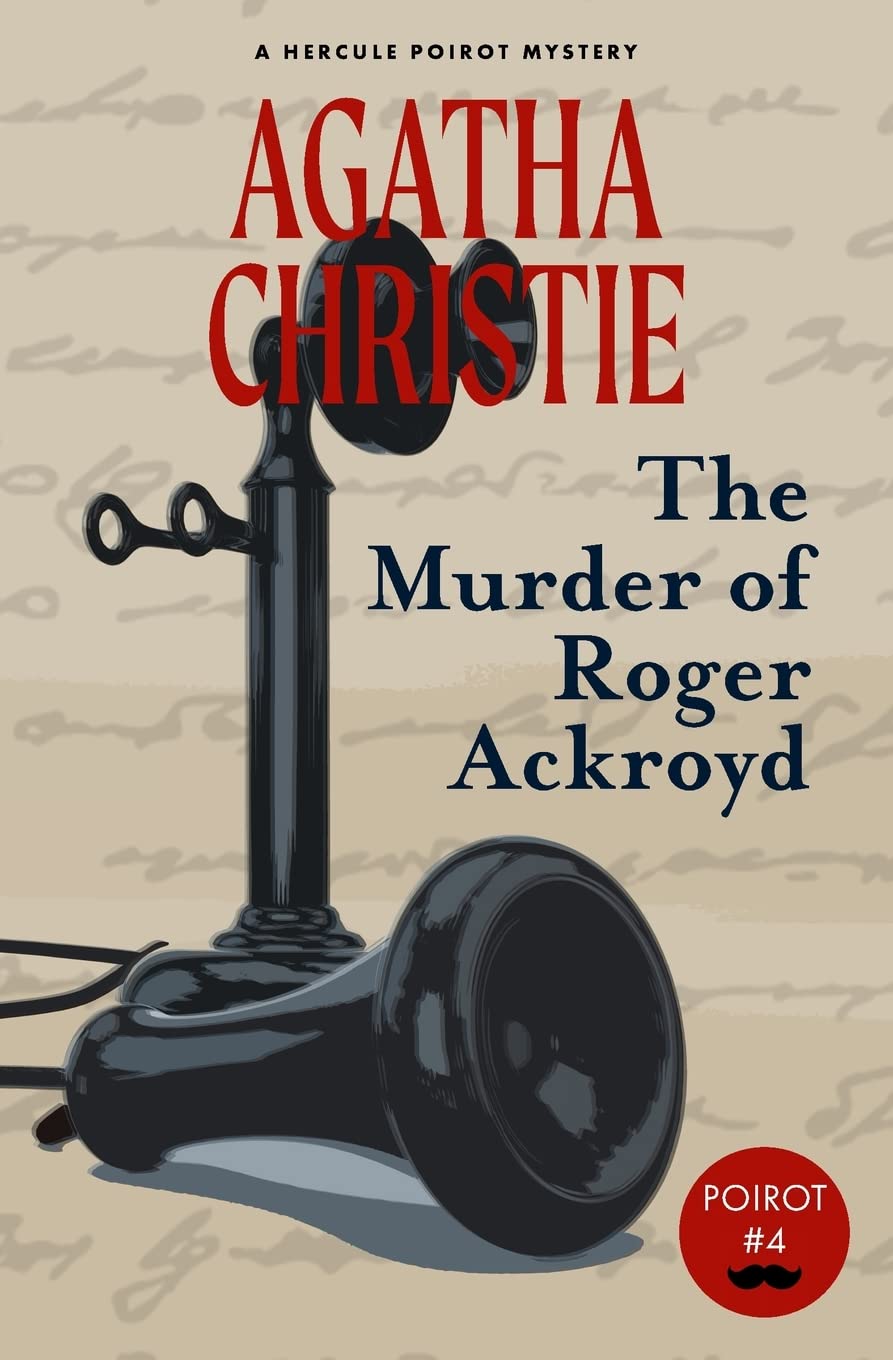
The Murder of Roger Ackroyd
Agatha Christie


 Apple Books


 82 Min Reading Time
 Audio Version Available
About this book
In the tranquil village of King's Abbot, secrets fester beneath the surface of polite society. When wealthy widow Mrs. Ferrars dies unexpectedly, the shockwaves ripple through the community, culminating in the brutal murder of Roger Ackroyd. He knew too much, they say – about Mrs. Ferrars' past, about a blackmailer at work, about hidden relationships.
As the local police flounder, a newcomer emerges from retirement: Hercule Poirot. Drawn into the investigation by a web of suspicion, Poirot must unravel the complex threads of jealousy, blackmail, and long-held grudges to expose the killer. But in a village where everyone has something to hide, can Poirot uncover the truth before another life is taken?
Agatha Christie's masterpiece, The Murder of Roger Ackroyd, delivers a shocking twist that redefined the genre and cemented her place as the Queen of Crime. Prepare to be captivated by a puzzle where nothing is as it seems, and the truth lies hidden in plain sight.
Summary of Key Ideas
- •
The Shocking Unreliable Narrator
The Unreliable Narrator: Dr. Sheppard, the narrator, is revealed to be the murderer, a shocking twist that subverts the reader's trust. This challenges the conventional detective story format where the narrator is typically a reliable guide. Christie masterfully uses Sheppard's profession as a doctor to gain the reader's confidence, making his eventual exposure all the more unexpected. The unreliability forces a re-evaluation of the entire narrative, questioning the validity of every observation and interaction presented.
- •
A Tangled Web of Deception
Deception and Hidden Motives: Nearly every character in the novel has something to hide, creating a web of secrets and suspicion. Roger Ackroyd himself is harboring information about a previous affair and blackmail, which fuels numerous motives for his murder. The deceptive appearances of the characters highlight the theme that appearances can be deceiving, and that understanding true motives is crucial to solving the crime. The villagers of King's Abbot, seemingly ordinary, are all entangled in a complex network of lies and half-truths.
- •
Poirot's Pursuit of Truth
Poirot's Methodical Deduction: Hercule Poirot relies on his "little grey cells" and meticulous observation to unravel the truth. He interviews each suspect multiple times, carefully analyzing their statements and behaviors for inconsistencies. Poirot's approach emphasizes psychological insight and understanding human nature, rather than relying solely on physical evidence. His methodical approach serves as a contrast to the emotional turmoil and biased perspectives of the other characters, ultimately leading him to the correct solution.
- •
Shattered Rural Tranquility
The Illusion of Order in Rural Life: The seemingly peaceful village of King's Abbot is disrupted by the murder, exposing the undercurrents of jealousy, greed, and resentment simmering beneath the surface. The novel dismantles the idyllic image of rural life, revealing the capacity for darkness and crime even in the most outwardly tranquil settings. The close-knit community, initially appearing supportive, is revealed to be rife with secrets and hidden agendas.
- •
Details Unmask the Truth
The Power of Observation and Detail: The solution to the mystery hinges on seemingly insignificant details that Dr. Sheppard omits or downplays in his narration. Poirot emphasizes the importance of paying attention to the smallest details, as they often hold the key to uncovering the truth. The novel underscores the idea that careful observation and attention to detail are crucial for accurate perception and sound judgment. What seems irrelevant initially often becomes vital in Poirot's reconstruction of the events.
- •
Moral Gray Areas and Justice
Justice and Moral Ambiguity: While Poirot solves the crime and exposes the murderer, the novel raises questions about justice and the complexities of human morality. Dr. Sheppard's motive for the murder stems from a desire to protect himself, and the narrative explores the gray areas of right and wrong. The ending, while providing a resolution, leaves the reader pondering the ethical implications of Sheppard's actions and Poirot's decision to allow him a certain measure of control over his fate.
- •
Beyond Guilt and Innocence
The Nature of Guilt and Innocence: The novel explores the fine line between guilt and innocence, showing how even seemingly innocent individuals can be implicated in criminal activities. Each character is touched by suspicion, and the revelation of the murderer challenges the reader's initial assumptions about who is capable of committing such a crime. The exploration of guilt extends beyond the act of murder itself, encompassing secrets, lies, and hidden desires that contribute to the overall atmosphere of mistrust.
- •
Exploring the Human Psyche
Psychological Complexity of Characters: Christie delves into the psychological motivations of her characters, exploring their fears, desires, and vulnerabilities. Dr. Sheppard's internal conflicts and rationalizations for his actions are particularly revealing, offering insight into the mind of a murderer. The psychological depth of the characters adds a layer of complexity to the plot, making the mystery more than just a puzzle to be solved.
Chapter Recap

About The Author
Agatha Christie
Agatha Mary Clarissa Miller was born in Torquay, Devon, in the United Kingdom, the daughter of a wealthy American stockbroker. Her father died when she was eleven years old. Her mother taught her at home, encouraging her to write at a very young age. At the age of 16, she went to Mrs. Dryden's finishing school in Paris to study singing and piano. In 1914, at age 24, she married Colonel Archibald Christie, an aviator in the Royal Flying Corps. While he went away to war, she worked as a nurse and wrote her first novel, The Mysterious Affair at Styles (1920), which wasn't published until four years later. When her husband came back from the war, they had a daughter. In 1928 she divorced her husband, who had been having an affair. In 1930, she married Sir Max Mallowan, an archaeologist and a Catholic. She was happy in the early years of her second marriage, and did not divorce her husband despite his many affairs. She travelled with her husband's job, and set several of her novels set in the Middle East. Most of her other novels were set in a fictionalized Devon, where she was born. Agatha Christie is credited with developing the "cozy style" of mystery, which became popular in, and ultimately defined, the Golden Age of fiction in England in the 1920s and '30s, an age of which she is considered to have been Queen. In all, she wrote over 66 novels, numerous short stories and screenplays, and a series of romantic novels using the pen name Mary Westmacott. She was the single most popular mystery writer of all time. In 1971 she was made a Dame Commander of the Order of the British Empire.
Main Quotes
"I should say the happy people are failures because they are content with so little."
"One cannot always believe appearances."
"It is extraordinary how few people's eyes are worth looking into. I like grey eyes, and I adore green ones; but blue eyes are surprisingly disappointing."
"The truth, however ugly in itself, is always curious and beautiful to seekers after it."
"Real meat cannot be sustained on lies."
"You see, I’m like a child. I want to know."
"It is completely unimportant. That is why it is so interesting."
"I believe in instinct, not reason. When reason is employed to justify a preconceived idea, it can be made to prove anything."
"One gets to know people, but not to change them."
"It is not until much later, as the book nears its end, that one knows that one was deliberately misled."
Who Should Read This Book
Fans of classic mystery novels
Readers interested in puzzle-solving narratives
Individuals who enjoy stories with unexpected twists
Admirers of Agatha Christie's works and Hercule Poirot
Those seeking engaging and suspenseful reads
Readers of British crime fiction
Individuals interested in village mysteries
Book Summaries Like
The Murder of Roger Ackroyd


FAQ

Free Access to LitNotes