




 DISCORD
The Myth of Sisyphus
Albert Camus


 Barnes & Noble Bestsellers


 46 Min Reading Time
 Audio Version Available
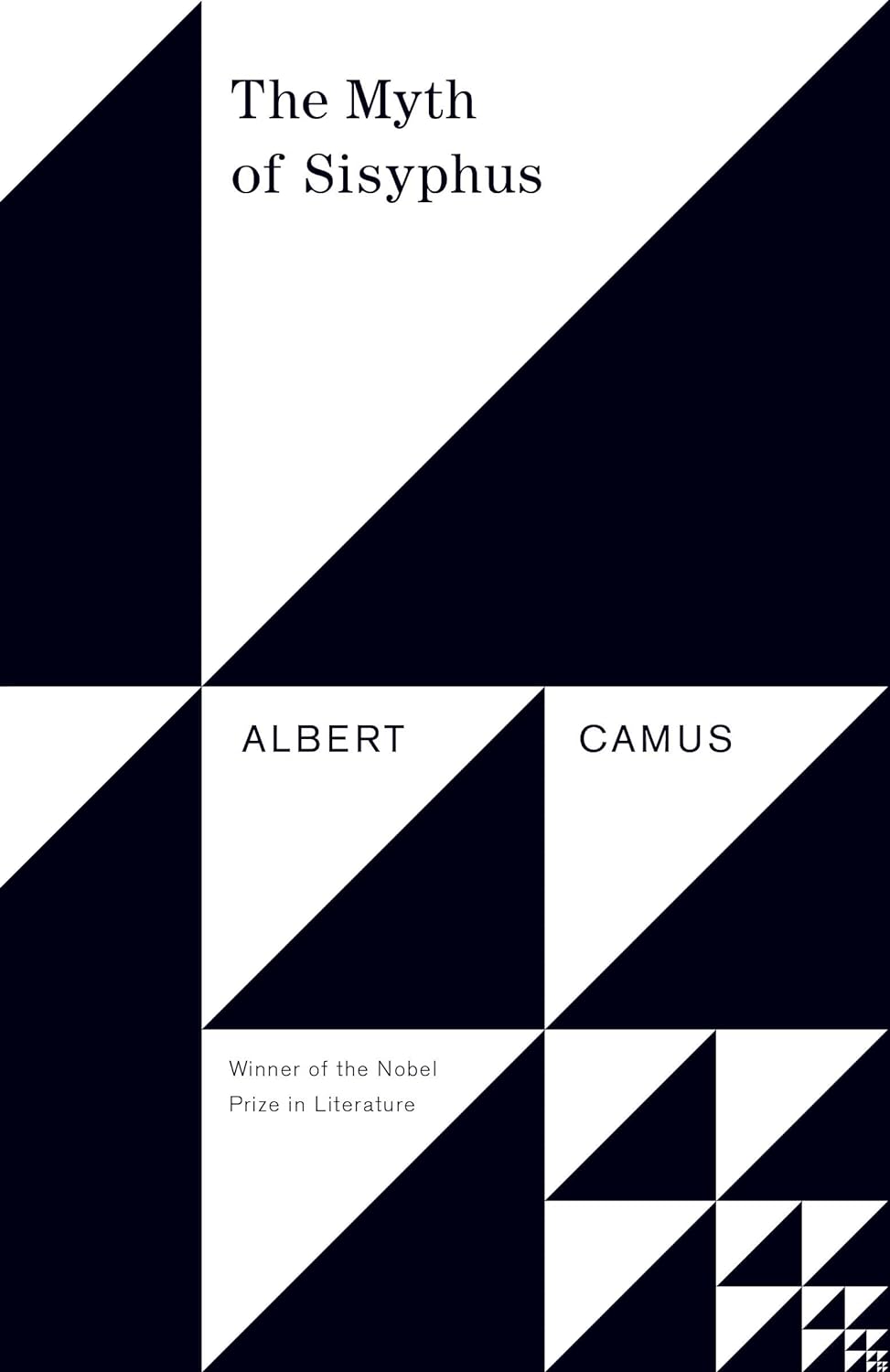
About this book
In The Myth of Sisyphus, Albert Camus grapples with the inherent conflict between humanity's desperate need for meaning and the universe's cold indifference. Through the iconic image of Sisyphus, eternally condemned to roll a boulder uphill only to watch it tumble back down, Camus dissects the absurd human condition.
More than just a philosophical essay, this is a profound exploration of freedom, revolt, and passion. Camus challenges us to confront the meaninglessness of existence, not with despair, but with defiant joy. He asks: if life is inherently absurd, how should we live?
With striking clarity and unwavering conviction, Camus transforms the myth of Sisyphus into a powerful allegory for modern life, arguing that it is in recognizing the absurd that we find the freedom to imagine a life filled with meaning and purpose. A landmark work of existentialism, The Myth of Sisyphus remains a vital and compelling read for anyone seeking to understand their place in an incomprehensible world.
Summary of Key Ideas
- •
The Absurd: The Core of Human Existence
The central concept of the book is the Absurd, which arises from the fundamental conflict between humanity's innate desire for meaning and the universe's meaningless silence. Camus argues that humans constantly seek purpose, clarity, and reason in a world devoid of these qualities. This collision generates the feeling of absurdity, a sense of alienation and disorientation. The Myth of Sisyphus explores how individuals grapple with this inherent contradiction and the various responses they adopt, ranging from escapism to revolt. Understanding the absurd is the first step toward confronting the human condition, according to Camus.
- •
Three Responses to the Absurd
Camus identifies three primary responses to the Absurd: suicide, philosophical suicide (or leap of faith), and acceptance/revolt. Suicide, for Camus, is not a viable solution as it negates the very consciousness that recognizes the absurd. Philosophical suicide involves abandoning reason and embracing religious or ideological beliefs to find meaning, which Camus rejects as a dishonest evasion. The only authentic response is to accept the absurd and rebel against it by fully embracing life, even without inherent meaning. This revolt involves recognizing the lack of ultimate purpose but continuing to live with passion and awareness.
- •
The Path of Revolt: Embracing Life's Absurdity
Revolt, in Camus's philosophy, is not a violent uprising but a constant awareness and defiance of the absurd condition. It means refusing to accept any imposed meaning or external authority and instead creating one's own values and meaning through experience. This revolt is sustained by lucidity – a clear-eyed understanding of the absurd – and passion, an enthusiastic embrace of the present moment. By rebelling against the absurd, individuals affirm their freedom and humanity, even in the face of an indifferent universe. Revolt is the active recognition of absurdity and the continuous effort to live in spite of it.
- •
Freedom Through Recognizing the Absurd
Freedom, for Camus, is intricately linked to the acceptance of the absurd. Once individuals acknowledge the lack of inherent meaning, they are liberated from the constraints of seeking external justification for their existence. This freedom allows them to define their own values, create their own meaning, and live authentically, unburdened by societal expectations or metaphysical demands. Camus suggests that embracing this freedom, while daunting, is essential for a fulfilling life. True freedom comes from recognizing the absurd and choosing to live deliberately within its boundaries.
- •
The Importance of Passion
Passion, within the context of Camus's philosophy, signifies a wholehearted embrace of life's experiences, even in the face of absurdity. It involves immersing oneself fully in the present moment, savoring its joys and confronting its sorrows with equal intensity. Passion is the driving force behind revolt, fueling the individual's determination to live authentically and create meaning in a meaningless world. It's about experiencing the world fully, without reservation, and finding value in the richness and complexity of human existence, even if that existence lacks ultimate significance.
- •
Sisyphus: An Absurd Hero
Camus uses the myth of Sisyphus, condemned by the gods to eternally roll a boulder uphill only to have it roll back down, as a metaphor for the human condition. Sisyphus's endless, futile task represents the absurdity of life, where efforts often seem meaningless and repetitive. However, Camus argues that Sisyphus can find happiness by accepting his fate and recognizing his own strength and defiance in the face of it. The key is to imagine Sisyphus happy, finding joy in the act of pushing the boulder, embracing his fate as his own, and thus triumphing over the absurd.
- •
Living in the Present: The Only Certainty
Camus posits that the only certainty we have is the present moment. Since the future is uncertain and the past is immutable, individuals should focus on living fully in the now. By appreciating the present and engaging with it passionately, they can create meaning and experience life to the fullest, despite the absence of any ultimate purpose. This emphasis on the present encourages individuals to embrace the tangible aspects of life, such as relationships, sensory experiences, and creative endeavors, finding value in the immediate and concrete.
- •
Lucidity: Seeing the Absurd Clearly
Lucidity, in Camus's framework, refers to a clear-eyed awareness of the absurd condition and its implications. It involves recognizing the lack of inherent meaning in the universe and refusing to embrace illusions or comforting falsehoods. Maintaining lucidity is essential for authentic revolt, as it prevents individuals from falling into despair or seeking false solace in religion or ideology. This clear awareness allows individuals to confront the absurd directly and make conscious choices about how to live in its presence, empowering them to create their own meaning.
Chapter Recap

About The Author
Albert Camus
Albert Camus was a French Algerian author, philosopher, and journalist who was awarded the Nobel Prize for Literature in 1957. He was a key philosopher of the 20th-century and his most famous work is the novel *L'Étranger* (*The Stranger*). In 1949, Camus founded the Group for International Liaisons within the Revolutionary Union Movement, which was a group opposed to some tendencies of the surrealistic movement of André Breton. Camus was the second-youngest recipient of the Nobel Prize for Literature - after Rudyard Kipling - when he became the first African-born writer to receive the award. He is the shortest-lived of any literature laureate to date, having died in an automobile accident just over two years after receiving the award. He is often cited as a proponent of existentialism, the philosophy that he was associated with during his own lifetime, but Camus himself rejected this particular label. In an interview in 1945, Camus rejected any ideological associations: "No, I am not an existentialist. Sartre and I are always surprised to see our names linked…"
Main Quotes
"There is but one truly serious philosophical problem, and that is suicide."
"The world is neither reasonable nor unreasonable. It is."
"You will never be happy if you continue to search for what happiness consists of. You will never live if you are looking for the meaning of life."
"The absurd depends as much on man as on the world."
"Man stands face to face with the irrational. He feels within him his longing for happiness and for reason. The absurd is born of this confrontation."
"The struggle itself... is enough to fill a man's heart. One must imagine Sisyphus happy."
"Beginning to think is beginning to be undermined."
"There is no sun without shadow, and it is essential to know the night."
"What is called a reason for living is also an excellent reason for dying."
"To lose one's life is of little matter; when one loses the meaning of life, that is when one goes."
Who Should Read This Book
Young adults interested in philosophy and existentialism
University students studying philosophy, literature, or political science
Readers interested in absurdist literature and philosophy
Individuals grappling with questions of meaning, purpose, and the human condition
Those interested in exploring themes of rebellion, freedom, and the value of life in the face of absurdity
Readers of classic philosophical essays
People seeking intellectual stimulation and challenging perspectives on life
Individuals interested in Albert Camus and his other works
Book Summaries Like
The Myth of Sisyphus

FAQ

Free Access to LitNotes