




 DISCORD
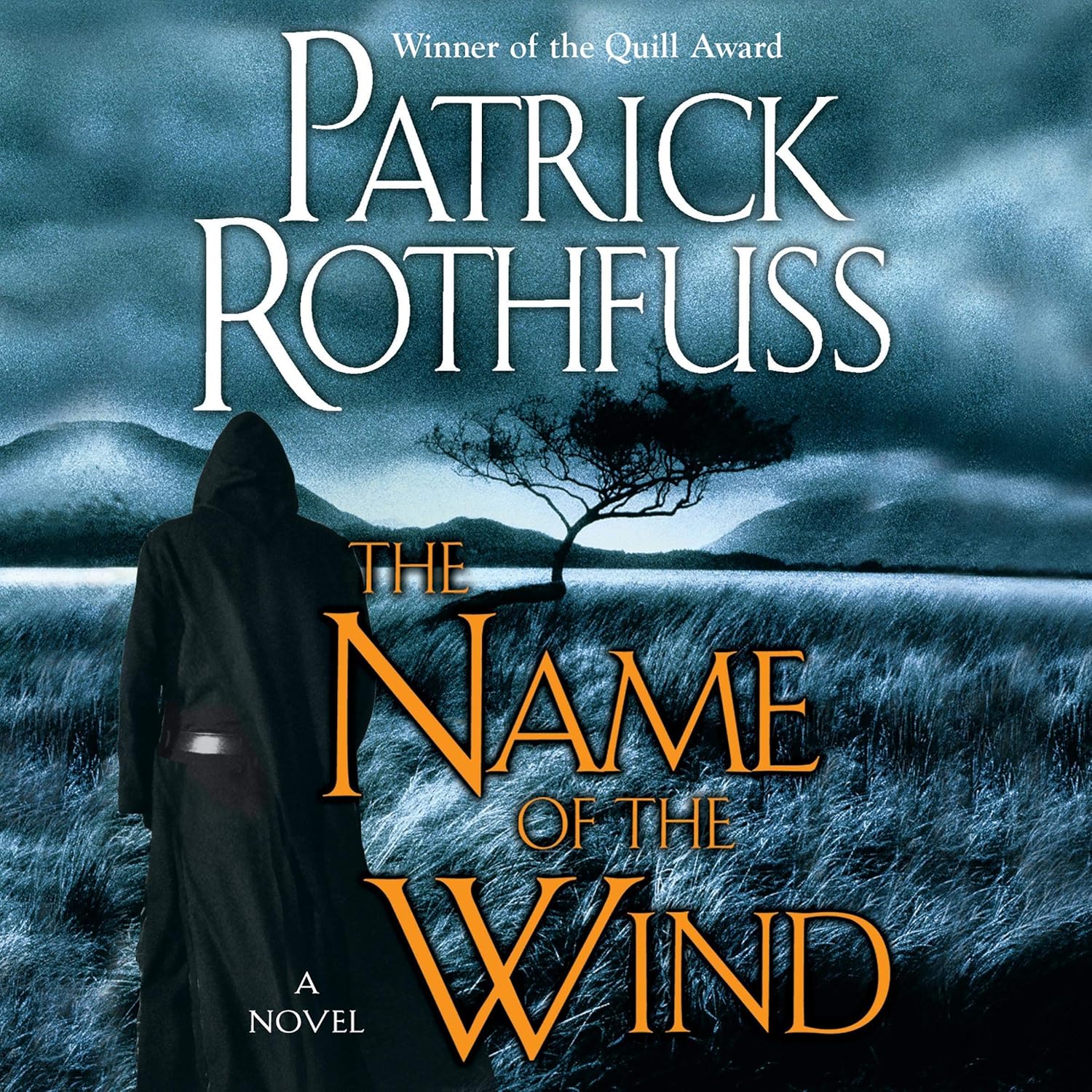
The Name of the Wind
Patrick Rothfuss


 Apple Books


 238 Min Reading Time
 Audio Version Available
About this book
My name is Kvothe. You may have heard of me.
I have stolen princesses back from sleeping barrow kings. I burned down the town of Trebon. I have spent the night with Felurian and left with both my sanity and my life. I was expelled from the University at a younger age than most people are allowed in. I tread paths by moonlight that others fear to speak of during day. I have talked to Gods, loved women, and written songs that make the minstrels weep.
So begins the legend of Kvothe, an unassuming innkeeper with a past shrouded in mystery and magic. From a childhood as a traveling player to surviving as a near-feral orphan in a crime-ridden city, Kvothe’s daring bid to enter a legendary school of magic sets him on a path to becoming the most notorious wizard his world has ever known.
The Name of the Wind is a breathtaking coming-of-age story, a high-action adventure told with a poet's grace, that invites you to discover the truth behind the myth and step into the mind of a wizard.
Summary of Key Ideas
- •
The transformative power of journey and experience
Kvothe's journey from a young Edema Ruh performer to a renowned (and infamous) figure is central to the novel. The story details his childhood within a traveling troupe, the tragic loss of his family, his subsequent struggles as a street urchin, and his eventual acceptance into the University. This journey encompasses not only physical travel but also intellectual and emotional growth, shaping him into the complex character he becomes. It showcases his resilience, ambition, and the profound impact of trauma on his life. His relentless pursuit of knowledge and understanding, even in the face of adversity, defines much of the narrative.
- •
The duality of brilliance: Talent and its consequences
Kvothe's exceptional talent and intelligence set him apart. He possesses a natural aptitude for music, languages, and magic, excelling in his studies at the University. This brilliance, however, is often tempered by his impulsiveness and pride, leading him to both great achievements and significant setbacks. His rapid learning and mastery of various skills are essential to his rise, but it's also a source of arrogance and recklessness, contributing to some of the problems he faces. This duality makes him a compelling and flawed protagonist.
- •
The relentless pursuit of knowledge
The pursuit of knowledge and understanding is a driving force for Kvothe. He seeks to uncover the secrets of naming, a powerful form of magic, and to learn the truth about the Chandrian, the mythical figures who murdered his family. His quest for knowledge leads him down dangerous paths, forcing him to confront powerful enemies and make difficult choices. This pursuit is not just academic; it's deeply personal, fueled by a desire for revenge and a need to understand the forces that shaped his life. Knowledge, in this world, is power, but it also comes with great responsibility and risk.
- •
Stories as shapers of reality and legacy
The power of stories and their impact on shaping reality is a recurring theme. Kvothe's own story is framed as a deliberate act of shaping his legacy, challenging the existing narratives about him. The novel suggests that stories have the power to influence events and that the truth can be fluid and subjective, depending on who is telling the tale. The way Kvothe crafts his narrative highlights the importance of perspective and the potential for stories to be both revealing and deceptive. This meta-narrative element adds depth and complexity to the overall story.
- •
The enduring impact of loss and trauma
Loss and trauma profoundly impact Kvothe's life, particularly the murder of his family by the Chandrian. This event shapes his character and motivates his actions, fueling his desire for revenge and his relentless pursuit of answers. The trauma he experiences creates a deep sense of isolation and drives him to seek understanding and control over the forces that caused him so much pain. His journey is, in many ways, a process of grappling with this loss and finding a way to move forward, even as the past continues to haunt him. The exploration of grief and its lasting effects are central to understanding Kvothe's motivations.
- •
The elusive nature of identity
The nature of identity and the construction of self are explored through Kvothe's multiple personas and the varying accounts of his life. He is known by many names and has played many roles, each contributing to the complex tapestry of his identity. The novel questions whether someone can truly know themselves, and how much of our identity is shaped by our experiences and the perceptions of others. Kvothe's struggle to reconcile his different identities reflects a deeper exploration of the human condition and the search for meaning and purpose.
Chapter Recap

About The Author
Patrick Rothfuss
Patrick Rothfuss (born June 6, 1973) is an American author, best known for his epic fantasy series *The Kingkiller Chronicle*. Born in Madison, Wisconsin, he matriculated at the University of Wisconsin-Stevens Point, initially studying chemical engineering before switching to English. Rothfuss spent nearly a decade working on his debut novel, [*The Name of the Wind*][1], which was published in 2007 to critical acclaim. The novel won the Quill Award and became a New York Times Bestseller. The success of his first book allowed him to focus on writing full-time, leading to the publication of the second book in the series, [*The Wise Man's Fear*][2], in 2011, which also topped the New York Times Bestseller list. In addition to his writing, Rothfuss founded Worldbuilders, a charity fundraiser. ([Source][3]) [1]: https://openlibrary.org/works/OL8479867W [2]: https://openlibrary.org/works/OL8479869W [3]: https://patrickrothfuss.com/content/author.html
Main Quotes
"Words are pale shadows of forgotten names. As names have power, words have power. Words can light fires in the minds of men. Words can wring tears from the hardest hearts."
"There are three things all wise men fear: the sea in storm, a night with no moon, and the anger of a gentle man."
"It was my name. All of me knew it."
"I’ve always liked libraries. It pleases me that they exist and that I know how to use them."
"“You have to be a bit of a liar to tell a story the right way.”"
"“Not all those who wander are lost.”"
"“The truth is a slippery thing.”"
"“Anyone can love a thing because. That’s as easy as putting a penny in your pocket. But to love something despite. To know the flaws and love them too. That is rare and pure and perfect.”"
"“Only priests and fools are fearless, and I’ve never been on the best of terms with God.”"
"“My name is Kvothe, pronounced nearly the same as 'Quothe'. Names are important as they tell you a great deal about a person.”"
Who Should Read This Book
Readers of epic fantasy and coming-of-age stories
Readers who enjoy detailed world-building and magic systems
Readers who appreciate lyrical prose and character-driven narratives
Fans of authors like Brandon Sanderson, Robin Hobb, and George R.R. Martin
College-aged and older readers interested in mature themes
Readers looking for a book with elements of mystery and adventure
Readers who enjoy stories about gifted individuals and their journeys
Book Summaries Like
The Name of the Wind


FAQ

Free Access to LitNotes