




 DISCORD
The Neverending Story
Michael Ende


 Apple Books


 82 Min Reading Time
 Audio Version Available
About this book
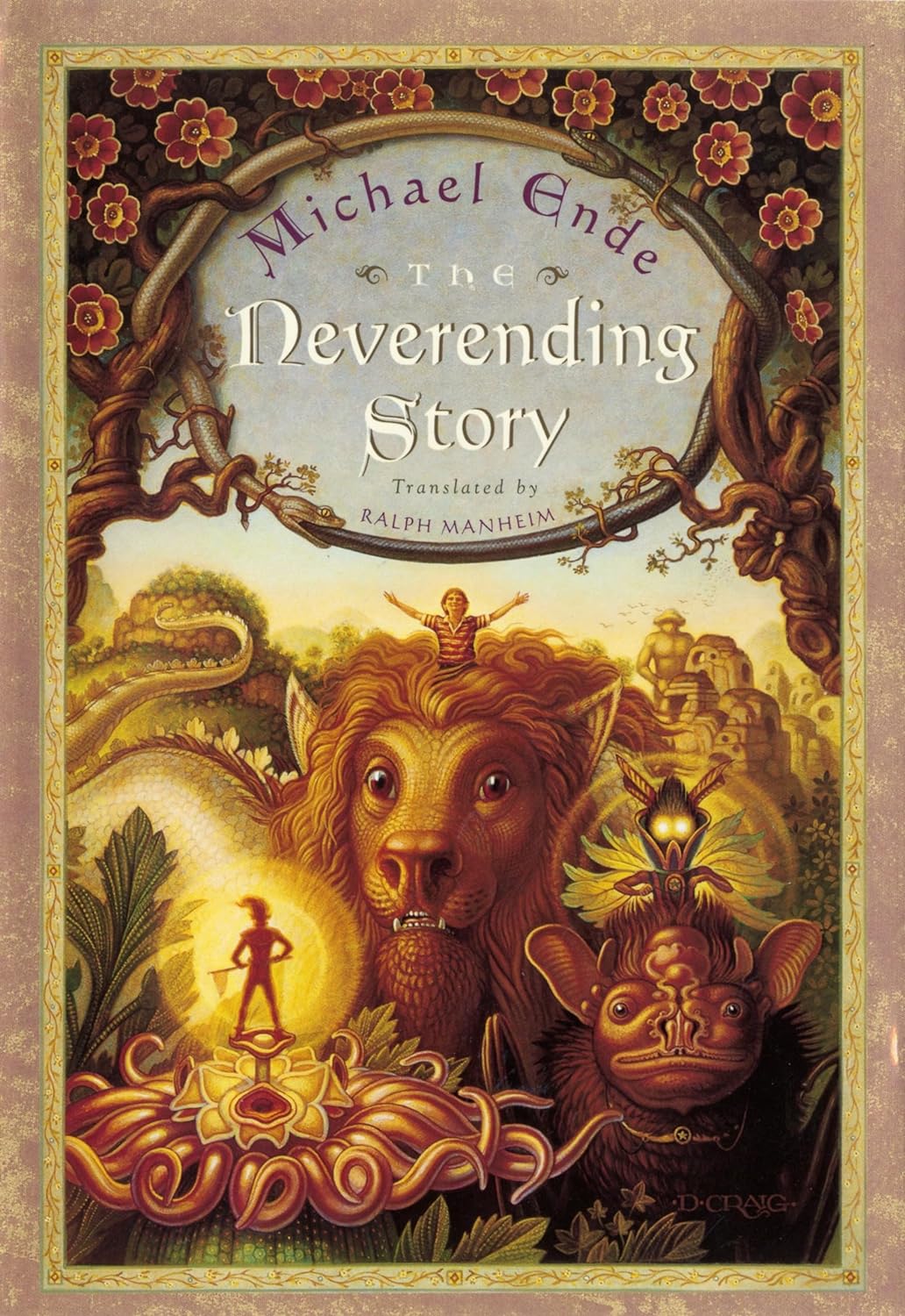
When Bastian Balthazar Bux discovers a curious book titled "The Neverending Story," he's irresistibly drawn into its pages. He finds himself transported to Fantastica, a breathtaking realm of dragons, giants, and mythical creatures teetering on the brink of oblivion. The Childlike Empress, ruler of Fantastica, is fading, and only a human can save her and their world.
As Bastian reads on, he realizes he's not just a spectator, but a vital part of the story. He must enter Fantastica, embark on a perilous quest, and give the Empress a new name to restore balance. But the deeper he journeys into this enchanted land, the more he risks losing himself – and the line between reality and imagination – forever. Can Bastian find the courage within to save Fantastica, or will he become lost in the neverending story?
Summary of Key Ideas
- •
Imagination as a Vital Force
The Power of Imagination: At its heart, "The Neverending Story" celebrates the boundless potential of the human imagination. Fantastica, the realm of fantasy, is sustained by human dreams and stories. As people lose their capacity to imagine, Fantastica begins to crumble, consumed by the Nothing. The novel emphasizes that imagination is not merely escapism but a vital force that shapes reality and gives meaning to existence. Through Bastian's journey, Ende underscores the importance of nurturing creativity and embracing the transformative power of stories.
- •
Worlds Intertwined
The Interconnectedness of Worlds: The book intricately weaves together the real world and the world of Fantastica, demonstrating their profound interdependence. Human emotions, beliefs, and stories directly influence the fate of Fantastica, while the experiences within Fantastica shape Bastian's character and understanding of himself. This connection highlights the idea that our inner lives and the external world are not separate entities but rather interconnected aspects of a larger reality. The well-being of one depends on the health and vitality of the other.
- •
Escapism's Double Edge
The Dangers of Escapism: While celebrating imagination, "The Neverending Story" also cautions against using fantasy as a mere escape from reality. Bastian's initial immersion in the book allows him to avoid dealing with his grief and loneliness. However, as he delves deeper into Fantastica, he risks losing himself completely, forgetting his real-world identity and responsibilities. The novel suggests that true growth comes from integrating imagination with reality, using it to enrich and transform our lives rather than to escape from them.
- •
The Anchor of Identity
The Importance of Identity and Memory: As Bastian uses the Auryn to make wishes in Fantastica, he gradually loses his memories of the real world. This loss of identity becomes a central conflict, emphasizing the significance of personal history and self-awareness. The novel suggests that knowing who we are, where we come from, and what we value is essential for navigating life's challenges and maintaining a sense of purpose. Without a strong sense of self, we risk becoming lost and adrift, like Bastian in the later stages of his journey.
- •
Confronting Apathy and Loss
Facing and Overcoming the 'Nothing': The 'Nothing' represents apathy, disillusionment, and the loss of imagination in the human world. It is a destructive force that consumes Fantastica, symbolizing the erosion of creativity and meaning. Overcoming the Nothing requires actively engaging with imagination, embracing stories, and confronting difficult emotions. The book suggests that by facing our fears and embracing creativity, we can push back against the forces that threaten to diminish our world and our spirits.
- •
Embracing Change and Renewal
The Cycle of Creation and Destruction: "The Neverending Story" acknowledges that creation and destruction are inherent parts of life. Fantastica is constantly being reshaped and redefined, reflecting the ever-changing nature of reality. The Nothing's destruction is not purely negative; it also clears the way for new possibilities and creations. This cyclical view suggests that embracing change and accepting loss are essential for growth and renewal. Just as Fantastica is reborn, so too can individuals find new beginnings after periods of destruction.
- •
Stories as Guides
The Value of Stories and Storytelling: The novel underscores the vital role of stories in shaping our understanding of the world and ourselves. Stories transmit cultural values, inspire empathy, and provide a framework for making sense of complex experiences. The act of storytelling, both reading and creating, is presented as a powerful way to connect with others, explore different perspectives, and cultivate imagination. Ende suggests that stories are not mere entertainment but essential tools for navigating life and creating a better future.
- •
A Path to Self-Awareness
The Journey of Self-Discovery: Bastian's adventures in Fantastica are ultimately a journey of self-discovery. He confronts his insecurities, overcomes his fears, and learns to embrace his own unique potential. Through his interactions with fantastical creatures and the challenges he faces, Bastian gains a deeper understanding of himself and his place in the world. The novel highlights the transformative power of experience and the importance of embracing the unknown in order to grow and evolve.
Chapter Recap

About The Author
Michael Ende
Main Quotes
"Real stories never end."
"Because people who have no hopes are easy to control; and whoever has the control has the power."
"Hopes and dreams are the foundation of Fantastica. Without them, the land dies."
"Never give up and good luck will find you."
"Only through Love can you find what you miss."
"It is much easier to deal with বাস্তবের [real] things."
"What I've started I must finish. I've gone too far to turn back. Regardless of what may happen, I have to go forward."
"You must let what happens happen. Everything must be equal in your eyes, good and evil, beautiful and ugly, foolish and wise."
"Nothing is lost. Everything is transformed."
"Human passions have mysterious ways, in children as well as grown-ups. Those affected by them can't explain them, and those who haven't known them have no understanding of them."
Who Should Read This Book
Children aged 8-12
Middle grade readers interested in fantasy
Readers who enjoy stories about imagination, courage, and self-discovery
Adults who read the book as children and want to revisit it for nostalgic reasons
Parents or educators looking for a book to read aloud to children
Readers interested in German literature and culture
Fans of classic fantasy literature like "Alice in Wonderland" or "The Wizard of Oz"
Readers who appreciate stories with philosophical and psychological themes explored through a fantastical lens
Individuals interested in the power of stories and the importance of reading
Collectors of classic children's literature
Book Summaries Like
The Neverending Story
FAQ

Free Access to LitNotes