




 DISCORD
The Odyssey
Όμηρος


 Barnes & Noble Bestsellers


 105 Min Reading Time
 Audio Version Available
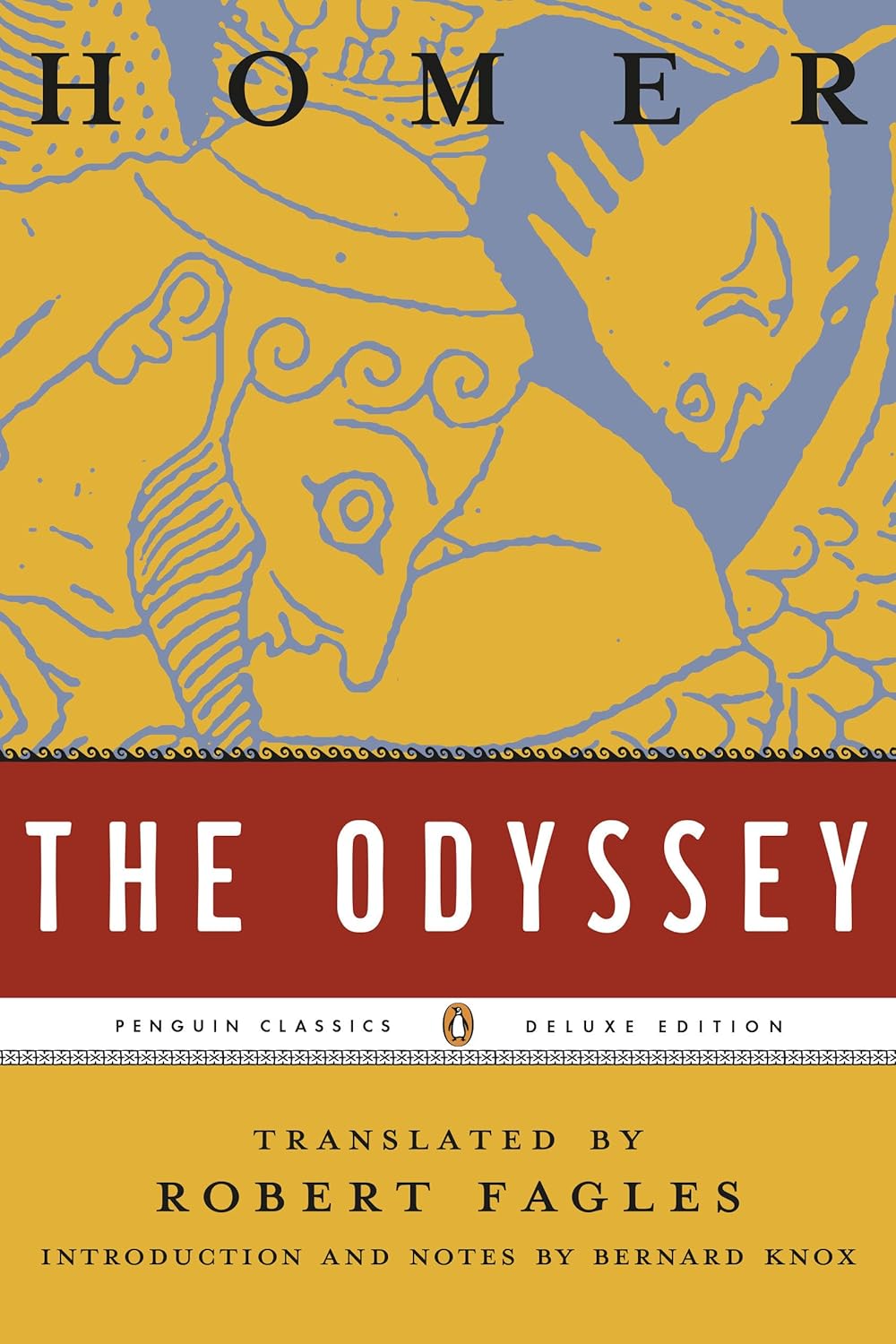
About this book
After ten years of war, Odysseus, King of Ithaca, faces a perilous ten-year journey home. Driven by a relentless longing for his wife Penelope and son Telemachus, he must outwit mythical creatures, navigate treacherous seas, and defy the wrath of vengeful gods. His wit, courage, and endurance will be tested against sea monsters, seductive sirens, and the allure of forbidden pleasures.
Meanwhile, in Ithaca, Penelope is besieged by ambitious suitors vying for her hand and Odysseus's throne. As they squander his wealth and plot against his son, Telemachus embarks on his own quest for news of his missing father.
Homer's Odyssey is a timeless epic of adventure, love, and the enduring power of the human spirit. It is a journey of self-discovery, where a hero confronts his mortality and fights to reclaim his kingdom, his family, and his destiny.
Summary of Key Ideas
- •
The Long and Perilous Journey Home
The epic centers around Odysseus's arduous journey home to Ithaca after the Trojan War. This theme highlights the challenges and perseverance required to overcome obstacles and reunite with loved ones. Odysseus faces storms, monsters, and temptations, all testing his resolve and delaying his return. The journey is not just physical but also a profound test of his character, resourcefulness, and leadership. His longing for home and family fuels his determination, showcasing the enduring power of nostos—the Greek concept of homecoming—as a fundamental human desire.
- •
The Sacred Duty of Hospitality (Xenia)
Hospitality, or xenia, is a sacred custom in ancient Greece, emphasizing the reciprocal relationship between hosts and guests. Offering food, shelter, and protection to strangers, regardless of their identity, was seen as a moral obligation. The Odyssey vividly illustrates both the proper adherence to xenia, as demonstrated by figures like Alcinous, and its blatant violation, as seen in the actions of the suitors who abuse Odysseus's household. The consequences of these actions underscore the importance of respecting social norms and divine laws.
- •
The Power of Loyalty and Fidelity
Loyalty is a central theme explored through the unwavering devotion of characters like Penelope, Odysseus's wife, and Telemachus, his son. Penelope cleverly resists the advances of numerous suitors, remaining faithful to her husband despite his prolonged absence. Telemachus embarks on a journey to seek news of his father, demonstrating his loyalty and growing maturity. Even loyal servants like Eumaeus play a crucial role in Odysseus's eventual triumph. These acts of faithfulness stand in stark contrast to the disloyalty of the suitors and some treacherous servants, highlighting the importance of fidelity and its rewards.
- •
Intelligence and Cunning Over Brute Force
Odysseus is renowned for his cunning and intelligence, often relying on his wit to overcome challenges that brute strength alone cannot solve. His ability to deceive and strategize is evident in his escape from the Cyclops, his manipulation of the suitors, and his overall navigation of the perilous journey home. Athena, the goddess of wisdom, frequently assists Odysseus, further emphasizing the value of intelligence and strategic thinking. This theme underscores the idea that cleverness and resourcefulness are essential qualities for survival and success.
- •
The Intervention of Gods and Goddesses
The gods play a significant role in the lives of mortals, constantly intervening in their affairs. Athena acts as Odysseus's protector and guide, while Poseidon, angered by Odysseus's blinding of Polyphemus, hinders his journey. The gods' involvement reflects the ancient Greek belief in divine influence and the importance of piety. Characters who honor the gods are often rewarded, while those who offend them face divine wrath. This theme explores the complex relationship between humans and the divine, highlighting the unpredictable nature of fate and the consequences of hubris.
- •
The Necessity of Vengeance and Justice
Vengeance is a recurring motif, particularly in Odysseus's brutal retribution against the suitors who have plagued his household and courted his wife. Upon his return, Odysseus, with the help of Telemachus and loyal servants, exacts a bloody revenge, killing all the suitors. This act of vengeance restores order and justice to Ithaca, reaffirming Odysseus's authority and punishing those who have violated xenia and threatened his family. While seemingly harsh, this theme reflects the ancient Greek emphasis on honor and the necessity of retribution for wrongdoing.
Chapter Recap

About The Author
Όμηρος
Main Quotes
"Sing to me of the man, Muse, the man of twists and turns"
"There is nothing more admirable than when two people who see eye to eye keep house as man and wife, confounding their enemies and delighting their friends."
"My name is Nohbdy: mother, father, and friends, everyone calls me Nohbdy."
"A man who has been through bitter experiences and travelled far enjoys even his sufferings after a time."
"Of all that breathes and crawls across the earth, nothing is feebler than man."
"The journey is the thing."
"Hateful to me as the gates of Hades is that man who hides one thing in his heart and speaks another."
"Quickly he পেল the sea with the oars."
"A bowshot away, a lookout perched to scan the whitecaps."
"For in the end, it is all about memory, its sources and its magnitude."
Who Should Read This Book
Students of literature
Students of Greek history and culture
Readers interested in classic epic poems
Individuals interested in ancient Greek society and values
Those interested in stories of adventure, heroism, and perseverance
Readers seeking themes of hospitality, loyalty, and homecoming
Fans of mythology and ancient legends
Educators looking for curriculum material
Readers interested in oral storytelling traditions
Book Summaries Like
The Odyssey




FAQ

Free Access to LitNotes